
 English
 简体中文
简体中文 Русский
 Français
 Português
 Español

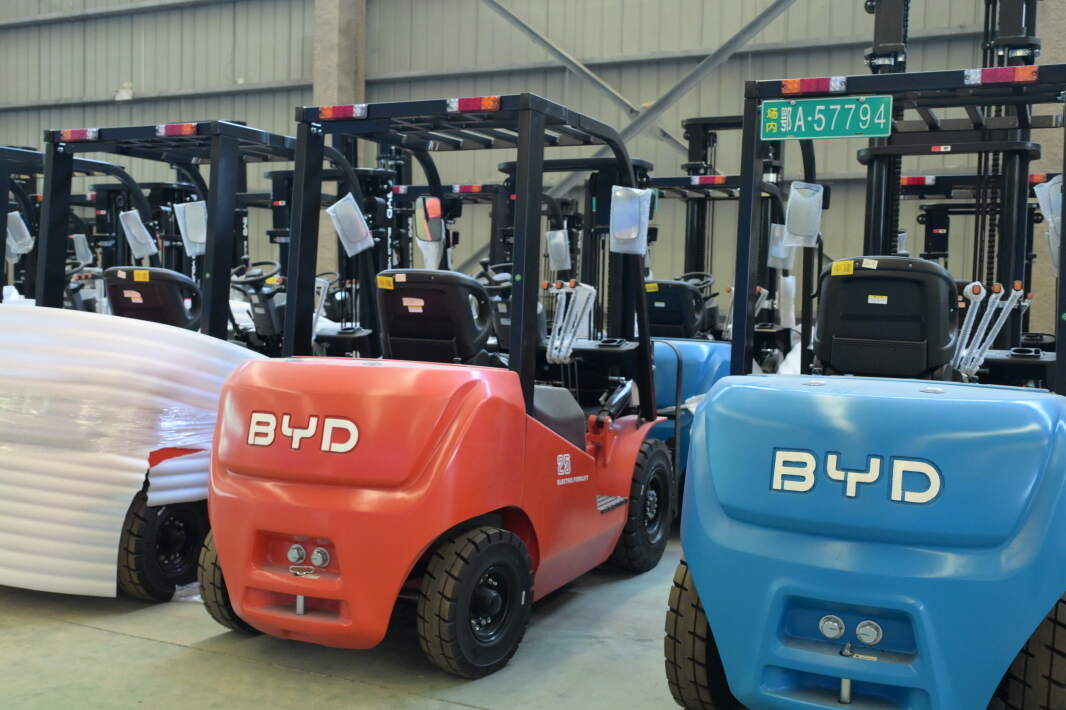
Against the general trend of low-carbon and high-efficiency development in the global logistics and manufacturing sectors, electric forklifts have become one of the most widely adopted handling equipment in various enclosed operation scenarios in recent years, as their performance and applicable scenarios continue to expand.
Core Functional Advantages of Electric Forklifts
Compared with traditional internal combustion powered handling equipment, electric forklifts produce zero local exhaust emission during operation, generate much lower noise and vibration, and will not cause disturbance to surrounding staff or pollution to stored goods, which makes them suitable for scenarios with high requirements for environmental cleanliness, such as food processing workshops, pharmaceutical storage areas and enclosed retail warehouses. The overall energy consumption cost of electric forklifts in the full service cycle is also relatively stable, which fits the low-carbon operation goals of most modern industrial sites.
Standardized Operation Guidelines for Daily Use
Operators need to complete full pre-use inspection before starting the equipment, check the remaining power, brake sensitivity, tension state of the lifting chain and the smoothness of the hydraulic system. During operation, avoid sharp acceleration or emergency steering under full load, keep the fork at a low and safe height when driving on ramps, and do not turn or park at will on sloped surfaces. When the equipment is not in use temporarily, operators should pull the handbrake completely, lower the fork to contact the ground, and cut off the main power supply to avoid potential safety risks.
Routine Maintenance Suggestions to Prolong Equipment Life
For the common maintenance work of electric forklifts, operators should avoid over-discharging the power battery, keep the charging area well ventilated, and regularly check the electrolyte level of the battery pack for applicable models. It is also necessary to clean up the dust and debris accumulated on the surface of the equipment regularly to prevent sundries from blocking the heat dissipation channel of the drive motor, and check the sealing performance of the hydraulic oil circuit periodically to find hidden leakage problems in time.
Scene Matching Principles for Different Work Demands
When selecting suitable electric forklifts, practitioners can match the equipment parameters according to the actual operation scenarios. For narrow aisle storage sites, compact body models can be selected to improve space utilization, for high rack storage scenarios, models with matched lifting height can be selected to meet access demands, and there is no need to pursue redundant performance parameters to cause unnecessary cost waste.


