
 English
 简体中文
简体中文 Русский
 Français
 Português
 Español

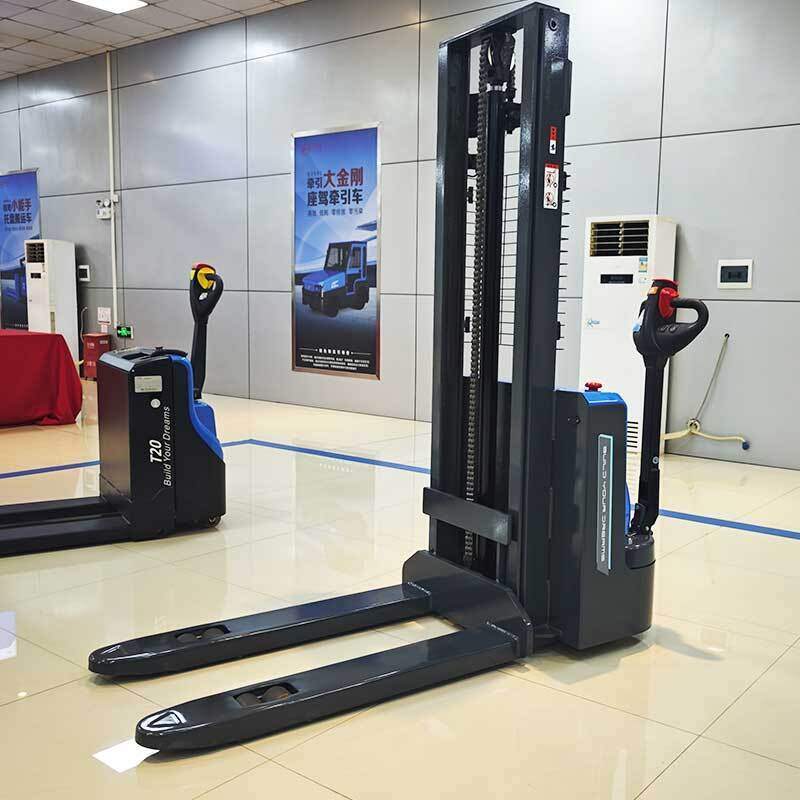
Precise load positioning is one of the core capabilities required for electric forklift operators to complete daily warehouse handling tasks safely and efficiently, and proper mast control training lays a solid foundation for this core capability. Unstandardized mast operation habits often lead to problems such as cargo slipping, shelf collision, and unexpected wear of forklift components, which will bring unnecessary extra cost consumption to the operation site.
Before the formal skill training, it is necessary to set up an independent closed training area, remove unrelated obstacles and idle personnel within the activity range, and prepare standard training aids including empty pallets, marked positioning points, and simulation storage racks of different heights. In the initial adaptive stage, trainees need to complete repeated no-load exercises first, get familiar with the stroke and feedback force of the mast control lever, master the reaction delay between the operating instruction input and the actual movement of the mast, and develop the operation habit of pushing and releasing the lever gently, avoid sudden large-scale push-pull action that causes the mast to shake violently.
After the trainees are proficient in no-load operation, they can carry out progressive load positioning training. Start with low-height ground positioning: place multiple empty pallets at pre-marked points, and train trainees to adjust the mast height to the position where the fork can be accurately inserted into the pallet gap, with a positioning error of no more than 2 cm. After the low-height operation reaches the expected proficiency, gradually increase the operation height to 1.5 meters, 3 meters and other conventional storage layer heights. In this process, trainees need to learn to use the dual reference of direct side observation and rearview mirror feedback to confirm the level of the fork and the distance between the mast and the shelf beam, so as to avoid scratching the shelf structure when placing goods at high positions.
In the training process, it is also necessary to correct common incorrect operation habits, for example, some trainees will move the forklift body at the same time when the mast is lifting or lowering to pursue operation speed, which will easily cause the load to shift and shake and bring hidden safety risks. The training process should clearly require that the body can only be moved after the mast action is completely stable and the load is kept in a balanced state. In addition, it is necessary to add adaptive training for loads of different weights, so that trainees can master the inertia difference of mast lifting and lowering under different load conditions, and adjust the timing of releasing the control lever in time. Systematic and standardized mast control training can effectively reduce the rate of cargo damage and equipment damage, and continuously improve the overall operation efficiency of the warehousing scenario.


