
 English
 简体中文
简体中文 Русский
 Français
 Português
 Español

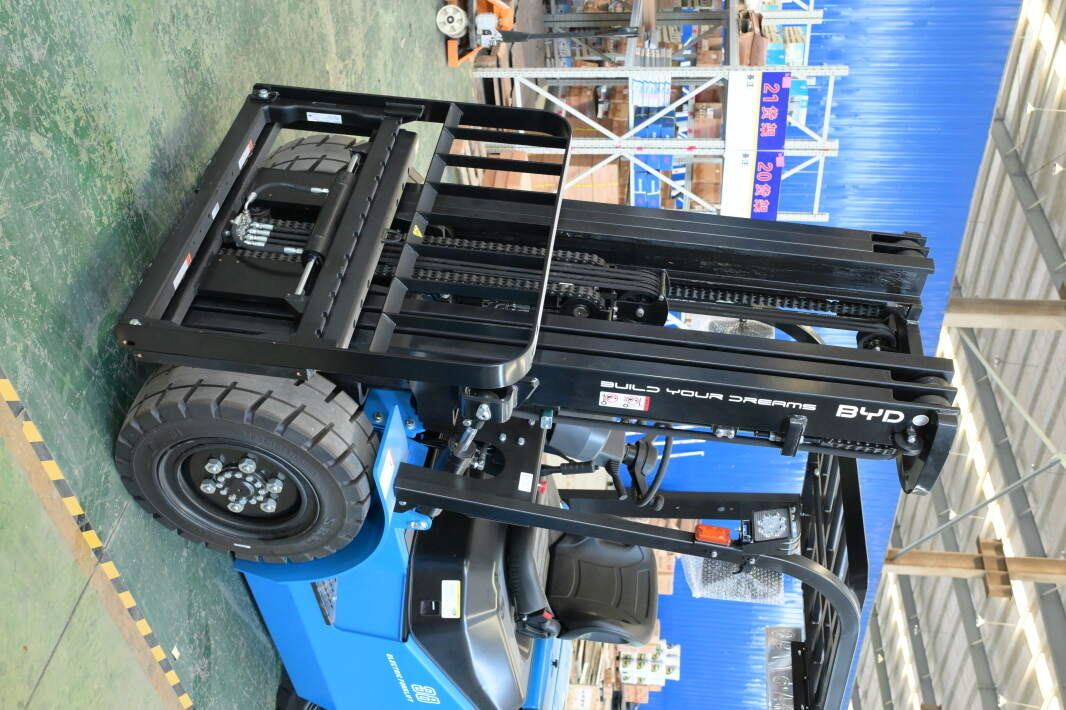
For multi-site logistics companies that operate dozens or even hundreds of warehouses and distribution hubs across different regions, electric forklifts are core workhorses that support most of all cargo handling workflows. Scattered operation scenarios, varied site conditions, and frequent cross-site deployment of forklift operators often create hidden safety gaps that may lead to avoidable collisions, tip-over incidents, cargo damage or personnel injury. Building a standardized, replicable electric forklift incident-prevention program across all sites can effectively fill these gaps, improve overall safety performance and meet local work safety regulatory requirements.
The first core module of the program is to establish a unified cross-site safety baseline. All operation rules for electric forklifts, including travel speed limits in different functional zones, mandatory pedestrian yielding rules, rated load standards, narrow channel operation requirements and forbidden zone access rules, are formulated by the central safety management team, and delivered to every site with no local deviation allowed. All sites are required to post the unified rules at forklift parking areas, operation channels and operator lounges, to make every rule highly visible for all relevant personnel.
The second module is a tiered, traceable safety training system. Apart from mandatory pre-job training for new forklift operators, regular quarterly refreshment training is arranged for all serving personnel, with targeted alignment sessions specially arranged for staff who are frequently deployed across different sites. The training combines theoretical knowledge with scenario-based practical drills, covering common high-risk situations including ramp operation, peak-time traffic diversion and special-shaped cargo handling. All training attendance and assessment records are uploaded to the central safety management platform for unified management.
The third module is a full-lifecycle dynamic equipment inspection mechanism. Every electric forklift under the company’s management is assigned a unique digital profile, which records all daily pre-shift checks finished by operators, weekly special safety checks conducted by site maintenance staff, and monthly random sampling inspections carried out by the central safety team. Key inspection items include braking performance, warning light and sound functionality, fork wear level, and electrical system operation status. Any identified hidden risk will trigger an immediate lockout of the equipment, to forbid any fault-carrying operation before the problem is fully fixed.
The last core module is a shared cross-site emergency response and hidden risk notification mechanism. A unified graded incident reporting process is applied across all sites, requiring all near-miss events and minor safety hazards to be reported within specified time window. The central safety team will sort out these cases regularly, distribute anonymized case alerts to all sites, and organize collective discussion to extract actionable improvement suggestions, so that all teams can learn from hidden risks occurring in other sites without repeated trial of errors. When implemented steadily, such structured prevention program can help multi-site logistics companies eliminate fragmented local safety loopholes, reduce electric forklift related incident rates steadily, protect the safety of frontline staff, and support stable, compliant daily operation across all locations.


