
 English
 简体中文
简体中文 Русский
 Français
 Português
 Español

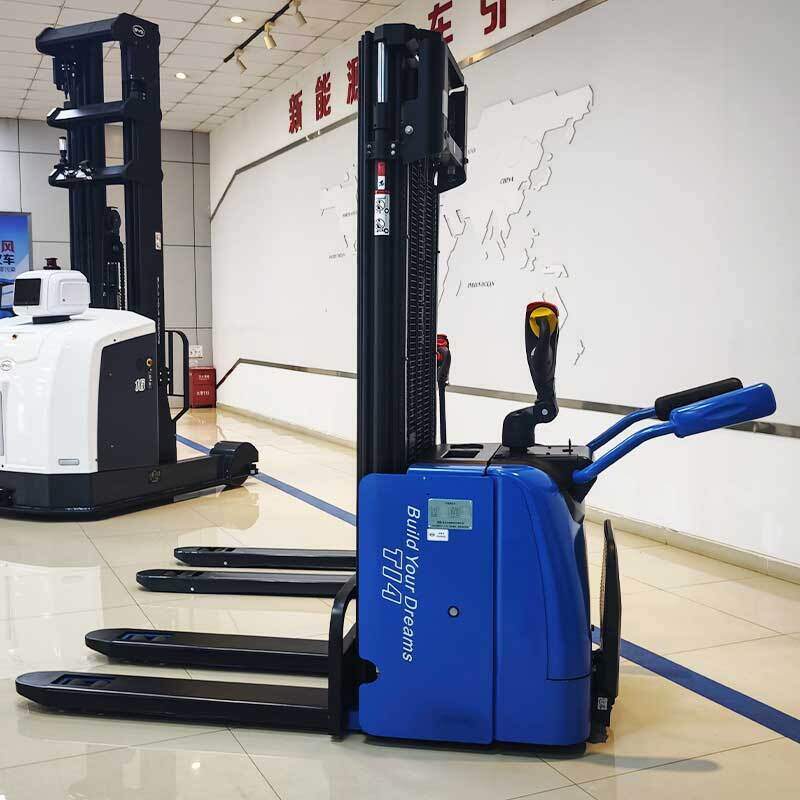
As low-carbon logistics concepts gain wider popularity across industrial scenarios, electric forklifts have become one of the most widely adopted material handling equipment in modern warehouses, manufacturing workshops and distribution centers. Many industrial practitioners still face common pain points in improper operation, insufficient maintenance and mismatched scenario selection during daily use, which leads to unexpected downtime and higher operating costs.
Core Operation Specifications for Daily Use
Before starting the equipment, operators should check the remaining power level, brake flexibility, tire condition and fork deformation status to eliminate hidden risks in advance. During the driving process, keep the running speed matched with the site condition, avoid sharp turns and sudden braking, and keep a safe distance from surrounding personnel and stacked goods. When picking up and placing heavy loads, keep the goods centered on the forks to avoid unbalanced stress that may cause side tipping, and never overload the equipment beyond the rated load range marked on the official specification, which will effectively reduce the occurrence of accidental safety incidents.
Routine Maintenance Tips to Extend Service Life
Regular maintenance work can effectively reduce the failure rate of electric forklifts and prolong the whole lifecycle of the equipment. After daily use, wipe the dust and residual sundries on the body surface in time, check the connection status of the battery interface, and arrange full charging according to the specified parameters. Every 300 to 500 hours of working time, conduct a targeted inspection on the motor, hydraulic lifting system and circuit connection, and replace the worn lubricating oil and wearing parts in time according to the actual operation status. It is not recommended to leave the battery in a full discharge status for more than 24 hours, which may cause irreversible damage to the battery performance.
Scenario Adaptation to Boost Material Handling Efficiency
Different working scenarios can match the corresponding operation adjustment schemes to give full play to the performance of electric forklifts. For narrow aisle warehouses, operators can adjust the traveling route in advance to avoid unnecessary detours, and set a reasonable goods stacking height within the equipment’s lifting range. For outdoor open working sites, choose to use the equipment under suitable weather conditions, and take protective measures for the core electrical components when the ambient humidity is too high or the temperature is extremely low. Reasonable adaptation of equipment and scenarios can help teams get stable and long-term operation benefits in daily logistics links.


