English
 简体中文
 Русский
 Français
 Português
 Español


Cold storage facilities operate under extremely challenging working conditions that differ vastly from regular ambient-temperature warehouses. Persistent low temperature, frequent temperature difference fluctuations between cold working zones and transition aisles, high humidity, and frost accumulation on the ground all pose severe challenges to the normal operation of material handling equipment, making standard electric forklifts far from enough to meet the long-term stable operation needs of such scenarios.
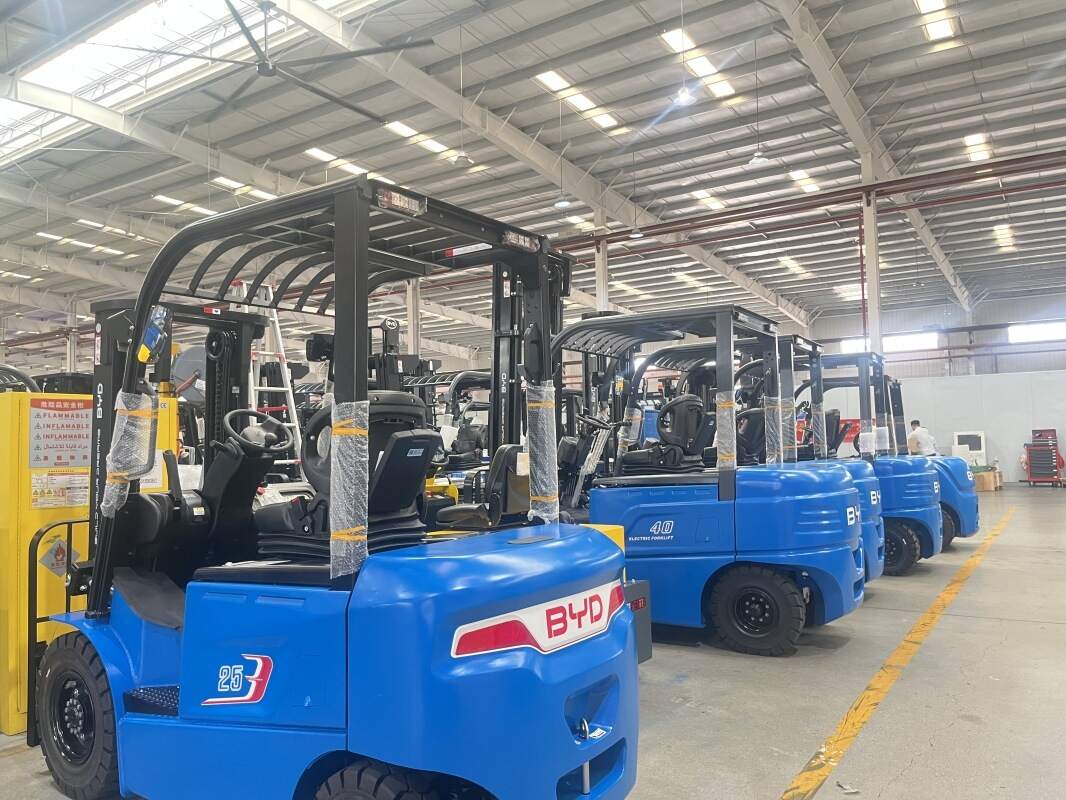
The first core requirement for electric forklifts used in cold storage is reliable low-temperature adaptability of the power system. The power unit must maintain stable output performance even under long-term exposure to low temperature environments as low as -30℃, avoiding sudden power drop or capacity attenuation that will interrupt ongoing cargo handling operations. A well-designed thermal management system for the power unit can also prevent unnecessary warm-up time before starting, which effectively cuts down non-working waiting time and improves the overall operation efficiency of the whole warehouse.
The second non-negligible demand is the overall structural and component frost resistance. All circuit units, control panels and wiring harnesses should adopt targeted sealed protection design, to avoid safety hazards such as short circuit or signal failure caused by condensate generated when forklifts shuttle between different temperature zones. The rubber and plastic parts used on forklifts, including tires, sealing rings and operation handle sleeves, should be made of special low temperature resistant materials, to avoid hardening, brittleness and cracking after long-term use, effectively extending the service life of the whole vehicle. The tread design of special anti-slip tires can also greatly reduce the risk of sideslip when driving on frosted ground, effectively protecting the safety of operators and stored goods.
The third demand is the humanized operation adaptation under low temperature environment. The operation components should keep proper operation damping even under ultra-low temperature conditions, so that operators wearing thick cold-proof gloves can complete all operation actions smoothly without extra effort. Optional constant temperature heating configuration in the operation area can effectively improve the comfort of long-time operation, reduce the fatigue of operators, and indirectly reduce the probability of operation errors.
In addition, low maintenance frequency is also a key index that cold storage facilities attach great importance to. Reducing the number of routine maintenance and fault repair can avoid unnecessary times of forklifts moving out of the low temperature area to the warm maintenance zone, which further reduces the extra energy consumption caused by repeated temperature changes and improves the continuity of warehouse operation.
As Jian Shu New Energy, we focus on BYD electric forklifts, and all our products have passed strict low temperature environment test verification, which can fully match the operation demands of different types of cold storage and cold chain logistics scenarios. If you have relevant selection demands or want to get targeted solutions, please send an email to [email protected] for more professional support.