English
 简体中文
 Русский
 Français
 Português
 Español


For logistics, manufacturing and storage operation teams in Kankan, selecting suitable material handling equipment that balances performance and long-term expenditure is a core priority to optimize operational efficiency. Many local operators often only focus on the upfront procurement cost of forklifts when making purchase decisions, while ignoring the cumulative expenditure during the full service cycle, which may lead to unexpected extra cost burden in 3 to 5 years of daily operation.
The total cost of ownership of three-wheel forklifts covers multiple dimensions including initial procurement expenditure, energy consumption cost, daily maintenance cost, after-sales supporting service cost, and residual value at the end of service life. For traditional fuel-powered three-wheel forklifts operating in local Kankan scenarios, daily fuel cost, regular engine oil replacement, filter part replacement and exhaust system maintenance will take up more than 60% of the total expenditure in the full operation cycle. For new energy three-wheel electric forklifts, the energy consumption cost per hour of operation is far lower than that of fuel counterparts, and the structural design without internal combustion engine greatly reduces the demand for vulnerable part replacement in daily maintenance, which helps operators cut unnecessary recurring cost steadily.
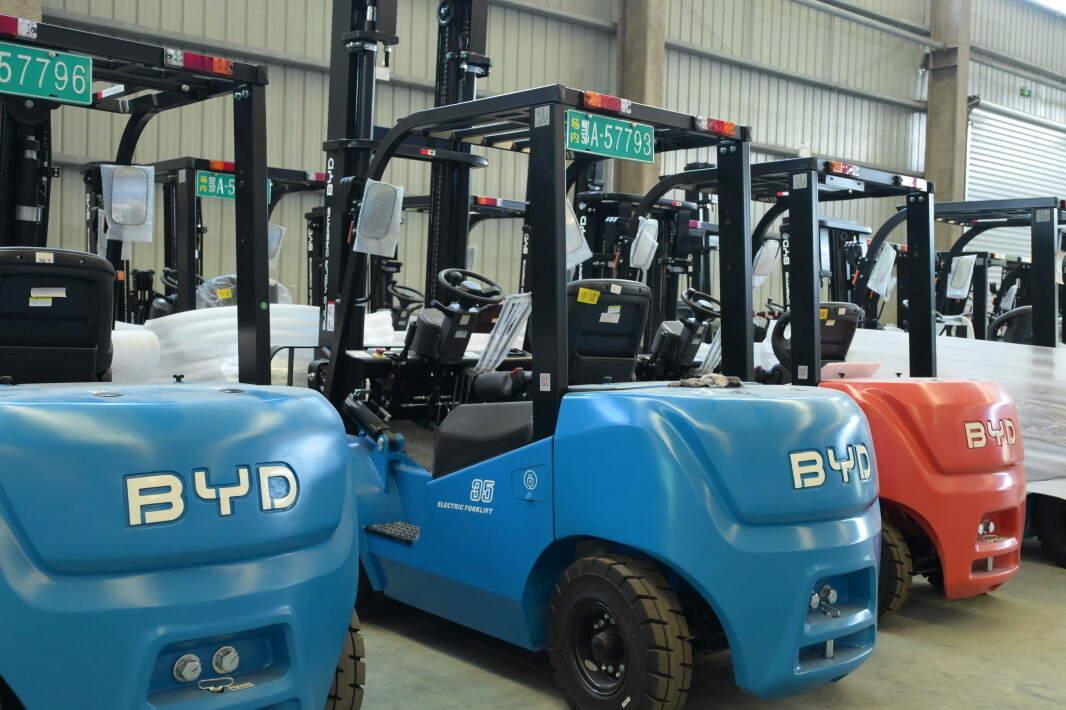
As a professional new energy material handling solution provider, Jianshu New Energy focuses on BYD electric forklift services, providing full cycle cost evaluation reports for users before procurement, helping you clearly calculate the possible expenditure of different operation cycles, to avoid hidden extra cost in later usage. If you have relevant demands for solution consultation, you can send email to contact us at [email protected] at any time.
It is worth noting that the application scenario of three-wheel forklifts in Kankan mostly covers narrow aisle storage, small cargo handling in factory workshops, and short-distance material transfer in port transit yards. The compact body design of three-wheel electric forklifts can adapt to these narrow operation spaces well, and the low noise, zero emission operation feature also meets the increasingly strict environmental management requirements of local operation sites. During the whole service cycle of the equipment, the supporting service team will also provide regular inspection services, to help users reduce unexpected downtime loss, further control the comprehensive total cost of ownership. Different from the calculation logic that only counts the upfront procurement expenditure, the total cost of ownership assessment mode can help local Kankan enterprise users make more scientific and reasonable equipment procurement decisions, obtain steady cost optimization effect in long-term material handling operation.