English
 简体中文
 Русский
 Français
 Português
 Español


Many warehouse and logistics operators prioritize long-term return on investment when selecting material handling equipment, rather than only referring to the one-time procurement price at the initial stage. This practical analysis focuses on the actual operating economic performance of BYD lithium forklift in daily work scenarios, to provide reference for operational decision making.
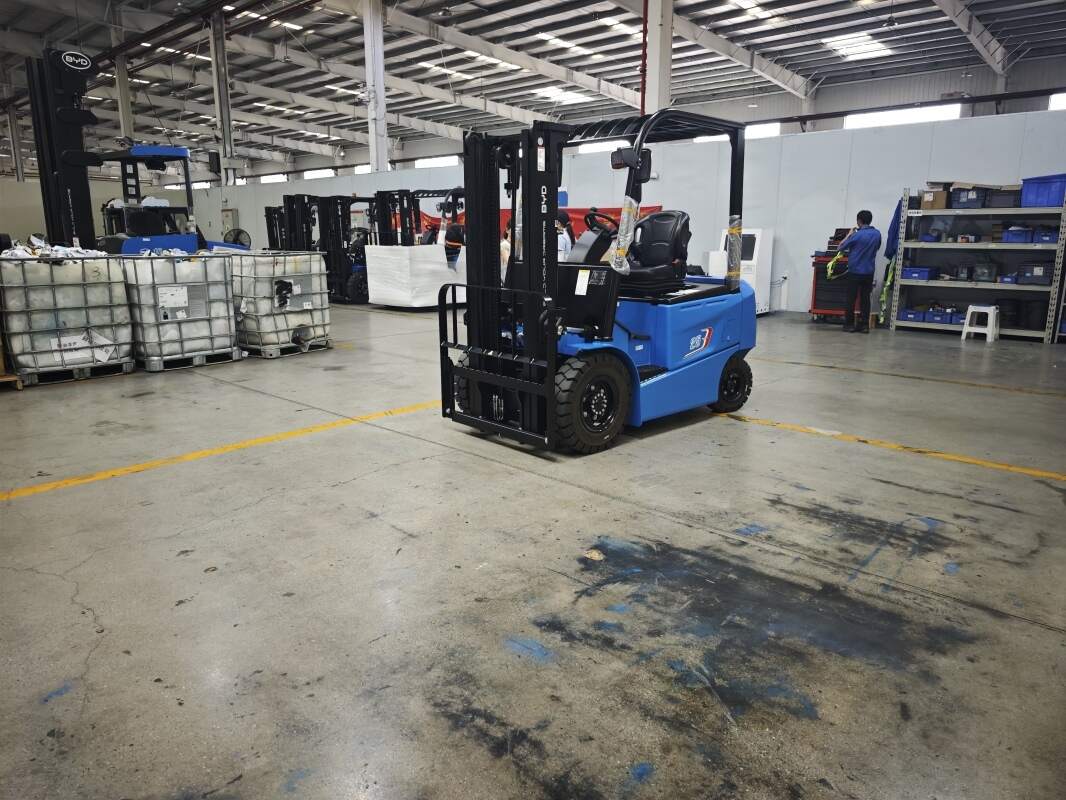
From the perspective of initial procurement input, many operators may notice that the upfront cost of BYD lithium forklift is slightly higher than equipment with other power types on the market. But if we calculate the total cost of the whole life cycle covering 5 to 8 years of normal use, the economic advantage of this lithium forklift will become very prominent.
For daily operation cost, the high energy conversion efficiency of the lithium power system helps the forklift complete the same handling workload with much lower power consumption, which cuts the unit energy cost per hour of operation a lot. Unlike traditional power equipment that needs frequent fluid replacement, part replacement and complicated maintenance procedures, this lithium forklift does not need regular fluid filling, acid balancing or other tedious maintenance work that takes extra labor hours. The daily maintenance work only includes routine inspection of tires, braking system and circuit connection points, which greatly reduces the labor cost spent on equipment maintenance.
From the perspective of downtime loss that is easy to be ignored, the traditional internal combustion powered equipment will take several hours for each regular maintenance, which will occupy the effective operation time and even cause operation gap during peak order periods. BYD lithium forklift has no internal combustion related wearing parts, the annual maintenance time is less than 10% of the traditional similar capacity equipment, which brings more than hundreds of extra effective working hours for the operation team every year. This advantage can effectively avoid the economic loss caused by delayed order delivery caused by equipment failure.
The longer cycle life of the on-board lithium battery also brings higher residual value of the whole equipment when it reaches the end of service life, which further reduces the average use cost per year. Statistics from actual user feedback show that most high-frequency operation scenarios can recover the incremental initial investment within 3 to 4 years of normal use, and all the operating costs after that will be significantly lower than that of traditional power equipment.
We are Jian Shu New Energy, we focus on providing professional supporting services for BYD electric forklift users, including free on-site operation efficiency assessment and customized operation cost optimization scheme. If you have any related inquiry, please contact us via [email protected].