English
 简体中文
 Русский
 Français
 Português
 Español


Against the background of global low-carbon logistics transformation, electric forklifts have become the preferred material handling equipment for more and more manufacturing, warehousing and retail enterprises, due to their low operation noise, zero on-site emission and low long-term use cost. Many purchasers often face confusion when making selection decisions, as improper configuration will either cause unnecessary cost waste or fail to meet actual operation demands. This practical framework sorts out core evaluation dimensions for reference, to help enterprises make cost-effective selection decisions.
The first step of the framework is to make full statistics and verification of actual operation scenarios. You need to sort out the main operation areas of the forklift, confirm whether the operation is carried out in a closed indoor warehouse, outdoor yard or mixed scenario, so as to confirm the requirements for tire type, waterproof and dustproof performance of the equipment. In addition, you also need to measure the minimum width of the operation passage, the maximum required lifting height of goods, the gradient of the frequently passing ramp, and the daily average operation duration, all these basic data will form the basic reference benchmark for subsequent model matching.
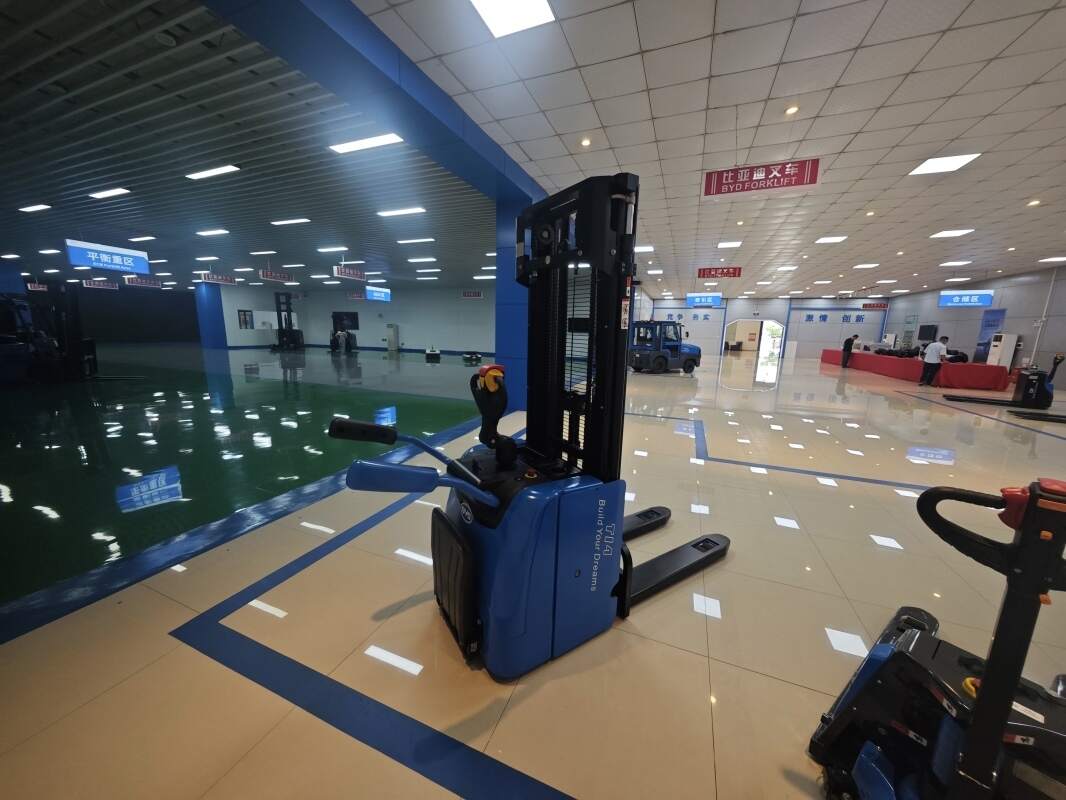
On the basis of clarifying the scenario parameters, the second step is to complete the matching of load and energy configuration. It is not advisable to blindly pursue a higher rated load parameter, which will push up the procurement cost unnecessarily. Enterprises can take the maximum weight of conventional handling goods as the reference, reserve a small amount of load redundancy according to the actual situation, so as to meet the peak operation demand. For the energy system configuration, you can select the corresponding battery capacity according to the daily continuous operation hours and the charging conditions on site, to avoid the situation that the battery power cannot support the whole shift operation, and also avoid the excess high battery configuration that increases the idle cost.
The third core dimension of the framework is to evaluate the whole lifecycle operation cost and supporting service. Except the one-time procurement cost, you need to pay attention to the convenience of later routine maintenance, the supply stability of spare parts, and the professional operation training support provided by the supplier. A complete after-sales service system can effectively reduce the downtime of equipment in long-term operation, and avoid the loss caused by delayed maintenance.
If you need professional customized electric forklift selection support, Jian Shu New Energy, which focuses on BYD electric forklift products, can provide you with targeted solution design, you can send your specific demand description to the mailbox [email protected] for consultation.