English
 简体中文
 Русский
 Français
 Português
 Español


Beverage plants have unique material handling characteristics, including high-density storage demands, strict food hygiene requirements and frequent short-distance turnover of finished product pallets. Proper planning of 3-wheel electric forklift deployment can greatly improve overall operation efficiency without disrupting existing production and storage workflows.
First, complete systematic on-site survey before deployment. You need to measure the actual width of all operation channels, the maximum height of shelf stacking, the average daily handling volume of raw materials and finished products, as well as the average running distance between the production workshop, temporary storage area and finished product warehouse. Unlike larger counterbalance forklifts, 3-wheel electric forklift has a smaller turning radius, which can adapt to narrow passage conditions that are common in old beverage plants, so you do not need to modify the existing warehouse structure to expand channels, which saves extra renovation cost and time. The survey result can also help you confirm the reasonable number of devices to be deployed, to avoid insufficient handling capacity or redundant idle devices.
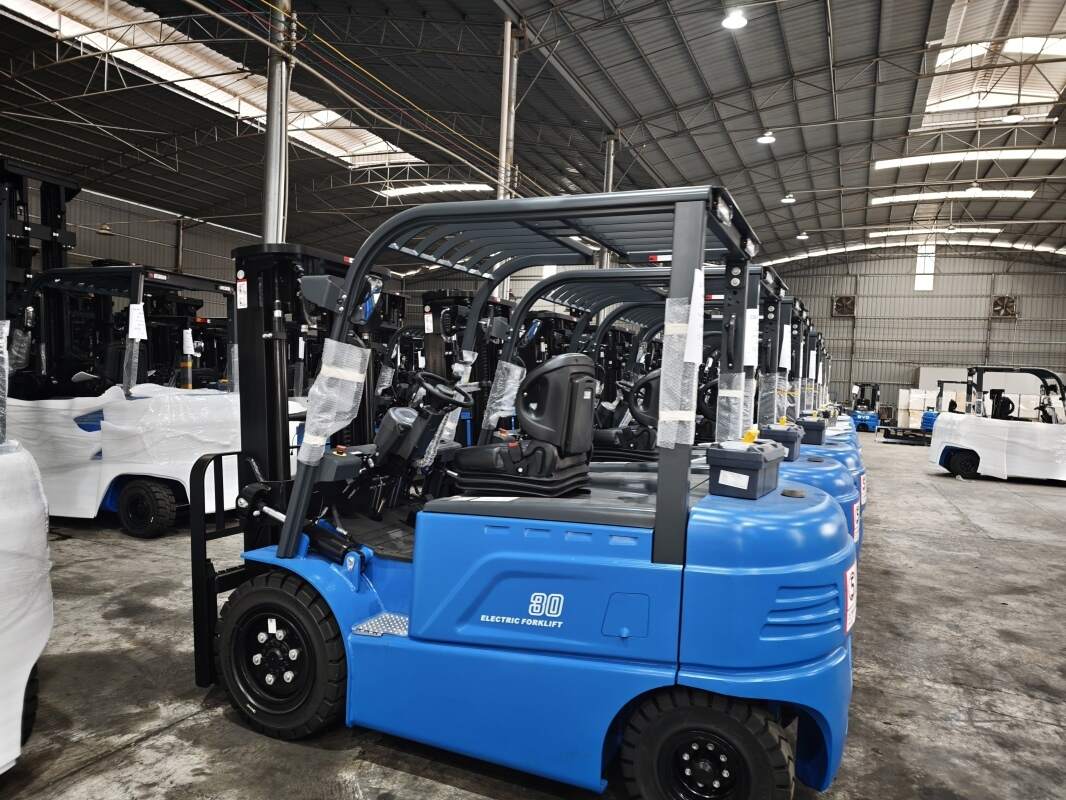
Second, match the actual operation requirements of beverage production scenarios. Beverage products are usually heavy in unit pallet weight, and the whole operation process requires no pollution to avoid any impact on food safety. The zero-emission feature of 3-wheel electric forklift fully meets the clean production standard of food and beverage industry, there is no tail gas emission, no risk of lubricating oil leakage that may contaminate packaging or finished products, and it also runs with low noise to avoid interfering with normal production and staff work. You can select proper load capacity and lifting height specifications according to the weight of your common handling pallets and the maximum shelf height, to avoid redundant performance waste or insufficient operation ability.
Third, make supporting operation and maintenance plans. You can set up a dedicated charging area in the non-core area of the plant, arrange supplementary charging during off-peak production hours to ensure the forklift has sufficient power to support full-day operation. It is also recommended to arrange regular safety operation training for the operators, and arrange periodic routine inspection for the vehicles, to eliminate potential hidden troubles in time and guarantee stable continuous operation.
If you need professional customized planning suggestions for 3-wheel electric forklift for your beverage plant, we are 尖树新能源, focusing on BYD electric forklift products. You can send your specific demand to our email box at [email protected], and our professional team will provide you with targeted support.