English
 简体中文
 Русский
 Français
 Português
 Español


As low-carbon logistics and warehouse management continue to develop, electric forklifts have become a common material handling tool in storage, manufacturing ports and distribution centers. Different from internal combustion forklifts, electric forklifts feature lower operating noise, zero local emissions and lower long-term operating cost, which is more suitable for indoor enclosed operation scenarios. The following content will introduce the full set of entry points for new operators to master electric forklift usage in a stable and standard way.
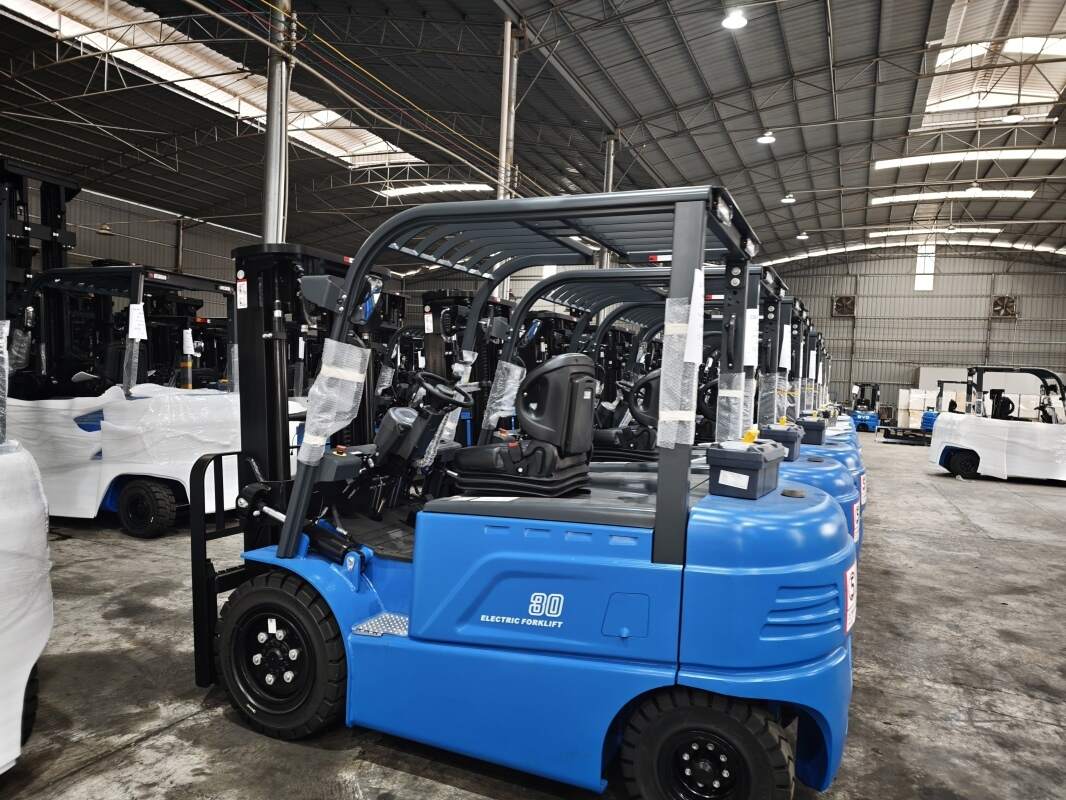
The first step before formal operation is to complete comprehensive pre-use inspection. New operators need to walk around the whole vehicle first to check whether the tire pressure is normal, whether there is obvious scratch or deformation on the fork and gantry structure, and confirm that no sundries are stacked near the walking wheel that may block normal operation. Then operators need to check the remaining power level of the battery, test the flexibility of the brake system and the normal display of the safety warning light, and adjust the seat position to ensure that all operation levers and pedals can be touched smoothly in a natural sitting posture. It is also necessary to confirm that there is no accumulated water on the operation site that exceeds the safety threshold of the motor, to avoid hidden safety risks caused by accidental water inflow of electrical components.
For the basic operation process, new operators should keep low speed when starting, avoid sudden acceleration that leads to unstable vehicle body, and honk the horn in advance when turning, crossing the intersection or passing the crowd-intensive area to remind surrounding personnel to pay attention to avoidance. When carrying goods, adjust the fork spacing to adapt to the pallet width, keep the center of the goods at the middle position of the two forks, and lower the carrying goods to a height of 10 to 15 cm from the ground during driving, which can effectively reduce the risk of goods slipping and tipping. Operators should not carry any unrelated personnel on the vehicle, and do not carry goods that exceed the rated load weight of the equipment, to avoid damage to the gantry structure or rollover accident. When driving on a sloped site, keep the goods facing uphill to move forward, do not turn sharply on the slope, and do not park the vehicle on the inclined surface at will.
In terms of daily use and maintenance, operators need to park the electric forklift in the designated parking area after each use, lower the fork to contact the ground completely, pull up the handbrake and turn off the total power supply in time. It is recommended to arrange supplementary charging when the remaining battery power drops to 20% to 30%, do not wait until the power is completely exhausted to charge, which can help prolong the overall service life of the battery. When cleaning the body, do not use high-pressure water gun to directly wash the electric control box and battery connection part, you can use dry soft cloth to wipe the dust on the surface of the components.
If you have demand for electric forklift selection or further operation guidance, Jianshu New Energy, which focuses on BYD electric forklift, can provide you with professional supporting services, you can send emails to [email protected] to get relevant support and consultation.