
 English
 简体中文
 Русский
 Français
 Português
 Español


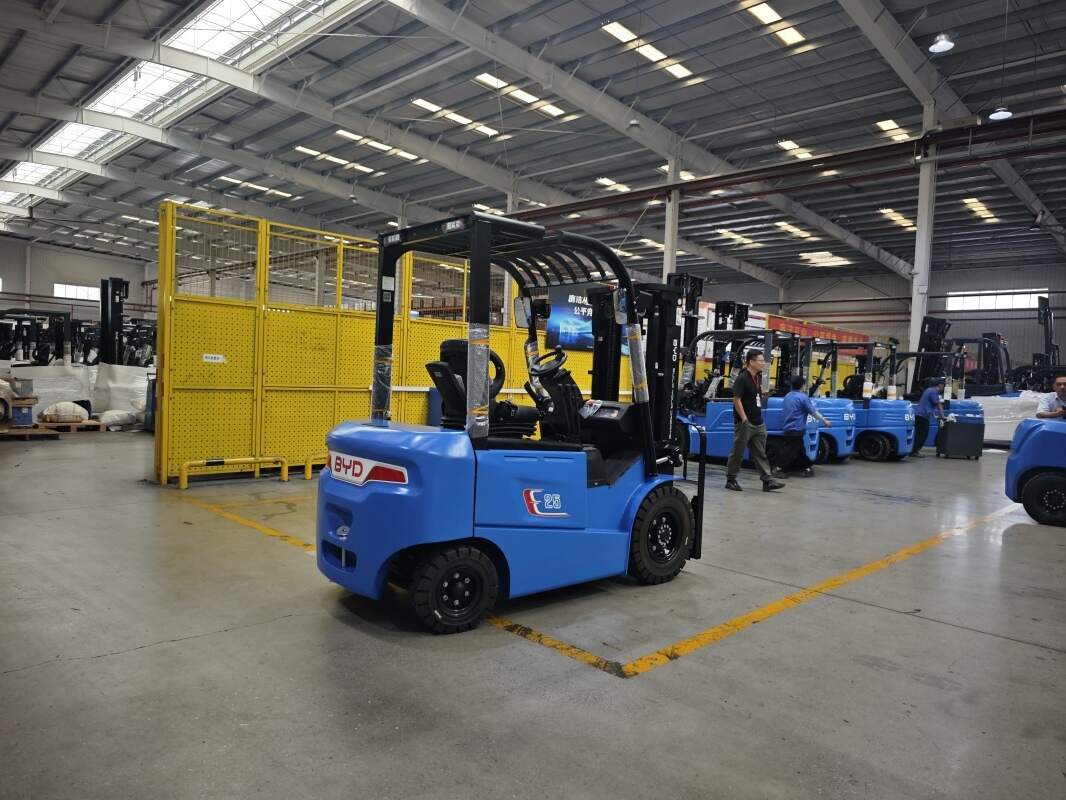
Electric forklifts have become core equipment in modern indoor logistics, warehousing and light manufacturing scenarios, as more operators prioritize low noise, zero local emissions and flexible maneuverability compared with internal combustion counterparts. Mastering standardized operation and management rules can help teams give full play to the equipment’s performance while reducing unnecessary operation risks.
Core Pre-operation Inspection Protocols
Before each shift, operators need to check the battery power level, brake sensitivity, tire wear condition and the normal operation of lifting and tilting hydraulic components. No overloading is allowed even if the equipment seems to have extra load capacity, operators should also confirm that the surrounding working area has no scattered obstacles or unrelated personnel before starting the equipment. Operators should also verify that the warning light and prompt sound system work normally before formal operation, to avoid hidden safety hazards in the subsequent handling process.
Scenario-adaptive Operation Norms
In narrow aisle scenarios, operators need to control the driving speed below the specified limit, keep a safe distance of more than 0.3 meters from surrounding shelves and stacked goods. When operating on sloped surfaces with gradient within the allowable range of the equipment, operators should keep the load facing the uphill direction and avoid turning midway. For high altitude picking operations, operators should avoid standing under the lifted forks to prevent accidental falling of goods, and adjust the lifting height reasonably according to the actual shelf position to reduce unnecessary shaking.
Routine Daily Maintenance Arrangements
After each shift, operators need to wipe the surface of the equipment, clean up the dust and debris accumulated on the heat dissipation structure of the motor, park the equipment in the designated charging area, turn off the power supply and pull the hand brake. Do not leave the equipment with full load parked for a long time to avoid long-term pressure damage to the hydraulic system. For long-term unused equipment, it is necessary to charge the battery regularly every two weeks to avoid deep power loss that affects the overall service life.
Practical Energy Efficiency Promotion Methods
Reasonable operation habits can effectively extend the single continuous working time of the equipment. Operators can avoid frequent sudden acceleration and sudden deceleration during driving, plan the handling route in advance to reduce unnecessary repeated driving, arrange the charging schedule reasonably according to the actual operation volume, and avoid frequent full discharge and full charge cycles that cause extra loss to the battery pack. By following these standardized operation and management rules, logistics teams can create a safer, more stable and low-cost material handling working environment, and give full play to the application advantages of electric forklifts in different daily scenarios.


