
 English
 简体中文
简体中文 Русский
 Français
 Português
 Español

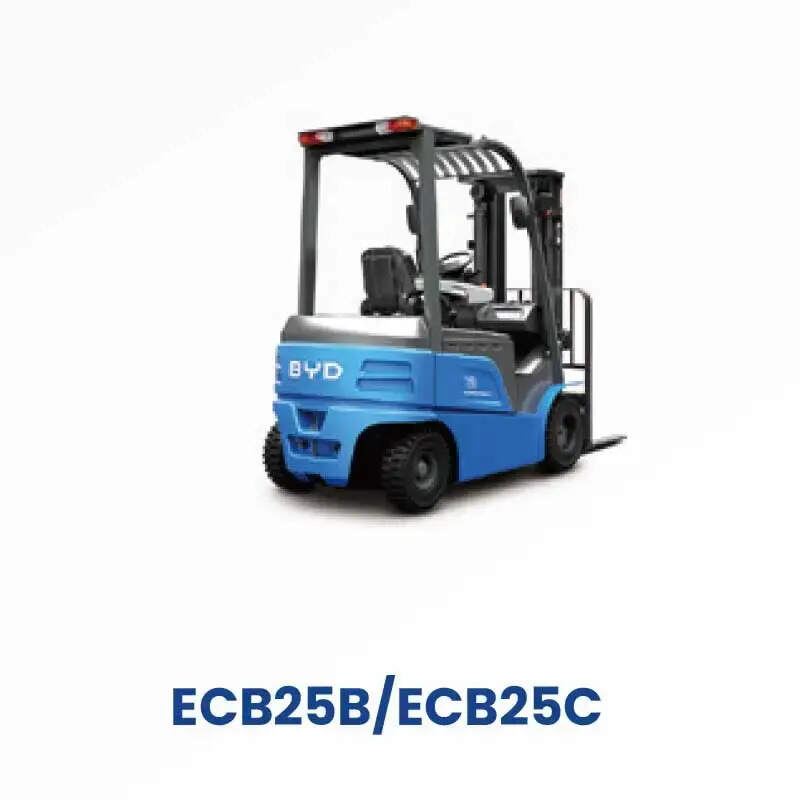
As low-carbon logistics and warehouse operation concepts gain wider recognition, electric forklifts have become one of the most widely used material handling equipment in industrial scenarios in recent years. Unlike traditional internal combustion forklifts, electric models rely on power battery packs to provide driving and lifting power, which brings distinct characteristics in operation, maintenance and scenario adaptation for on-site users.
Core Scenario Adaptation Features of Electric Forklifts
Most standard electric forklifts are suitable for closed or semi-closed indoor warehouse scenarios, food processing workshops, pharmaceutical storage areas and other places that have requirements for low exhaust emission and low operating noise. Their no-emission operation feature can avoid the problem of harmful gas accumulation in narrow enclosed spaces, while the low noise output will not interfere with the daily communication of on-site operators, and reduce the long-term noise interference impact on working staff. For scenarios with relatively heavy load handling requirements, users can select corresponding load capacity specifications according to the maximum weight of goods to be handled daily, to ensure the basic operation stability in daily use.
Standard Daily Operation Norms
Before starting each shift of operation, operators need to conduct a quick basic inspection of the equipment, including checking the remaining power level of the battery pack, whether the braking system responds sensitively, whether the lifting hydraulic structure runs smoothly, and whether the light and prompt alarm devices work normally. During the operation process, operators should avoid sharp acceleration and sharp steering as much as possible, keep a safe distance from surrounding goods, shelves and on-site personnel, and do not carry out over-height stacking or over-load handling operations beyond the equipment’s rated parameters. After the daily operation is completed, the equipment should be parked in the designated charging area, the power switch should be turned off, and the corresponding charging connection operation should be carried out according to the remaining power status, to avoid long-term power loss of the battery pack.
Basic Daily Maintenance Tips
Regular routine maintenance can effectively extend the service life of electric forklifts, and reduce the probability of unexpected equipment failure during peak operation periods. Operators need to regularly clean the dust and sundries accumulated on the surface of the battery pack and the body heat dissipation structure, check the wear status of the driving tires on a regular basis, and timely replace the parts that have exceeded the normal wear range. It is not recommended to store the equipment in a humid environment with excessive temperature difference for a long time, to avoid abnormal aging of the internal circuit structure. Following these basic operation and maintenance rules can help enterprises give full play to the performance advantages of electric forklifts, and create more stable value for daily material handling work.


