
 English
 简体中文
 Русский
 Français
 Português
 Español


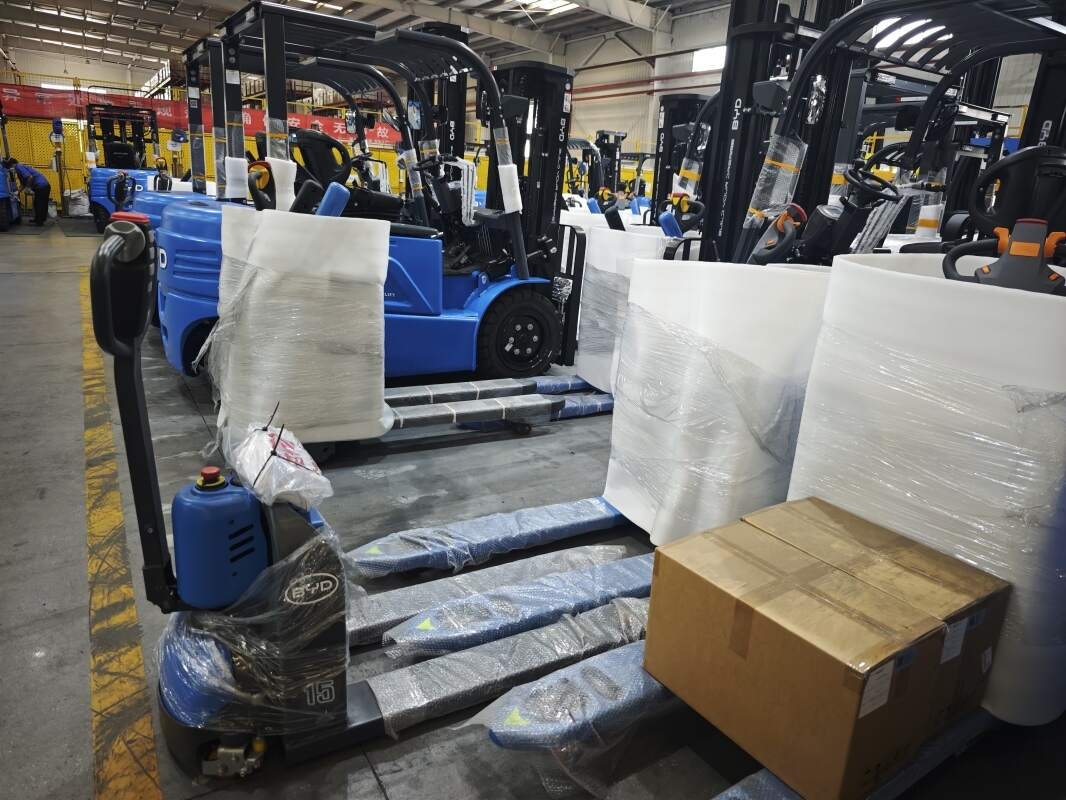
As the modern logistics and warehouse industry continues to promote low-carbon transformation and refined cost control, electric forklifts have become one of the most common material handling equipment in daily operation, and mastering standardized operation and maintenance knowledge can help practitioners obtain more stable performance of the equipment in long-term use.
Core Operation Specifications for Daily Use
Before starting each shift, operators need to complete a quick pre-check of the remaining power level, brake sensitivity, steering flexibility and fork surface integrity, to find out potential hidden troubles in advance. During the whole operation process, operators need to keep the actual load within the rated load range of the equipment, avoid sharp turning or sudden braking when carrying heavy cargo, and keep a proper safe distance from surrounding personnel and obstacles in narrow warehouse aisles. It is not recommended to drive the equipment on slopes with a gradient exceeding the specified value, to avoid unnecessary extra wear of the power system and walking structure.
Routine Maintenance to Extend Equipment Service Life
Different from traditional internal combustion forklifts, electric forklifts take the power battery and motor system as the core power source, so the focus of daily maintenance is adjusted accordingly. Operators need to complete standard charging operation according to official guidance, avoid long-time over-discharging of the battery, and keep the surface of the battery pack clean and dry in daily storage state. It is also necessary to check the wear condition of walking wheels and the lubrication state of transmission parts regularly, clear the dust and sundries accumulated near the motor and heat dissipation structure at fixed intervals, which can effectively reduce the equipment failure rate in long-term continuous operation.
Efficiency Optimization Tips for Typical Warehouse Scenarios
For high-frequency access scenarios such as high-level shelf storage and short-distance cargo shifting, matching the running speed and fork lifting speed according to the weight of goods and surrounding environment can balance operation safety and work efficiency. Practitioners can arrange the patrol and maintenance schedule reasonably according to daily operation intensity, avoid long-time continuous overload operation of the equipment during peak operation periods, and reserve proper rest and heat dissipation time for the power system. These good operation habits can effectively reduce the overall use cost of the equipment in its full life cycle.


