
 English
 简体中文
 Русский
 Français
 Português
 Español


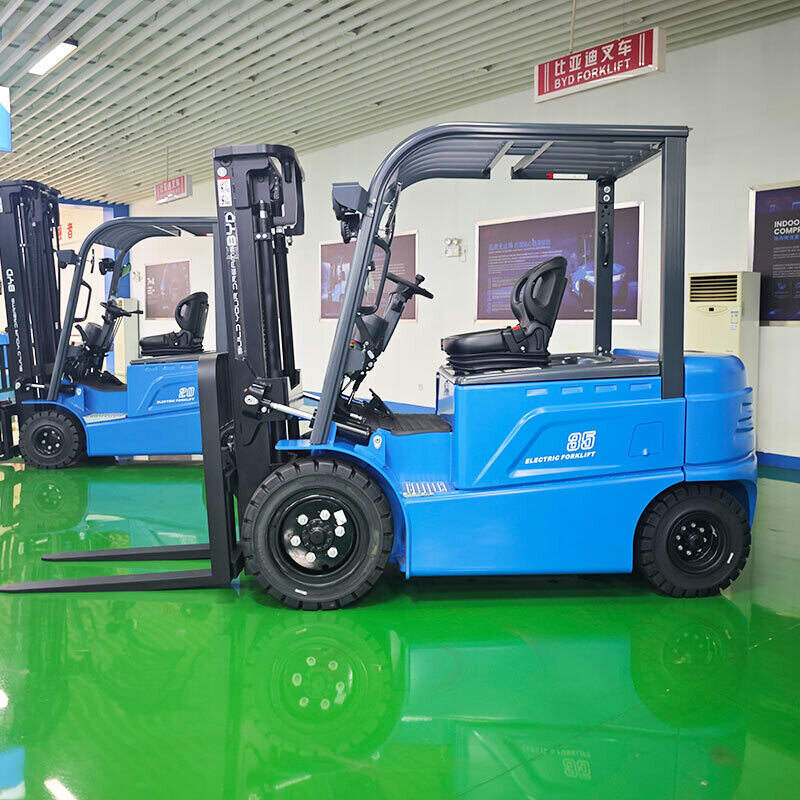
Against the background of the continuous promotion of low-carbon logistics concepts in the industrial sector, electric forklifts have become one of the most widely used material handling equipment in closed storage, manufacturing workshop and commercial distribution scenarios in recent years. Many frontline operators and warehouse management teams still have room to further improve the utilization efficiency of such equipment, to give full play to its inherent performance advantages in actual production.
Core Value of Standardized electric forklift Application
Compared with traditional fuel-powered handling equipment, properly used electric forklifts produce no local exhaust emissions during operation, generate significantly lower running noise, and can better adapt to the air quality and noise control requirements of enclosed operation spaces. Reasonable operation habits can effectively reduce unnecessary energy consumption, extend the single continuous working time of the equipment, and avoid frequent power loss situations that interrupt the normal operation rhythm of the whole warehouse. Good usage habits also help reduce the wear rate of core components, so that the equipment can maintain stable operation performance in longer service cycles.
Key Operation Specifications for Daily Use
Before each shift of formal operation, operators need to complete a quick inspection of core components, including the sensitivity of the braking system, the remaining power display, and the surface deformation of the cargo forks, to rule out hidden dangers before loading and transporting goods. During the driving process, operators need to properly control the driving speed according to the actual ground condition and the density of surrounding passing personnel, slow down in turning areas and passage intersections, and avoid long-time full-load climbing operations that put too much pressure on the power system. When the equipment is idle for more than 10 minutes, the power system should be switched to the standby state in time to avoid invalid energy consumption.
Routine Maintenance Strategies to Prolong Service Life
After each shift is completed, operators can wipe off the dust, scattered cargo residues and oil stains attached to the surface of the body, to prevent corrosive substances from eroding the shell and circuit connectors. Regularly check the connection points of the power battery to confirm there is no oxide accumulation or loose contact, and check the sealing performance of the hydraulic lifting system to avoid liquid leakage that affects the stability of cargo lifting. It is not recommended to use mismatched charging accessories for frequent over-fast charging, which may cause irreversible loss to the internal cell structure and reduce the total cycle life of the power battery. For warehouse management teams that use electric forklifts for a long time, forming a complete set of standardized operation and maintenance processes can effectively reduce the comprehensive operation cost of material handling links, and create a more stable and safe working environment for frontline operators.


