English
 简体中文
 Русский
 Français
 Português
 Español


Most enterprises take the upfront purchase price as the core reference when planning material handling equipment procurement, but this evaluation method usually ignores multiple hidden costs during the full service cycle of forklifts, and cannot help teams obtain expected return on investment. To calculate the total cost of a lithium-ion forklift objectively and accurately, you need to cover all links from purchase landing to end-of-life recycling, to get reliable reference data for procurement decision making.
The first part of the total cost calculation refers to the initial one-time investment, including the main body of the forklift, supporting dedicated charging equipment, necessary safety auxiliary accessories, as well as transportation and on-site debugging expenses. Many users will directly compare the nominal price of lithium-ion forklifts with traditional lead-acid models without calculating the cost of spare batteries required for multi-shift operation of lead-acid forklifts, which will lead to a big deviation of the initial cost data.
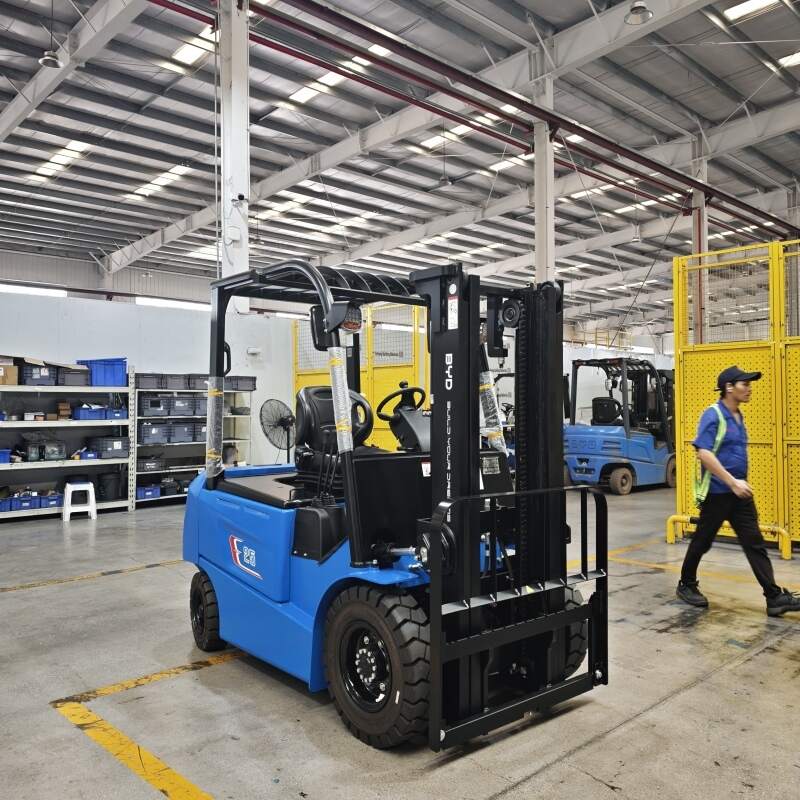
The second core part is the daily operating cost within the service cycle, which covers electricity consumption, maintenance expense and labor input. Lithium-ion forklifts have higher energy conversion efficiency, which can reduce the total power consumption per unit of working time to a relatively low level. Unlike traditional forklifts that need regular water replenishment, electrolyte detection and related vulnerable part replacement, lithium-ion forklifts require far less maintenance labor and material cost. Besides, lithium-ion forklifts support fast opportunistic charging, which does not need frequent whole battery replacement between shifts, saving extra labor input for battery handling and storage.
The third part covers residual value and hidden cost. Lithium-ion batteries have longer cycle life, so the residual value of the whole equipment at the end of service life is higher than that of traditional lead-acid forklifts. In addition, lithium-ion forklifts have zero on-site emission, which will not produce extra waste treatment cost or environmental compliance rectification expense for the warehouse team. It also reduces the unexpected production downtime caused by long charging and cooling period of traditional lead-acid forklifts.
As a professional new energy material handling equipment service provider, Jian Shu New Energy focuses on BYD electric forklifts. If you need a targeted total cost calculation solution for your specific operation scenario, you can send an email to [email protected] for professional custom support.