English
 简体中文
 Русский
 Français
 Português
 Español


Food and beverage operation scenarios have unique requirements for on-site material handling, covering food safety compliance, narrow space utilization, low emission operation and all-scenario accessibility. A 3-wheel electric forklift, as a flexible, zero-emission handling tool, can be taken as the core to build a scientific, systematic facility planning scheme that matches the whole operation flow.
The first step of planning is to optimize the channel layout of storage and operation areas. Different from bulky traditional handling equipment, the 3-wheel electric forklift features excellent steering flexibility, which allows you to narrow the reserved working channel width reasonably on the premise of ensuring operation safety. Such adjustment can effectively increase the number of available storage racks within the limited facility area, raise the overall storage capacity without expanding the site area, and create a larger buffer space for peak production and shipment periods. As the whole operation process produces no exhaust gas, it will not cause hidden pollution risks to raw food materials, semi-finished products and packaged finished goods stored in the adjacent areas, which fully meets the basic requirements of food hygiene management.
The second step is to connect the full operation flow with the performance characteristics of the 3-wheel electric forklift. You can sort out the whole flow from raw material unloading at the platform, cross-region transfer between production workshops, semi-finished product temporary storage, to finished product outbound shipment, and mark all the access points, turning areas and temporary operation positions on the facility layout drawing. The compact body of the 3-wheel electric forklift can smoothly pass through the transition zones between different functional areas of the food and beverage facility, and its low-noise operation feature will not interfere with normal production and on-site staff work. The whole vehicle has no oil leakage risk in normal operation, which will not pollute the ground of production areas that have strict cleaning and sanitation requirements.
The third step is to add reasonable supporting facility planning around the core handling equipment. You can set up a special charging and daily maintenance area in the independent zone that keeps a safe distance from food processing and storage areas, to avoid unnecessary cross interference between equipment maintenance operation and food production activities. The charging area can be equipped with corresponding fire protection and ventilation facilities according to actual demand, to form a complete closed-loop operation logic that covers equipment use, maintenance and management. Such planning can effectively reduce unnecessary redundant operation links, lower long-term operation cost, and bring stable and reliable handling support for daily operation.
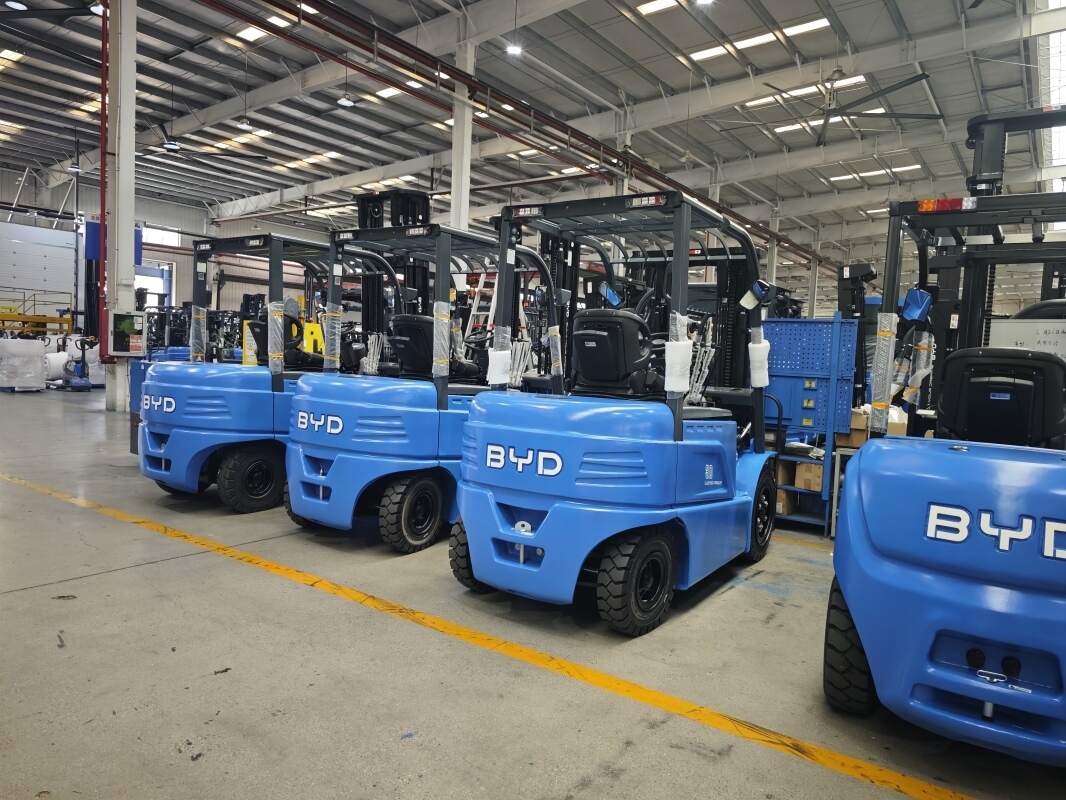
Sharp Tree New Energy focuses on BYD electric forklifts. If you have related demand for facility planning consultation or product matching, you can contact us via [email protected] for professional customized support.