English
 简体中文
 Русский
 Français
 Português
 Español


Counterbalance forklift, as one of the most widely used material handling equipment in modern logistics, manufacturing and warehousing scenarios, relies on the counterweight design at the rear of the vehicle to offset the load weight lifted by the front forks, so as to realize stable handling and stacking of heavy goods. Compared with traditional internal combustion counterparts, electric counterbalance forklifts feature zero local emission, low operation noise and lower long-term use cost, which are more suitable for closed workshops, food processing scenarios and environment-sensitive working areas.
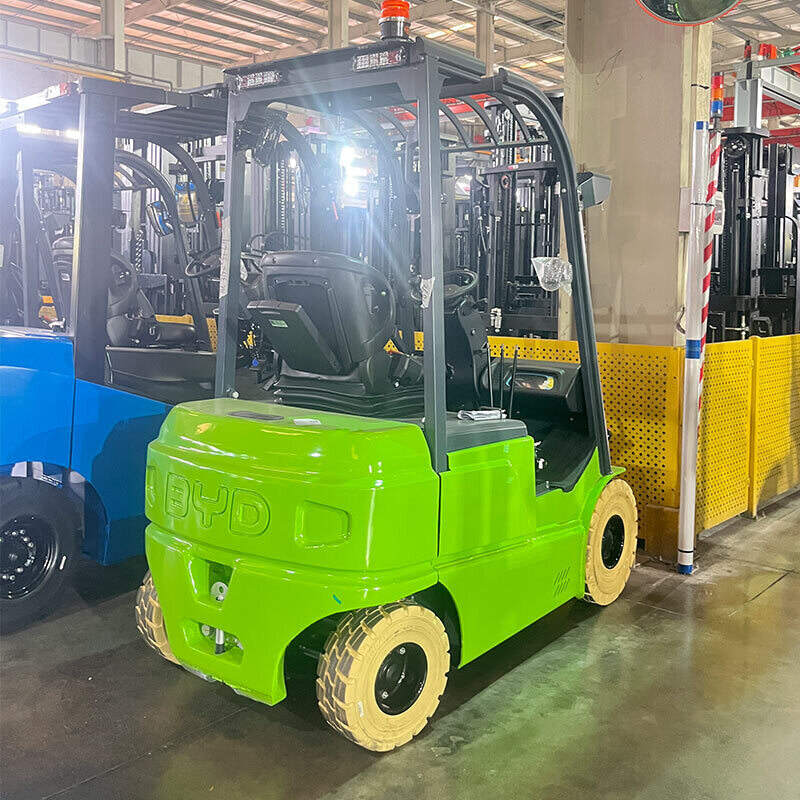
Before formal operation, you need to complete a full pre-shift inspection to eliminate potential hidden risks. First, check the remaining battery power to ensure it can support the whole day's operation without sudden power off in the middle of the task. Second, test the braking system, steering sensitivity and lifting function of the forks to confirm no lag or abnormal response. Third, check the fork surface for obvious deformation, the tire pressure and wear condition, as well as the effectiveness of the safety warning light and horn.
During the operation process, you need to strictly follow standardized safety specifications. Never exceed the rated load of the equipment, and keep the goods within the specified load center distance range to avoid tipping risk. When driving on flat ground, keep the forks 10cm to 15cm above the ground, and lift the forks to proper height only when you need to stack or unload goods. Do not turn on sloped roads, do not carry extra personnel on the vehicle, and slow down and honk when passing through intersections or areas with blocked sight.
Reasonable daily maintenance can effectively extend the service life of the counterbalance forklift and reduce long-term operation cost. For the power system, avoid overcharging or full discharge of the battery, keep the surface of the power electrode dry and clean, and avoid liquid intrusion. Check the hydraulic system regularly for oil leakage, and replace the hydraulic oil according to the specified cycle. If the equipment is left unused for a long time, store it in a dry and ventilated environment, and keep the battery power at about 50% to avoid power loss damage.
For users who are preparing to purchase or replace counterbalance forklifts, you can select appropriate parameters according to your actual working scenarios, including maximum daily handling load, minimum width of operation channel, maximum required lifting height, and whether there is outdoor rainproof use demand. This guide is provided by Jianshu New Energy, we focus on BYD electric forklift related services, if you have any product consultation or technical support demand, you can send email to [email protected] for professional reply.