English
 简体中文
 Русский
 Français
 Português
 Español


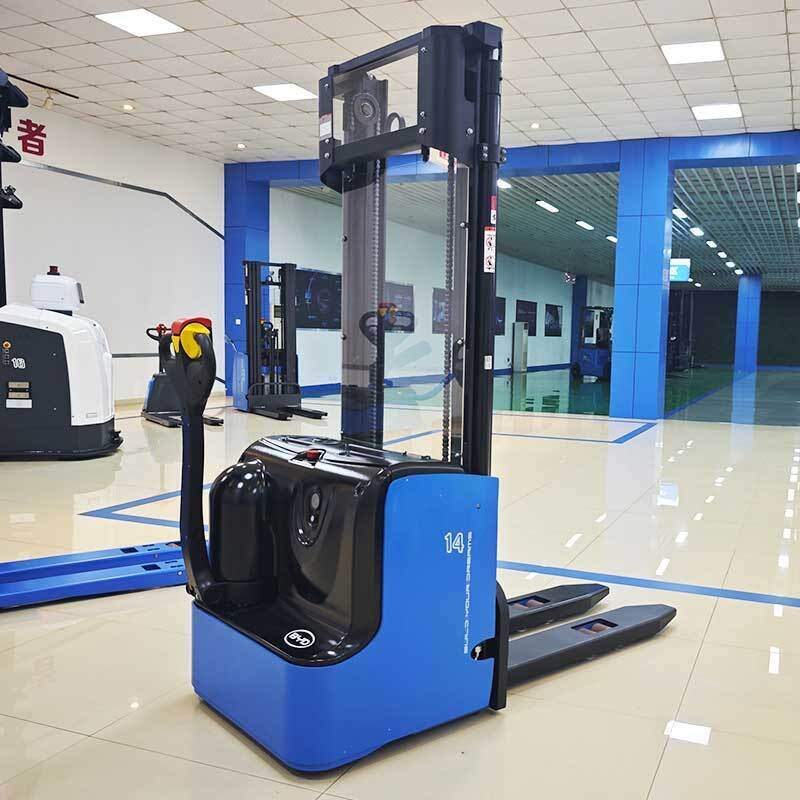
Many logistics, manufacturing and warehouse operations rely on material handling equipment to support daily workflow, but a lot of teams may not notice that their existing fleets no longer match the current operational demand. We sort out 5 obvious and practical signals to help operators judge whether it is the proper time to introduce a BYD lithium forklift to upgrade their daily work system.
The first sign is that your team suffers from frequent unplanned downtime. A lot of traditional handling equipment requires long-time charging, regular fluid replenishment, frequent parts inspection and other routine operations, which may take up more than 2 hours of working time every day. BYD lithium forklift eliminates most of the daily maintenance procedures, supports fast opportunity charging during shift breaks, and effectively reduces unnecessary downtime that affects daily work progress.
The second sign is that your long-term operational cost of handling equipment keeps growing at a non-negligible rate. Traditional fuel-powered equipment generates continuous fuel cost, regular oil replacement, filter replacement and other consumable cost. Ordinary lead-acid equipment needs to do periodic equalization charging, battery cell maintenance and other works. BYD lithium forklift has no such extra consumable consumption, and the total cost in the full use cycle can get reasonable control compared with traditional equipment.
The third sign is that your work site has strict requirements for low emission and low running noise. For scenes such as enclosed food processing workshops, cold chain storage facilities, and indoor retail distribution centers, open exhaust gas and high running noise of traditional equipment will affect the working environment of on-site staff and the safety of stored goods. BYD lithium forklift realizes zero tail gas emission, and the running noise is controlled at a low level, which can well meet the operation standards of these special scenarios.
The fourth sign is that your operation has 2 to 3 consecutive working shifts per day. For most multi-shift operation scenarios, traditional lead-acid forklifts need to be equipped with 2 to 3 sets of spare batteries to support long-time operation, which takes up extra storage space for battery replacement and charging. BYD lithium forklift supports high-power fast charging, which can get enough power supplement within 1 hour of break, no spare battery is needed to cover the whole multi-shift work time, saving extra space occupation.
The fifth sign is that your on-site operators have frequent feedback about equipment stability and potential safety risks. Old handling equipment that has been used for years may have problems such as aging circuit, reduced brake sensitivity and marked actual working range lower than rated value, which will bring hidden risks to on-site operation. BYD lithium forklift is equipped with battery system with multiple layers of safety protection structure, the whole vehicle is calibrated to adapt to high-frequency and heavy-load daily use, the operation stability meets the general industrial use standards.
If you find one or more of the above situations match your actual operation status, you can start to evaluate the feasibility of introducing new lithium handling equipment. As Jian Shu New Energy, we focus on providing professional BYD electric forklift products and supporting services for different industrial and logistics scenarios. For more detailed product and scheme consultation, you can contact us via [email protected].