
 English
 简体中文
 Русский
 Français
 Português
 Español


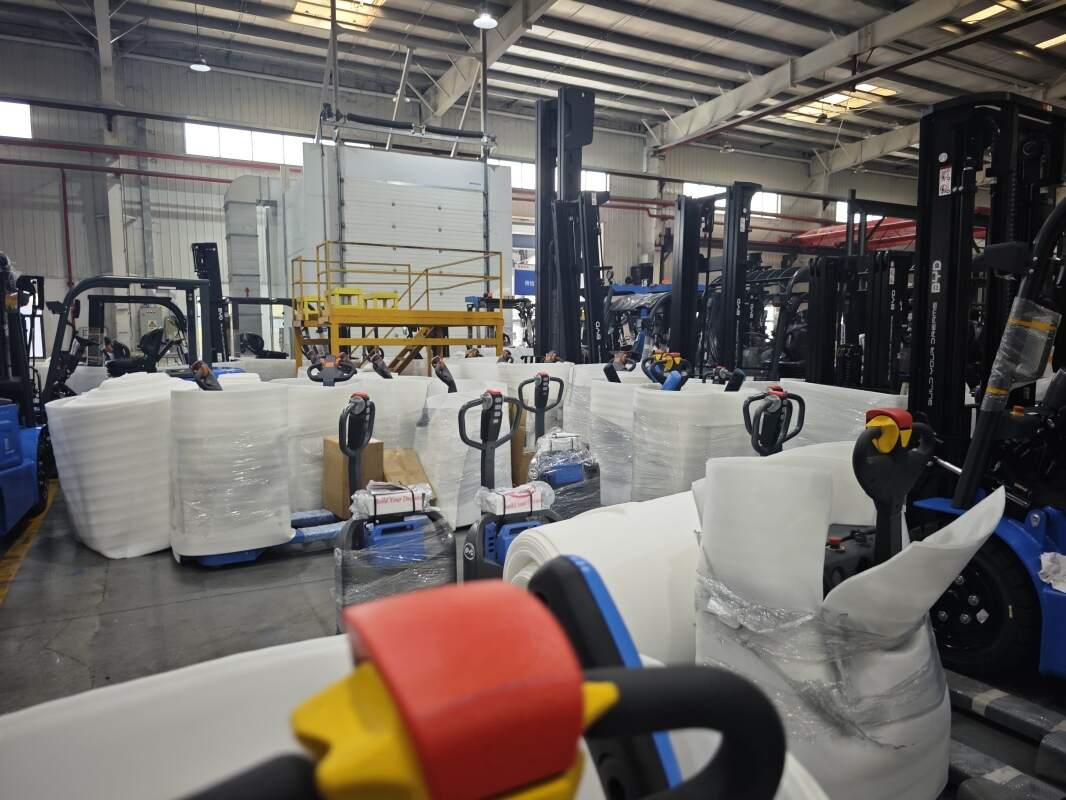
As low-carbon transformation becomes the core trend of modern industrial logistics, electric forklifts have become one of the most widely applied material handling equipment in warehouse, manufacturing and distribution scenarios. Mastering scientific operation, maintenance and optimization methods can help teams maximize the value of equipment inputs while ensuring on-site operation safety.
Core Standard Operation Specifications for Daily Use
Before each start of operation, operators need to complete a full pre-inspection covering remaining battery level, brake responsiveness, lifting component flexibility and safety accessory integrity, to eliminate hidden risks before formal work. During the operation process, operators should strictly follow the rated load limit, avoid sharp acceleration or sudden steering under heavy load state, and send proper warning signals in narrow aisles or areas with dense pedestrian flow to avoid collision with shelves, stacked goods or surrounding staff. Unmodified operation behaviors that exceed the designed working parameters of the equipment should be avoided in the whole operation process.
Targeted Daily Maintenance Framework
Regular targeted maintenance can effectively extend the service life of electric forklifts and reduce unexpected downtime. For the power system, operators should avoid over-discharging the battery to an extremely low level, and keep the charging process continuous as much as possible, wiping dust and stains on the electrode surface regularly to avoid poor contact. For the hydraulic and transmission system, teams need to check the sealing performance of oil pipelines regularly, add anti-wear lubricant to all movable connection parts on schedule, and replace worn walking tires in time to keep the driving stable.
Scene-based Efficiency Improvement Strategies
According to different application scenarios, teams can make targeted adjustments to further improve the comprehensive operation efficiency. For low-temperature cold storage scenarios, it is suggested to properly adjust the pre-heating process before operation to adapt equipment performance to the ambient temperature. For long-hour continuous operation scenarios, managers can arrange reasonable battery replacement intervals and optimized operation routes, to reduce invalid empty driving mileage and cut unnecessary energy consumption. Proper scheduling of equipment shifts can also balance the operation load of each unit, avoiding long-term continuous overworking of single equipment. All these practical skills are easy to implement for most industrial teams, which can help enterprises reduce long-term operation cost, promote the smooth flow of on-site materials, and better match the development demand of modern green industrial logistics.


