
 English
 简体中文
 Русский
 Français
 Português
 Español


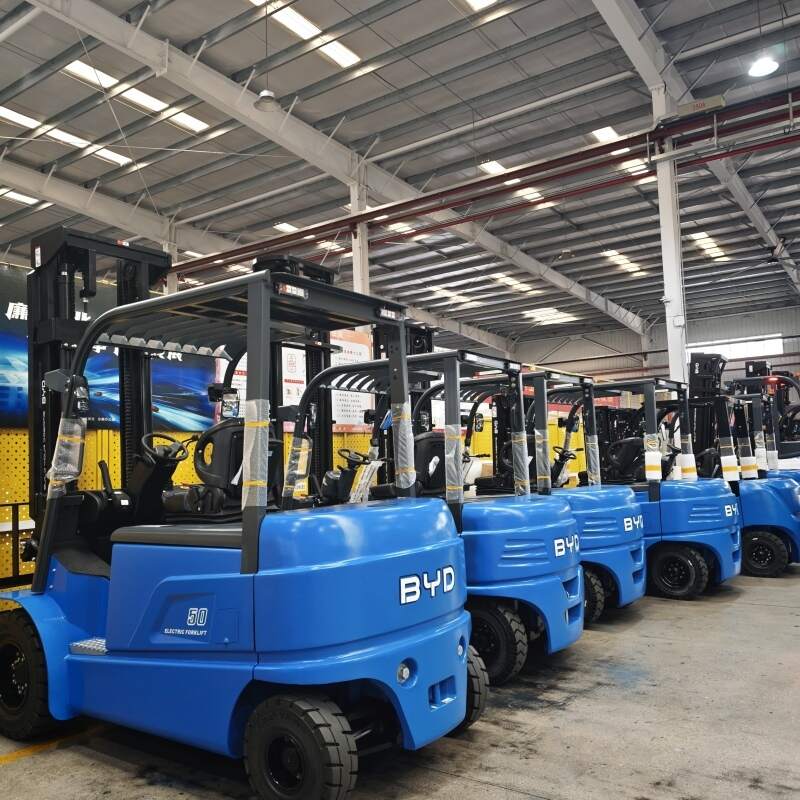
With the continuous promotion of low-carbon logistics concepts, electric forklifts have been widely applied in scenarios such as closed warehouses, manufacturing workshops, cold chain storage and retail distribution centers. Compared with internal combustion counterparts, such equipment features lower operating noise, zero on-site emissions and relatively lower long-term operation cost, but its service life and actual operation effect are closely related to users’ correct operation habits and daily maintenance specifications.
Standard Pre-operation Safety Check Procedures
Before starting the equipment for daily work, operators need to complete a series of standardized inspection steps first to eliminate hidden risks in advance. First, check the remaining battery level to confirm that the power is sufficient to support the full-day operation task, and confirm that the battery connection interface has no corrosion or loose wiring. Second, test the sensitivity of the braking system, steering handle and lifting control lever, check the wear degree of the load-bearing chain and the tire surface, and confirm that the warning light and sound prompt device of the equipment can work normally. Third, inspect the surrounding working area to remove obstacles and remind irrelevant personnel to stay away from the operation range, and avoid driving the device on the ground with accumulated water, ice or obvious pits at high speed. Operators are not allowed to carry extra personnel on the equipment, and it is not allowed to extend any part of the body outside the operation compartment during driving.
Scientific Daily Maintenance Specifications
Standardized daily maintenance can effectively extend the service life of electric forklifts and reduce unnecessary failure downtime. For the power battery module, users should avoid over-discharging the battery to the state of automatic shutdown, and keep the charging environment ventilated and dry, do not cover the heat dissipation holes of the charger during the charging process. Operators need to regularly clean the dust and debris accumulated on the surface of the drive motor and heat dissipation components, to avoid affecting the normal heat dissipation effect of the equipment. Check the liquid level of the hydraulic oil regularly, replenish the hydraulic oil that meets the specified specifications in time when the liquid level is lower than the standard line, and apply lubricating grease to the rotating connection parts and the lifting chain on schedule to reduce frictional wear.
Efficiency Optimization Tips for Common Application Scenarios
In the narrow channel operation scenario, operators should control the driving speed below the safe specified value, and complete the turning action after confirming that there is no obstacle in the turning range. When lifting heavy loads, the center of gravity of the goods should be kept within the rated load range of the forks, and overloading is strictly prohibited to avoid the risk of goods falling or equipment tipping. When the equipment needs to be stored for more than two weeks, the battery should be adjusted to 50% to 60% power state, and placed in a dry, cool and ventilated storage area, avoiding long-term exposure to extreme high temperature or low temperature environment. Following these standardized operation rules can help enterprises give full play to the performance advantages of electric forklifts, improve the overall efficiency of material handling, and create a safer working environment for frontline operators.


