
 English
 简体中文
简体中文 Русский
 Français
 Português
 Español

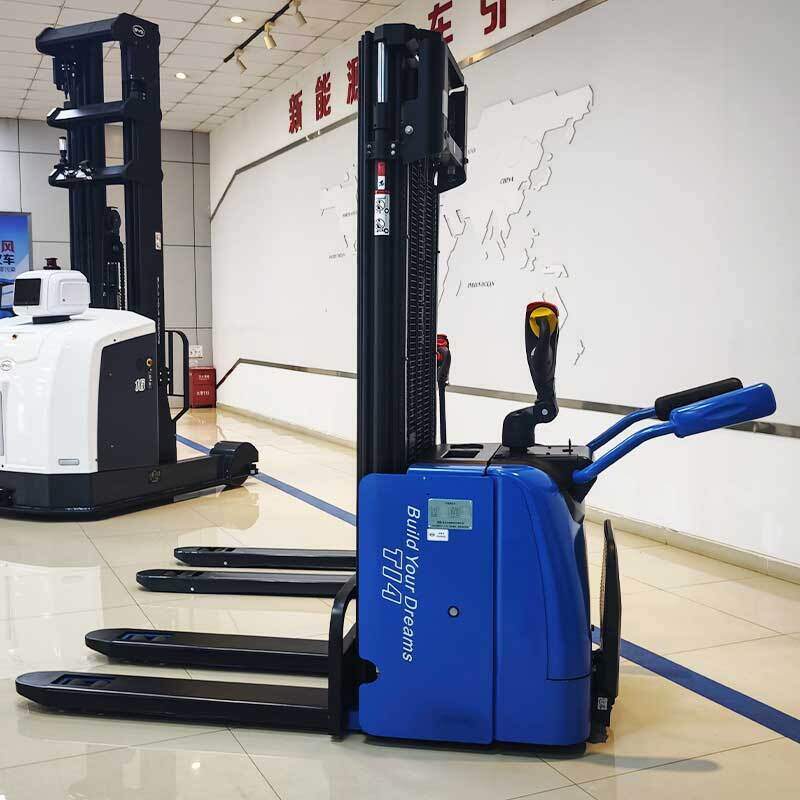
Against the backdrop of growing low-carbon logistics demand, electric forklifts have become one of the most widely applied material handling equipment in modern warehouse, manufacturing and distribution scenarios. For frontline operators and logistics managers, mastering correct operation, maintenance and optimization methods can help bring stable performance of the equipment and reduce unnecessary operating costs.
Core Advantages of Modern Electric Forklifts
Different from traditional internal combustion handling equipment, electric forklifts run on stored electrical energy, which produce no exhaust emission during operation, and generate relatively low working noise that will not cause excessive disturbance to indoor working environment. Most current models adopt integrated power control modules, with adjustable operation response sensitivity to adapt to different working proficiency of operators, and the overall operation threshold is relatively friendly for new practitioners. The energy consumption cost per unit working hour is usually lower than that of fuel-powered counterparts, which fits the daily operation demand of most small and medium-sized logistics sites.
Standard Daily Operation Guidelines
Before starting each shift of operation, operators need to conduct basic inspection on the core components of the equipment, including the remaining power level of the power pack, the flexibility of lifting and tilting mechanism, the sensitivity of braking system, and the normal operation status of lighting and warning devices. During the operation process, operators need to keep the load within the rated load range specified in the equipment manual, avoid sharp steering on uneven ground, and do not carry out over-height stacking operation beyond the allowable load center distance. When the equipment gives a low power warning, operators should arrange to return to the designated charging area in time, and avoid forced operation under low power status that may cause damage to the power system.
Routine Maintenance Tips to Extend Service Life
Regular maintenance work can effectively reduce the failure rate of electric forklifts in long-term use. Operators need to wipe the surface of the power contact points regularly to avoid dust accumulation that may cause poor conductivity, and check the wear degree of tire tread every 100 working hours, replace the tires when the wear depth reaches the specified threshold to avoid slipping risk during handling. The hydraulic oil inside the lifting system should be replaced according to the cycle specified in the official operation manual, and the interior of the control cabinet should be kept dry to avoid moisture erosion that affects the normal operation of electronic components.
Efficiency Optimization Strategies for Warehouse Scenarios
To further improve the working efficiency of electric forklifts, site managers can plan a reasonable fixed access path for handling operation, arrange the designated charging and parking area at the position close to the high-frequency operation area, to reduce the unnecessary empty driving distance. For multi-shift operation sites, adopting reasonable rotation charging arrangement can ensure that the available power of each equipment meets the operation demand of each shift, and reduce the waiting time caused by power exhaustion.


