
 English
 简体中文
 Русский
 Français
 Português
 Español


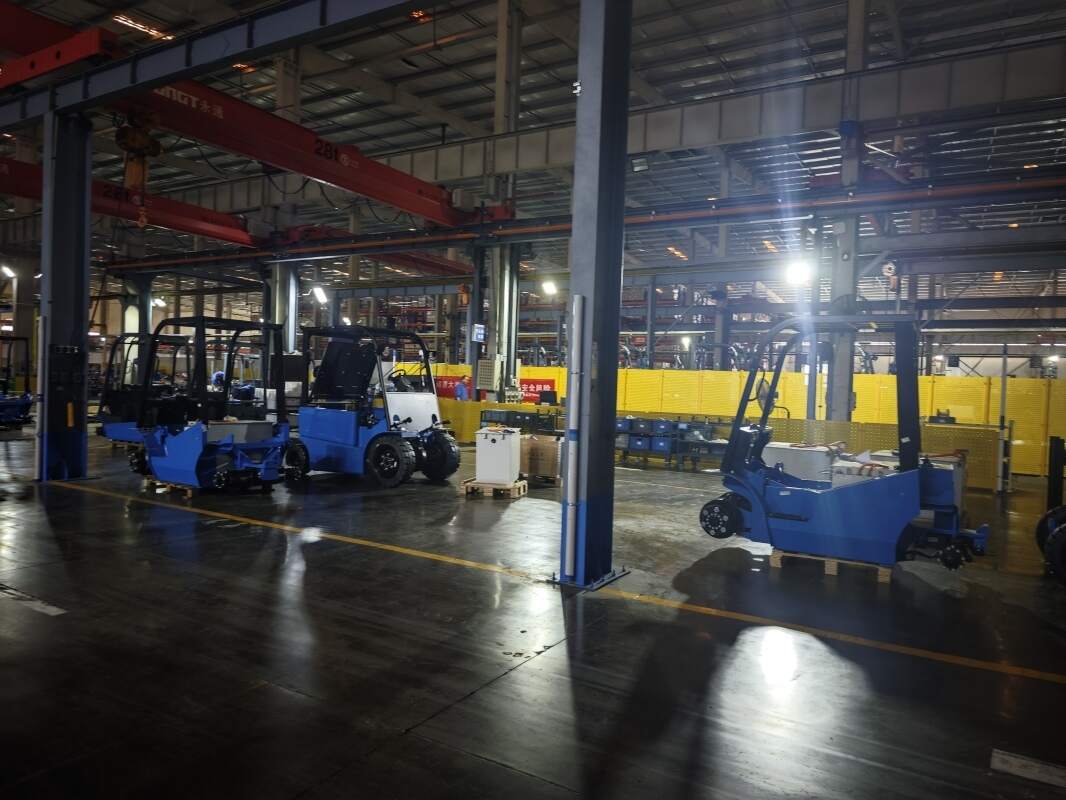
Against the background that more industrial and warehouse scenarios are shifting towards low-carbon and low-noise operation modes, electric forklifts have become one of the most widely used core equipment for indoor and short-distance outdoor material handling. Many frontline operators and management personnel still have room to further optimize the whole-cycle usage of such equipment to balance safety performance, service life and operational cost.
Core Daily Safe Operation Guidelines
Before each shift of operation, operators need to complete basic inspection procedures to confirm the remaining battery power, braking system sensitivity, steering flexibility, fork surface wear condition and warning light status. During the operation process, users should avoid carrying loads beyond the rated load capacity of the equipment, slow down the speed when passing corners or narrow aisles, do not drive transversely on sloped roads, and strictly prohibit carrying irrelevant personnel on the equipment. Operators also need to keep a safe distance from surrounding shelves, personnel and other operating equipment to avoid accidental collision risks.
Routine Maintenance Tips to Extend Equipment Service Life
Regular standardized maintenance can effectively reduce the probability of unexpected equipment failure in the working process. For the core power battery component, operators should avoid overcharging or deep discharging the battery for a long time, clean the dust and residual electrolyte on the battery surface regularly, and carry out supplementary charging once a month if the equipment is left idle for a long time. It is also necessary to check the heat dissipation performance of the driving motor regularly, confirm there is no liquid leakage in the hydraulic lifting system, and conduct a full range of component calibration every three to six months according to the actual operating intensity.
Feasible Methods to Improve Operational Efficiency
To give full play to the performance advantages of electric forklifts, the management team can reasonably plan the internal driving routes of the warehouse to reduce unnecessary repeated driving, select appropriate supporting fixtures according to different types of handling goods to expand the applicable scenarios of the equipment. Regular skill training for frontline operators can also help them form more energy-saving operation habits, and the operation log of each equipment can be established to track the energy consumption data under different working conditions, so as to arrange the work schedule more reasonably and avoid overloading the equipment during peak hours. Reasonable matching of equipment performance and actual demand can create more stable value for the whole material handling process.


