
 English
 简体中文
 Русский
 Français
 Português
 Español


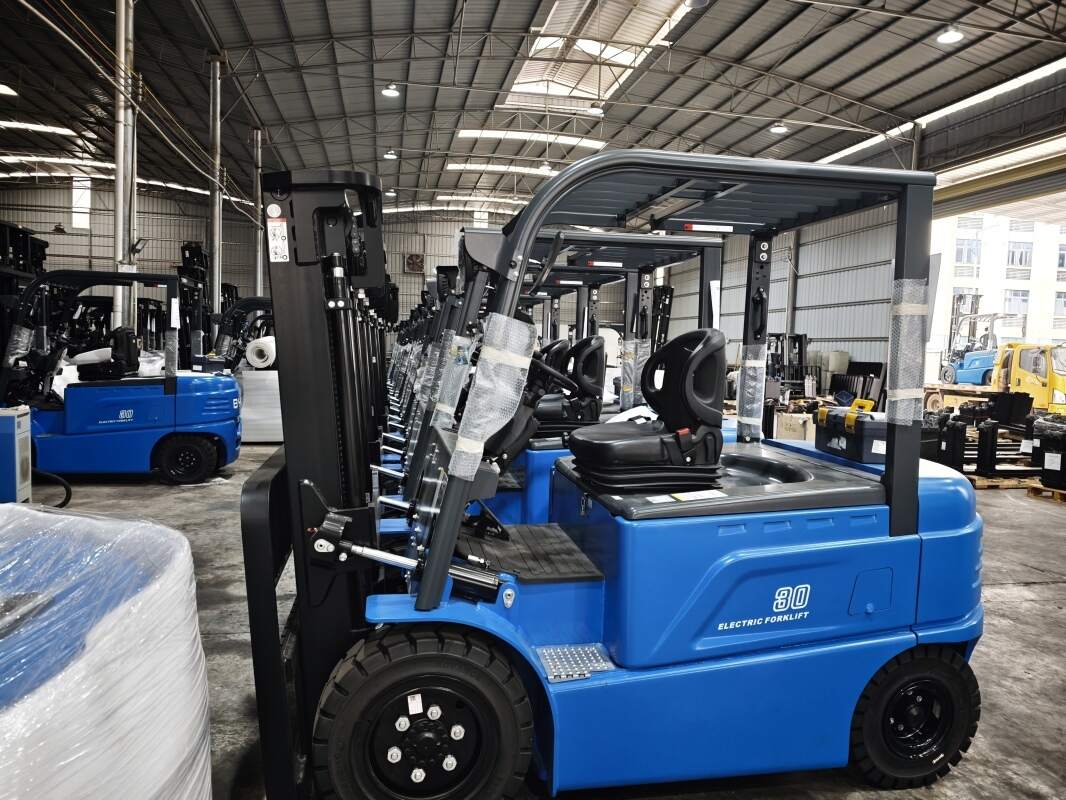
With the growing demand for low-carbon and efficient material handling in modern industrial and warehousing sectors, electric forklifts have gradually become a core equipment choice for most operation scenarios, as they feature lower noise emission, zero on-site exhaust and relatively lower long-term operation cost compared with internal combustion counterparts. Reasonable mastery of relevant operation and maintenance knowledge can help teams give full play to the equipment’s advantages and create higher operation value.
Core Performance Characteristics of Standard Electric Forklifts
Different from fuel-powered handling equipment, electric forklifts rely on on-board power storage units to provide power for walking, lifting and steering systems. Most mainstream models adopt modular power output design, which can adjust output power dynamically according to actual load weight and operation frequency, to avoid unnecessary energy loss during idle operation. The whole mechanical transmission structure is relatively simpler, which reduces the number of vulnerable moving parts to a large extent, and cuts the daily wear and tear caused by frequent mechanical friction. Most models can keep stable operation state under the load range marked on the nameplate, and meet the basic handling demands of most conventional warehousing scenarios.
Routine Operation and Maintenance Guidelines
Daily maintenance work for electric forklifts does not require complex professional operation procedures, most frontline operators can complete basic inspection work within 10 to 15 minutes before each shift. The core inspection items mainly include checking the remaining power level of the power storage unit, confirming the tightness of each connecting cable, testing the flexibility of the braking and steering system, and wiping the dust and sundries accumulated on the surface of the power dissipation module. It is not recommended to keep the equipment in full load operation state for more than 2 consecutive hours under high ambient temperature, which can effectively extend the overall service life of core components.
Scenario Adaptation and Efficiency Improvement Tips
For different operation scenarios, users can adjust the corresponding operation parameters of electric forklifts properly to get better use experience. For narrow aisle operation scenes in finished goods warehouses, operators can activate the low-speed precise control mode to ensure the operation safety when handling high-value fragile goods. For outdoor flat yard operation in low temperature environment, preheating the power unit for 3 to 5 minutes before formal operation can help the equipment reach the optimal power output state faster. Staff can also make reasonable operation schedule according to the actual power consumption data of each shift, to arrange the charging time in the non-peak operation period, so as not to affect the normal daily material handling rhythm.


