
 English
 简体中文
 Русский
 Français
 Português
 Español


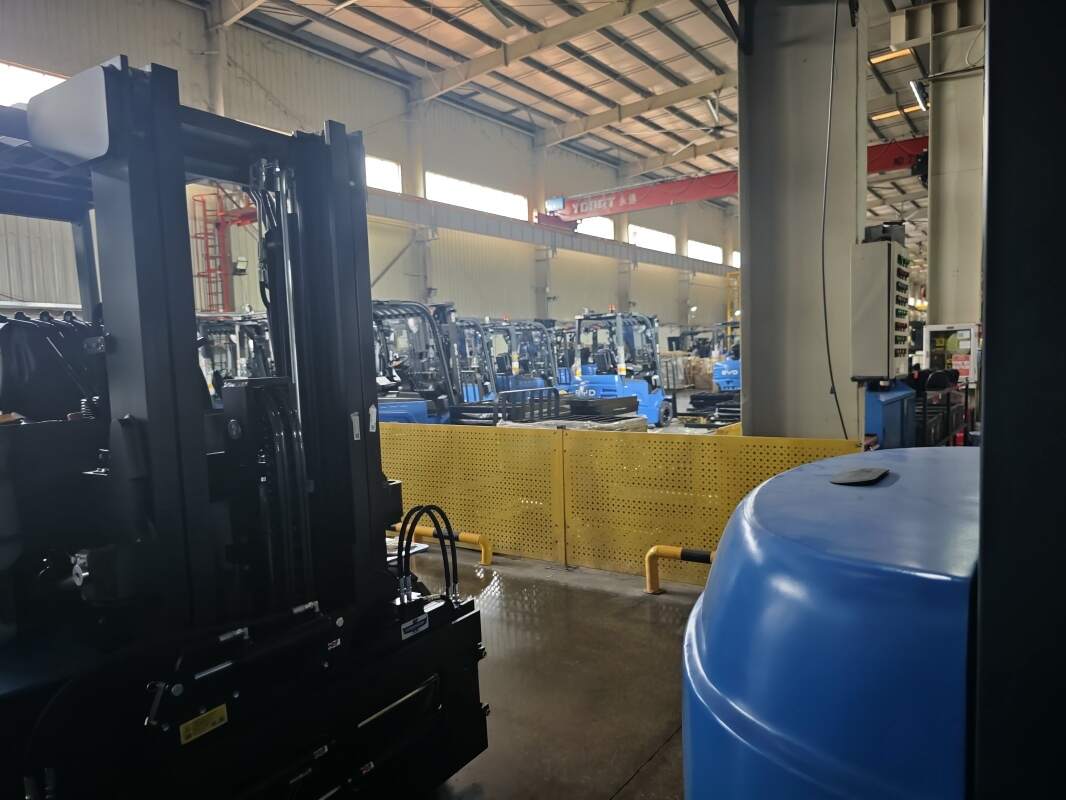
As low-carbon logistics becomes the mainstream trend of modern industrial operation, electric forklifts have become one of the most widely used material handling equipment in closed operation scenarios such as warehouses, manufacturing workshops and distribution centers. Different from internal combustion forklifts, electric forklifts rely on battery power output, with relatively low noise and zero local exhaust emission, which can better meet the environmental protection requirements of enclosed working spaces.
Basic Operation Specification for New Operators
Before formal operation, operators need to complete systematic safety training to get familiar with the basic parameters of the equipment, including load center, maximum lifting height and rated load weight. It is not recommended to operate the equipment beyond the rated load range for a long time, otherwise it will cause extra pressure on the lifting hydraulic system and power drive components. Before each shift, operators need to check the remaining power of the battery, the flexibility of the steering system, the braking performance and the surface condition of the fork, and timely deal with hidden problems found, rather than carry the defects to work. When driving in the warehouse channel, operators need to control the driving speed at a reasonable range, keep a safe distance from surrounding shelves, personnel and stacked goods, and avoid sudden braking or sharp steering as much as possible.
Daily Maintenance Points to Extend Equipment Service Life
Reasonable daily maintenance can effectively reduce the failure rate of electric forklifts and prolong the overall service cycle of the equipment. For the power battery part, operators need to follow the corresponding charging specification, avoid deep discharge as much as possible, and place the battery in a cool and ventilated area for charging, to avoid high temperature or humid environment affecting the performance of the battery pack. It is also necessary to regularly clean the dust and sundries accumulated on the surface of the motor and controller, check the tightness of each wiring harness interface, and prevent poor contact caused by long-term vibration in the operation process. For the hydraulic lifting system, regular inspection of the hydraulic oil level and sealing performance of the oil circuit can avoid the phenomenon of slow lifting or non-smooth descent of the fork in the use process.
Efficiency Optimization in Daily Material Handling Scenarios
To give full play to the performance advantages of electric forklifts, the logistics management team can adjust the layout of operation channels and the storage location of goods according to the parameters of the equipment, so as to reduce the unnecessary turning and walking distance of the equipment in the handling process. For the operation mode of multi-shift continuous work, the corresponding battery swapping preparation mechanism can be configured reasonably, which can reduce the waiting time caused by charging and ensure the continuous operation of the material handling link. In the long run, standardized operation and refined management can help enterprises control the comprehensive operation cost of electric forklifts, and better match the low-carbon and high-efficiency development goals of modern logistics systems.


