
 English
 简体中文
简体中文 Русский
 Français
 Português
 Español

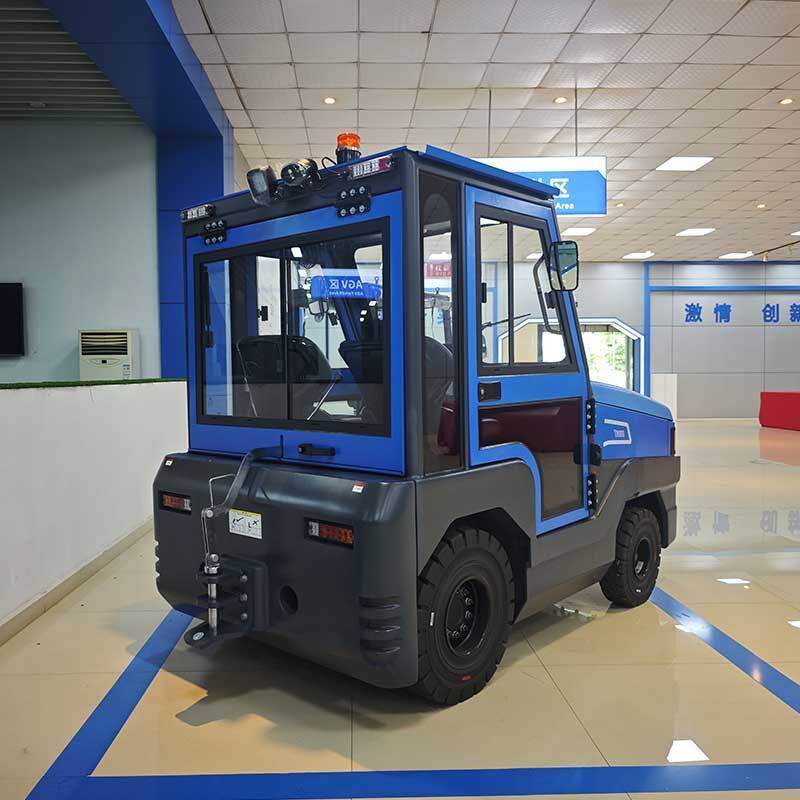
As low-carbon logistics development becomes the mainstream trend in the material handling industry, electric forklifts have gradually become a common configuration for most medium and large warehouse scenarios. Many operation and management personnel still have confusion about how to give full play to the performance of such equipment without unnecessary resource waste, and systematic application guidance can help teams obtain more stable use experience.
Core Performance Features Suitable for Scenario Expansion
Unlike internal combustion counterparts, electric forklifts rely on electric power drive systems, which produce almost no exhaust emissions during operation, and the overall operating noise level is controlled within a relatively low range. This feature makes them suitable for closed warehouse spaces, food storage areas, and other scenarios that have strict requirements for air quality and ambient noise. The structure of the power system also avoids the fuel supply and exhaust pipeline settings of traditional equipment, so the overall spatial footprint of the equipment can be optimized properly to adapt to narrower passage layouts in new-type warehouses.
Standard Operation Norms to Guarantee Daily Use Safety
Before each formal operation, operators need to check the remaining power status, the flexibility of the lifting mechanism, and the sensitivity of the braking system first, and do not start the operation when any abnormal indicator appears. During the handling process, the load weight should be controlled within the rated load range marked on the equipment body, and the goods should be placed in the center of the fork frame as much as possible to avoid rollover risks caused by unbalanced load center. When driving on narrow passageways, operators need to slow down in advance and pay attention to the surrounding passing personnel and stacked goods to avoid accidental collisions.
Routine Maintenance Strategies to Reduce Long-term Operating Costs
After each shift, operators need to wipe the dust and residual sundries on the surface of the equipment, check the connection status of the power interface, and arrange regular charging according to the specifications to avoid deep power loss that may cause irreversible damage to the power battery. The lubrication points of the transmission and lifting structure should be supplemented with professional lubricating oil on a regular basis, and the worn parts should be replaced in time in accordance with the equipment manual, which can effectively extend the stable service cycle of the whole machine. Proper use and maintenance arrangements can help logistics teams steadily improve the overall efficiency of material handling, and create more practical value for daily warehouse management.


