简体中文
 Русский
 Français
 Português
 Español
 لالعربية


As electric forklifts are widely used in warehousing, manufacturing and logistics distribution scenarios, battery charging safety has become a non-negligible core link in daily operational management. Improper charging operations may cause equipment damage, operation interruption or even potential safety hazards, so the management team needs to clarify and implement standardized rules covering all links of the charging process.
First, ensure the charging area meets basic safety requirements. The dedicated charging zone should be set in a well-ventilated space far from flammable, explosive or corrosive items, with obvious warning signs to prevent unrelated personnel from entering by mistake. The ground of the charging area is made of anti-slip and corrosion-resistant materials, equipped with fire fighting facilities that meet national safety standards, and no sundries or working tools are allowed to stack around the charging position, to reserve sufficient safe operation space for staff.
Second, standardize pre-charging inspection and personnel operation management. All staff responsible for forklift charging must receive professional safety training to master correct operation procedures and emergency response methods. Before starting charging, operators need to check the battery appearance first, confirm there is no bulge, liquid leakage, damaged interface or abnormal shell wear. It is strictly forbidden to use mismatched chargers for batteries of different specifications, which may cause overcurrent damage to the battery core. Operators also need to confirm the forklift is parked stably, the hand brake is pulled up, and the whole vehicle power is turned off before connecting the charging interface.
Third, carry out patrol and monitoring throughout the whole charging process. Do not cover the heat dissipation holes of the battery or charger with any sundries, to avoid poor heat dissipation leading to abnormal temperature rise. The ambient temperature of the charging area shall be kept within the reasonable range specified in the product manual. If operators find abnormal conditions such as peculiar smell, excessive battery surface temperature or spark at the interface during patrol, they should cut off the power immediately and arrange professional personnel for inspection, instead of continuing charging reluctantly.
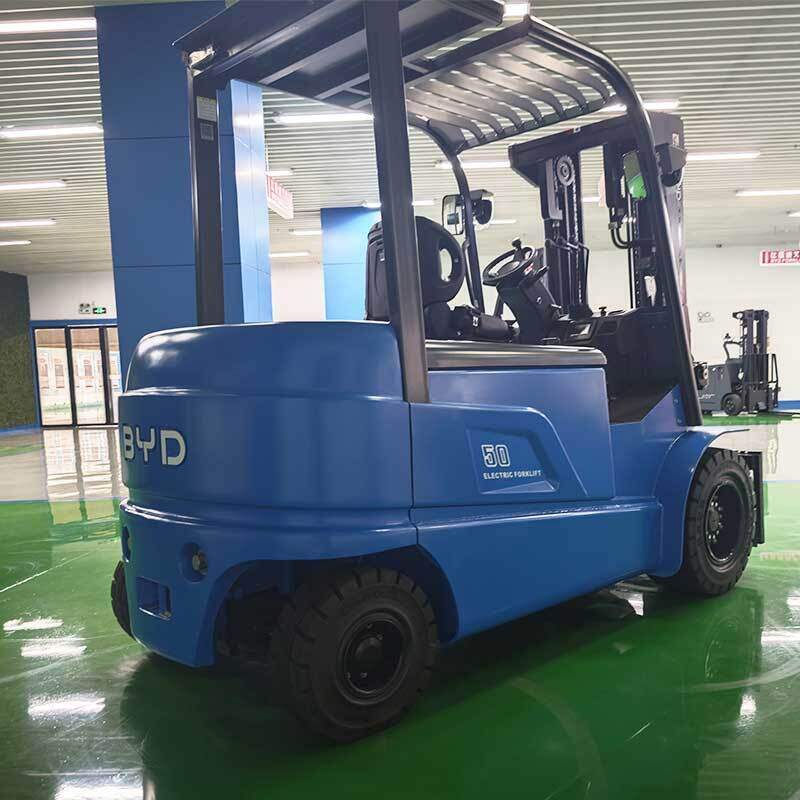
Fourth, complete post-charging management and regular maintenance work properly. After the battery is fully charged, operators shall disconnect the power supply in the correct sequence, arrange the charging cables neatly to avoid being crushed or trampled by passing vehicles which may cause insulation layer damage. It is recommended to arrange regular health detection for forklift batteries, track the performance attenuation status of the battery, and replace aging components in time.
Jianshu New Energy focuses on electric forklift products. If you need consultation services related to electric forklift battery safety management, standardized operation and daily maintenance, you can send emails to [email protected] to get professional technical support.