简体中文
 Русский
 Français
 Português
 Español
 لالعربية


Selecting the proper power source for forklifts is one of the core decisions that directly affects the long-term operation efficiency, cost control and environmental compliance of material handling processes. For a long time, the diversified supply of forklift power options has provided more choices for operators of different scenarios, but also raised the threshold for reasonable selection.
The traditional internal combustion forklift power source, represented by diesel and liquefied petroleum gas, is widely used in heavy-load outdoor operation scenarios due to its stable power output, no long-time waiting for energy replenishment, and strong adaptability to extreme low temperature environments. But this type of power source also has obvious limitations, including high tail gas emission, high operation noise, and high regular maintenance cost of the engine system, which is not suitable for closed indoor operation scenarios such as food processing, pharmaceutical storage and precision electronic manufacturing workshops.
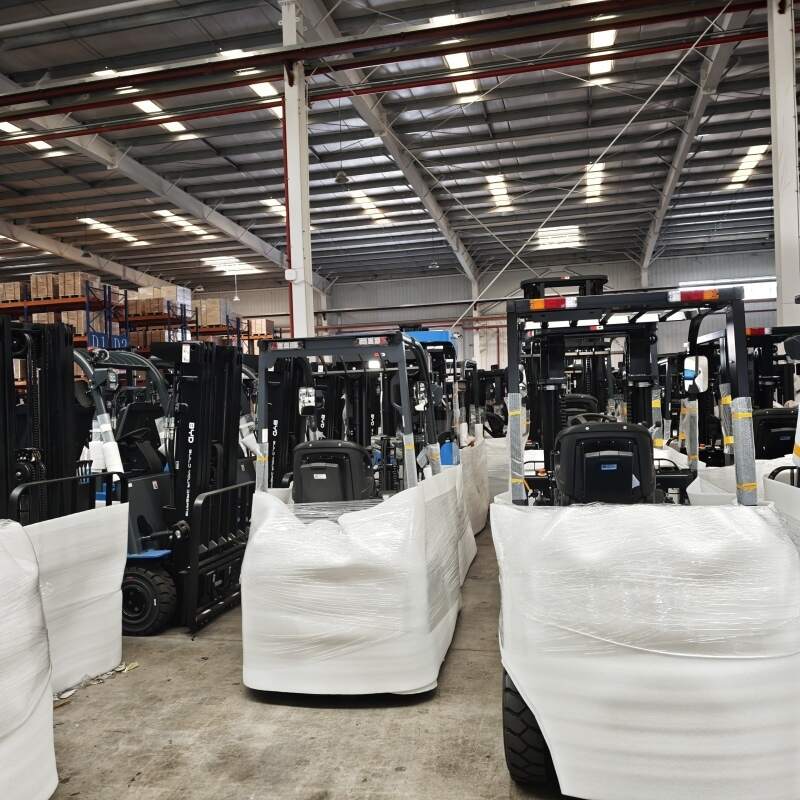
The traditional lead-acid battery powered forklift, which was popular in the market years ago, solves the emission problem of internal combustion models to a certain extent, but it still has many practical pain points in actual operation: it takes a long time to full charge, the battery cycle life is relatively short, the energy density drops sharply in low temperature environment, and a special independent charging and storage area is required in the work site, which brings extra management burden for operation teams with multi-shift high frequency operation demands.
In recent years, the new generation of new energy battery powered forklifts have gradually become the mainstream choice for industrial material handling. This type of power source achieves zero tail gas emission during the whole operation process, effectively reduces the noise interference in the work site, and supports fast charging to meet the continuous operation demand of multiple shifts. Its full life cycle operation cost is far lower than that of traditional internal combustion forklifts, and it can adapt to both indoor closed storage scenes and outdoor open operation environments.
When selecting forklift power sources, operators are advised to make comprehensive evaluation based on their actual operation conditions, including daily average operation duration, operation site environment, load weight demand, local environmental protection regulatory requirements and long-term operation budget. To help more users get suitable power matching solutions, we, Jian Shu New Energy, focus on BYD electric forklifts, and provide targeted consultation and supporting services for different operation scenarios. If you have relevant demands, please send emails to [email protected] for further communication.