
 简体中文
简体中文 Русский
 Français
 Português
 Español
 لالعربية

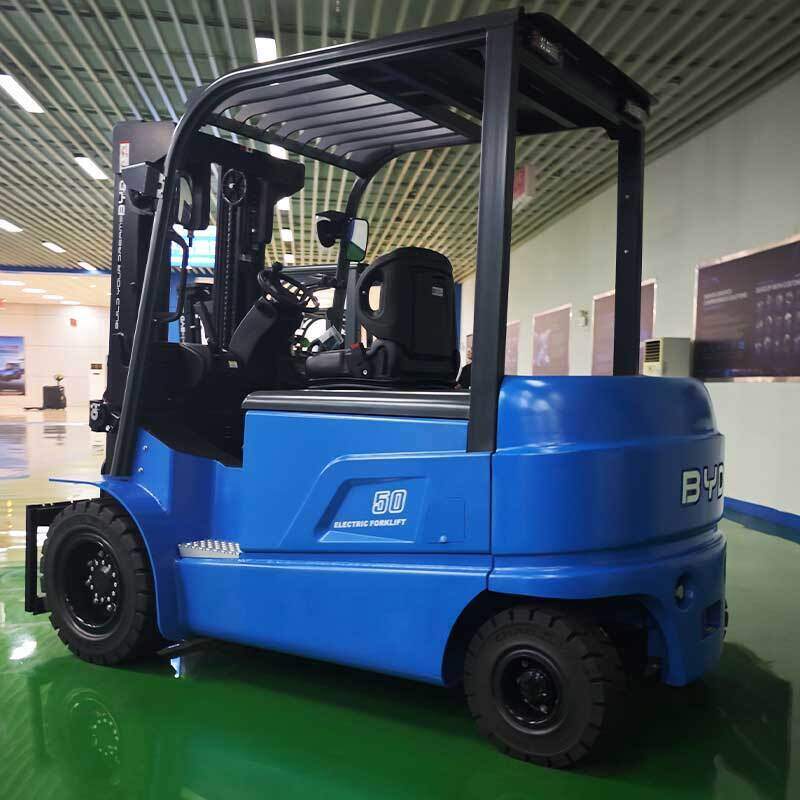
Nighttime warehouse shifts often feature reduced ambient light, fewer on-duty staff and longer response time for emergency support, which puts higher requirements for the safety of electric forklift operations. Unlike daytime working scenarios, operators need to follow targeted safety rules beyond the regular standard workflow to avoid preventable accidents.
The first key step is to complete nighttime-specified pre-shift checks before starting any operation. Apart from the regular routine inspection of brake performance, steering sensitivity and load fork condition, operators need to focus on testing all lighting components of the electric forklift, including front driving lights, rear warning lights, reverse indicator lights and flashing warning beacons around the vehicle, to make sure all of them work in normal condition. They also need to confirm the remaining battery level is enough to cover the whole shift, so as to avoid unexpected sudden power loss in the middle of a narrow warehouse aisle. Any damaged or faded reflective stickers on the vehicle body should be reported to the management for replacement in time before the shift starts.
During the actual operation process in low-light environments, operators should keep the driving speed at least 30% lower than the standard daytime driving speed. They need to honk the warning horn in advance when approaching aisle corners, high-stack cargo blind areas and doorways connecting different working zones. It is not allowed to accelerate suddenly or make sharp turns in areas with limited sight. When carrying bulky or high cargo, operators should adjust the cargo to a proper low height to avoid blocking their front view. All on-site staff, including forklift operators and other walking patrols, are required to wear high-visibility reflective vests during the whole nighttime shift. Operators should not wear noise-canceling headphones during work, so that they can catch the warning sounds from other personnel or surrounding facilities in time.
For emergency treatment and post-operation management, if operators encounter areas with extremely poor sight that cannot be illuminated by the forklift’s built-in lights, they should stop the vehicle completely, use a portable flashlight to check the surrounding conditions and confirm no obstacles or moving personnel exist before moving on. Once the electric forklift breaks down accidentally, operators should push the vehicle to the edge of the aisle that does not block the passage of other personnel, press the emergency power off button immediately, and contact the on-duty maintenance staff for treatment instead of disassembling the equipment without professional authorization. After the shift ends, operators should park the electric forklift at the designated parking area, pull the hand brake fully, lower the load forks to the ground completely, turn off all power and light switches, and make sure no vehicle is left at the main passage or emergency exit passage. Following these standardized safety rules effectively reduces the occurrence of safety risks, and creates a stable and secure working environment for all nighttime warehouse staff.


