简体中文
 Русский
 Français
 Português
 Español
 لالعربية


Nowadays, electric forklifts have been widely applied in logistics warehouses, manufacturing workshops, port cargo yards and other material handling scenarios, and lithium ion batteries have gradually become the mainstream power source to replace traditional lead-acid batteries. For many fleet managers and procurement personnel, selecting a suitable forklift lithium ion battery is not only related to the daily operation stability of the equipment, but also closely connected to the overall operation cost of the whole fleet. Many people tend to only compare the initial purchase price when making decisions, while ignoring many core factors that will affect the use experience for several years later.
The first factor to confirm is the reasonable capacity matching. You can make statistics of the average daily operation time of the forklift fleet in the past 3 to 6 months, record the peak operation hours in busy seasons, the maximum load weight and the proportion of high-frequency lifting operations. It is recommended to reserve about 15% capacity redundancy on the basis of meeting the conventional operation demand, which can avoid the risk of sudden power failure in the middle of peak operation, and will not cause unnecessary capital waste due to blindly purchasing products with excessive capacity.
The second core point is the safety performance that matches the actual use scenario. Most industrial operation scenarios have harsh conditions such as dust accumulation, frequent vehicle bump, high or low ambient temperature, and high humidity. It is necessary to check the protection level of the battery shell, the configuration of the built-in thermal management system, and the multiple protection mechanisms for overcharge, over discharge and over current. Products that meet general industry safety standards can effectively reduce hidden dangers in daily operation.
The third factor that cannot be ignored is the full life cycle cost accounting. Instead of only paying attention to the initial purchase cost, you can calculate the average annual use cost combined with the nominal cycle life of the battery, the daily maintenance workload and the supporting after-sales service. High quality forklift lithium ion batteries do not need frequent water replenishment, manual equalization and other maintenance operations like traditional lead-acid batteries, which can save a lot of labor and time cost in long-term use. Confirm the effective coverage period of the after-sales warranty and whether there is convenient on-site maintenance support, which will also reduce the extra cost in subsequent use.
The last key point is the compatibility with existing equipment. Before purchasing, confirm that the interface and communication protocol of the lithium ion battery can match the electronic control system of the existing electric forklift and the supporting charger, which can avoid additional modification cost and potential failure risk caused by mismatch.
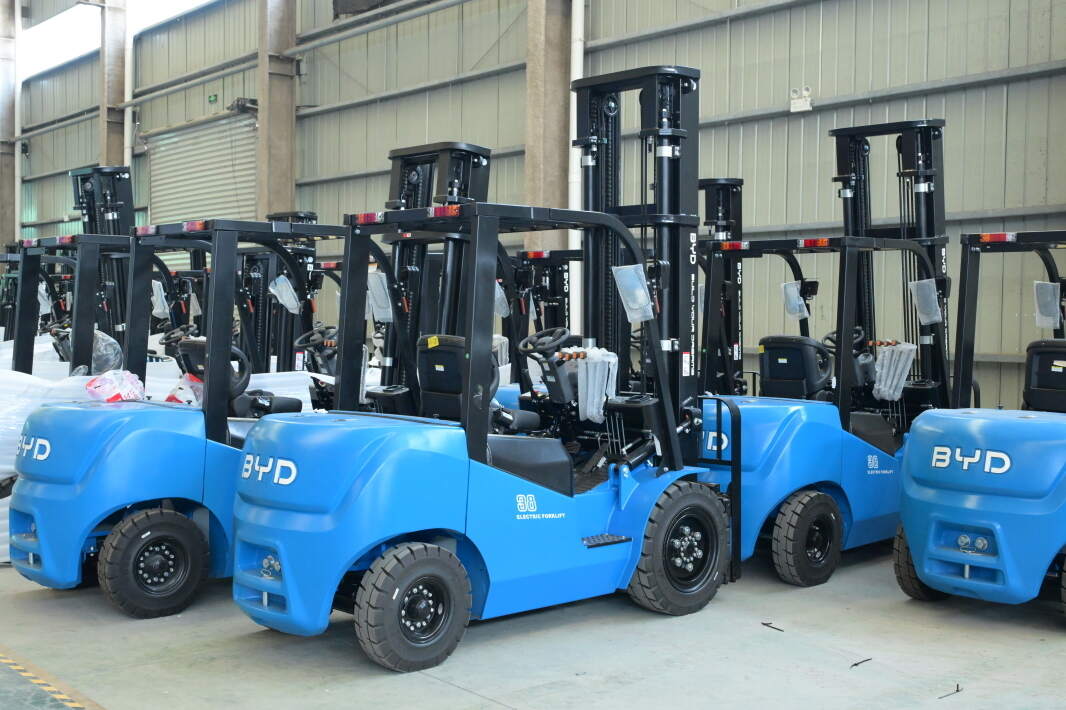
We are Jianshu New Energy, focusing on supporting services for BYD electric forklift. If you have any demand or consultation for forklift lithium ion battery selection, you can send an email to [email protected], and our professional team will provide you with targeted reasonable suggestions.