
 简体中文
简体中文 Русский
 Français
 Português
 Español
 لالعربية

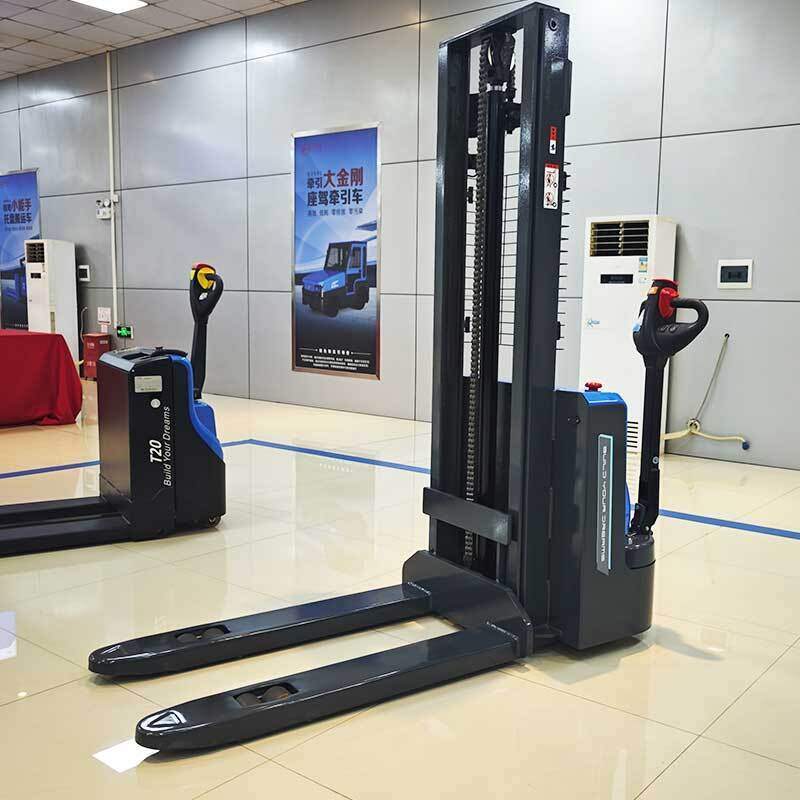
As one of the core handling equipment for narrow-aisle warehouse scenarios, BYD reach truck delivers stable lifting and moving performance, while reasonable battery capacity matching is the core premise to guarantee efficient operation and avoid unnecessary cost waste. Many warehouse operators often face the dilemma of mismatched battery capacity after purchasing reach trucks, either encountering unexpected power outage in the middle of operation, or paying extra unnecessary procurement and maintenance cost for redundant high-capacity batteries that far exceed actual demand. This guide provides clear and practical matching suggestions based on different daily operating hour requirements, to help users make proper choices that fit their actual operation status.
For scenarios where the daily operating hour is between 2 and 4 hours, such as small community retail warehouses, spare parts storage rooms of small factories that only carry out regular goods replenishment and sorting work every day, you can choose the basic matched battery capacity. This configuration can fully meet the daily operation demand, no extra redundant capacity will increase the overall purchase cost, and the regular full charge can support several days of normal operation even without frequent supplementary charging, which is very friendly for users with low operation frequency.
For scenarios where the daily operating hour is between 4 and 8 hours, such as most standard medium-sized e-commerce warehouses and raw material storage workshops that arrange single-shift operation, you can choose the medium-matched battery capacity. This capacity can support the full-shift continuous operation under conventional load conditions, and the fast charging function allows operators to get extra 1 to 2 hours of runtime after 15 to 20 minutes of supplementary charging during the work break, which can effectively deal with the temporary peak operation demand without arranging extra spare batteries.
For scenarios where the daily operating hour is between 8 and 12 hours, such as large logistics sorting centers that adopt two-shift alternating working system, you can choose the large matched battery capacity. This configuration can support continuous stable operation across two shifts with reasonable charging arrangement during the shift handover gap, no frequent battery replacement operation is needed, which reduces the extra labor work and management cost brought by battery replacement.
For scenarios where the daily operating hour exceeds 12 hours, such as large manufacturing factory warehouses that arrange three-shift non-stop operation around the clock, you can choose the full matched high capacity battery configuration. When matching, you also need to combine other actual operation factors including the average load weight of goods, maximum lifting height, and ambient temperature of the working area to make proper adjustment, to make sure the battery can support the continuous and stable operation as expected. Proper battery capacity matching can not only extend the overall service life of the battery, but also bring more stable operation experience for the whole material handling process.


