
 简体中文
简体中文 Русский
 Français
 Português
 Español
 لالعربية

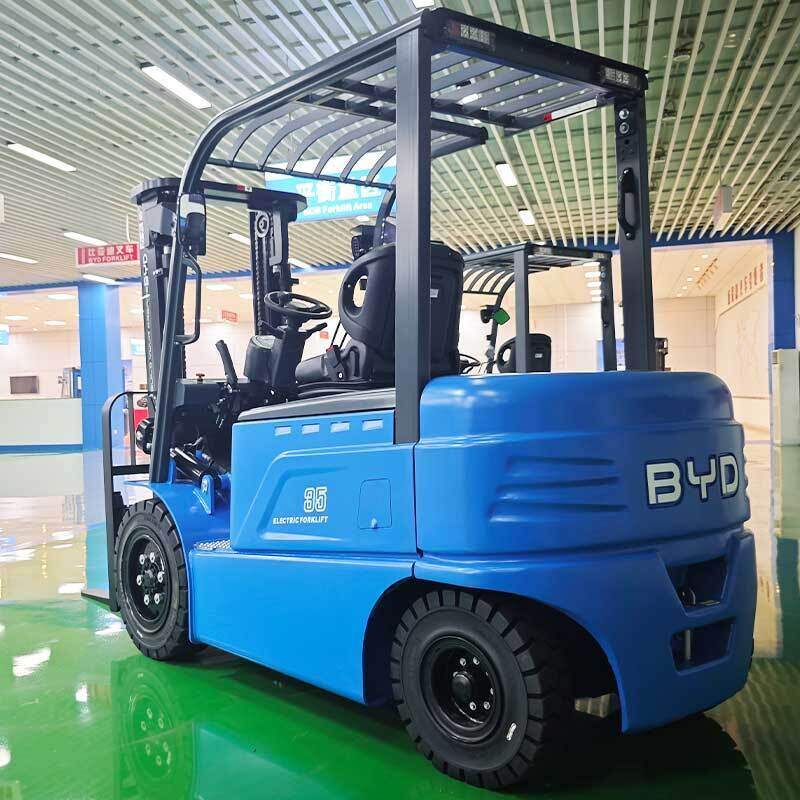
Against the general trend of low-carbon and environmentally friendly logistics development, electric forklifts have become a widely used material handling tool in most industrial storage and distribution scenarios, and mastering scientific use and management methods can bring multiple tangible benefits for frontline operation teams.
Core Operating Specifications for Daily Use
Before starting each work shift, operators need to complete a basic visual and function inspection around the equipment, check the tire wear condition, brake sensitivity, and remaining battery power level to eliminate potential hidden risks before formal operation. When driving in the warehouse passage, operators should keep a proper safe distance from surrounding stacked goods and other passing staff, and adjust the driving speed dynamically according to the ground friction condition and on-site personnel flow density. When lifting and transporting goods, the load center should be kept within the official specified range, and goods exceeding the rated load weight are not allowed to be lifted for a long time to avoid unnecessary damage to the gantry and carrying structure.
Routine Maintenance Points to Extend Equipment Service Life
Daily basic maintenance work does not require overly complex professional operations, and most of the relevant work can be completed by on-site management staff after simple system training. After each daily use, the surface of the equipment should be cleaned of accumulated dust and residual sundries, and the battery connection interface should be checked for abnormal wear or liquid leakage. When the equipment is scheduled to be idle for a long time, the battery should be kept at 40% to 60% power level for storage, and the regular supplementary charging cycle should be arranged properly to avoid irreversible performance attenuation of the battery pack. Regular inspection of the lubrication degree of the transmission and lifting kinematic parts can reduce the running noise and avoid abnormal wear of the internal moving components.
Optimized Scenario Matching to Improve Overall Operation Efficiency
Different types of electric forklift products have corresponding applicable load ranges and maximum lifting height limits, and operation teams can select matching parameters according to their daily operation characteristics, so as to give full play to the inherent performance advantages of the equipment. For narrow aisle operation scenarios, reasonably matching the body size and minimum turning radius parameters can effectively improve the utilization rate of the existing warehouse storage space. For high-frequency continuous operation scenarios, arranging reasonable shift handover and charging rest cycles can avoid the problem of insufficient power supply during peak operation periods. Following the above systematic guidelines, logistics operation teams can build a more standardized electric forklift management system, reduce unnecessary comprehensive operation costs, and steadily improve the overall safety level of on-site material handling work.


