
 简体中文
简体中文 Русский
 Français
 Português
 Español
 لالعربية

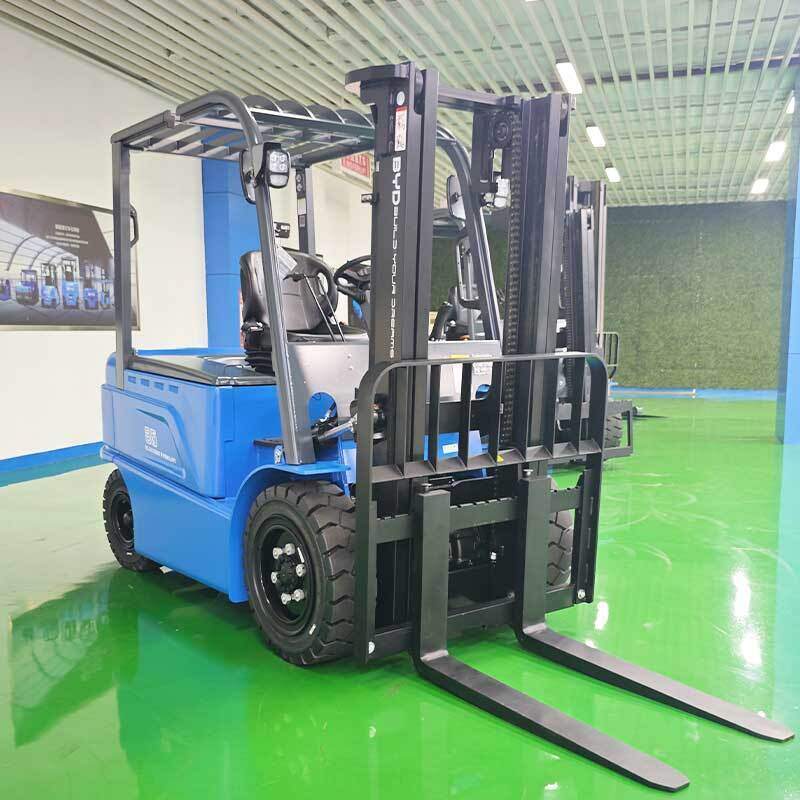
As low-carbon logistics development accelerates across the global material handling industry, electric forklifts have gradually become the widely adopted equipment for most indoor storage, retail distribution and light manufacturing production scenarios. Compared with traditional internal combustion counterparts, they produce no on-site exhaust emissions, generate lower operation noise, and have more flexible operating parameters that can match diversified work demands.
Core Performance Characteristics Suitable for Different Scenarios
Unlike fuel-powered forklifts, standard electric forklifts use energy storage power units to provide driving and lifting power, the whole structure has fewer vulnerable moving parts related to fuel supply and exhaust processing, which cuts down unnecessary wear in daily high-frequency operation. For narrow aisle warehouses, compact body models can adapt to 2.8-meter-wide operation channels, completing cargo stacking, picking and transshipment work without occupying extra storage space. For cold storage and low-temperature working scenarios, customized power modules can maintain stable output within the specified temperature range, avoiding sudden power drop that affects normal operation process.
Daily Maintenance Guidelines to Ensure Stable Operation
Routine maintenance work of electric forklifts does not require complex professional skills, most of the inspection items can be completed by on-site operators during pre-shift preparation. Operators can check the remaining power level of the energy storage unit, confirm that the lifting hydraulic system has no oil leakage, test the sensitivity of brake and steering function, and clean the dust and sundries attached to the body surface and heat dissipation area every working day. It is recommended to arrange targeted professional inspection every 300 to 500 working hours, to check the wear condition of walking wheels, the connection tightness of wiring terminals, and the attenuation degree of power unit capacity, which can effectively reduce unexpected downtime in peak operation periods.
Standard Operation Tips to Improve Using Efficiency
Operators need to receive professional operation training before formally taking up the post, master the correct operation posture and load capacity parameters of different models, avoid overloading the equipment beyond the rated load range for a long time. When operating in narrow space or areas with frequent pedestrian flow, operators need to slow down in advance, use the prompt sound and light warning function to remind surrounding personnel, to reduce the occurrence of safety risks. Reasonable matching of electric forklift models and logistics process can effectively improve the overall turnover efficiency of warehouse cargo, and control the long-term operation cost of material handling links.


