
 简体中文
简体中文 Русский
 Français
 Português
 Español
 لالعربية

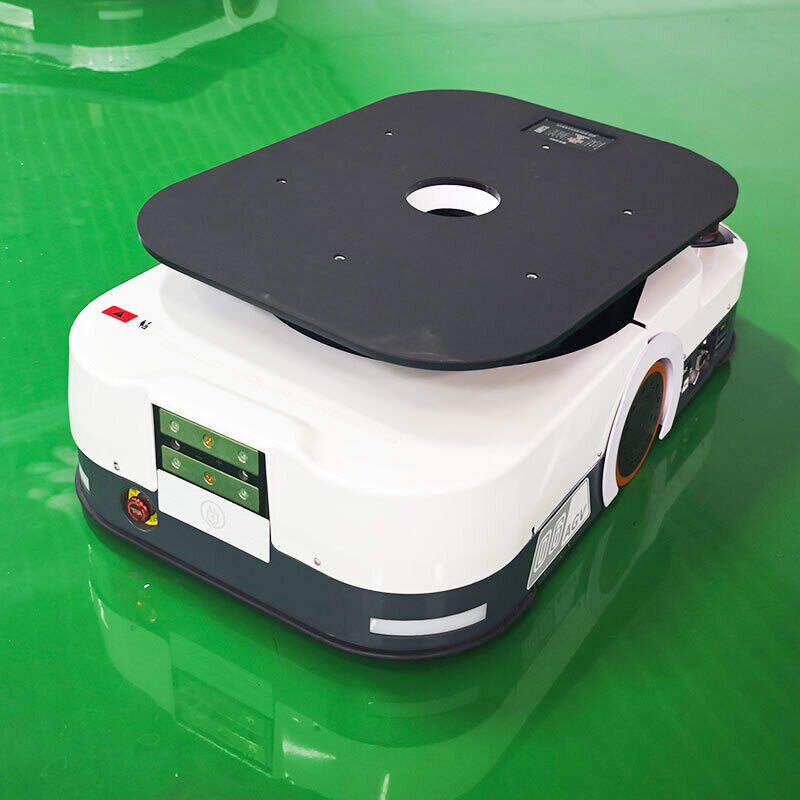
As low-emission, low-noise material handling equipment becomes the mainstream of modern warehouse and industrial logistics operations, electric forklift power systems have been the core factor that directly affects daily operation experience. The two most widely applied power schemes for electric forklifts are alternating current (AC) motors and direct current (DC) motors, and clarifying their differences in hardware performance and service characteristics can help operation teams make more targeted configuration plans.
From the perspective of basic hardware structure, traditional DC motors rely on carbon brushes and commutators to achieve current commutation, so there is physical contact between the dynamic and static components inside the shell. AC motors adopt a brushless induction structure, which generates a rotating magnetic field through the input alternating current to drive the rotor to operate, with no direct mechanical contact between the core moving and static parts, and the overall hardware integration is higher than that of conventional DC motors.
In actual operation performance, DC motors can output stable torque under low load conditions, which can meet the use requirements of light and medium intensity handling scenarios. AC motors have faster magnetic field regulation response, when working in frequent start-stop, ramp load and other heavy-duty scenarios, the power output stability is better, and the energy efficiency can reach about 12% higher than DC motors of the same specification under full load state, effectively extending the single-charge battery life of the equipment.
In terms of long-term service and maintenance considerations, DC motors need regular inspection and replacement of wearing parts such as carbon brushes every certain working hours, and cleaning the carbon deposit on the surface of the commutator. The operation threshold of such routine maintenance work is low, front-line maintenance personnel can complete it after simple training, and the cost of spare parts is relatively affordable. AC motors have no carbon brush and other mechanical wearing parts, the daily routine maintenance demand is very low, only regular inspection of the tightness of the wiring terminals and cleaning of the heat dissipation air duct are required, which greatly reduces the probability of unplanned downtime. If there is a fault in the internal drive module or stator winding, the maintenance technical threshold is relatively higher, and the cost of component replacement is slightly higher.
Overall, neither of the two motor schemes has absolute advantages or disadvantages. Users can select the appropriate type according to their own actual operation frequency, maintenance team configuration and long-term budget arrangement, to maximize the comprehensive use value of electric forklift equipment.


