
 简体中文
 Русский
 Français
 Português
 Español
 لالعربية


Against the backdrop of booming warehousing and logistics industry, electric forklift has become the mainstream handling equipment for most operation scenarios, and the market demand for forklift rental services keeps growing in recent years. Many teams that carry out forklift rental business used to rely on manual paper registration and scattered spreadsheet recording to manage orders, assets and personnel, which easily leads to problems such as order information omission, equipment state tracking delay, and untransparent cost settlement. A standardized forklift rental management system can effectively solve these common pain points and bring stable optimization to daily operation.
Core Basic Functions of Forklift Rental Management System
A standard applicable forklift rental management system covers three core modules. The first is the full order life cycle management module, which records the whole process from user demand submission, order confirmation, equipment dispatch, on-site delivery to order return, so that each rental track can be traced clearly. The second is the equipment asset status management module, which can bind each device to unique identification information, and record its usage duration, accumulated working hours, and historical maintenance records in real time. The third is the automatic settlement and statistics module, which can automatically generate corresponding bills according to the actual rental duration, additional service content and other agreed terms, avoiding manual calculation errors.
Field Operation Best Practices for System Use
In actual on-site deployment and use, teams can follow several practical principles to give full play to the value of the system. First, set a reasonable data synchronization frequency according to the actual operation scale. For small and medium-sized rental teams with less than 50 devices, data synchronization once every 2 hours can meet the daily demand, while large-scale teams can adjust to real-time synchronization according to the actual situation. Second, carry out regular asset verification once every 15 days, to compare the data recorded in the system with the actual on-site equipment status, and correct abnormal data in time to ensure the accuracy of the system database. Third, set graded operation permissions for different positions, so that front-line dispatch personnel, maintenance personnel and financial settlement personnel can only access the function modules corresponding to their own post responsibilities, to avoid misoperation of core data.
Optimization Points for New Energy Electric Forklift Rental Scenarios
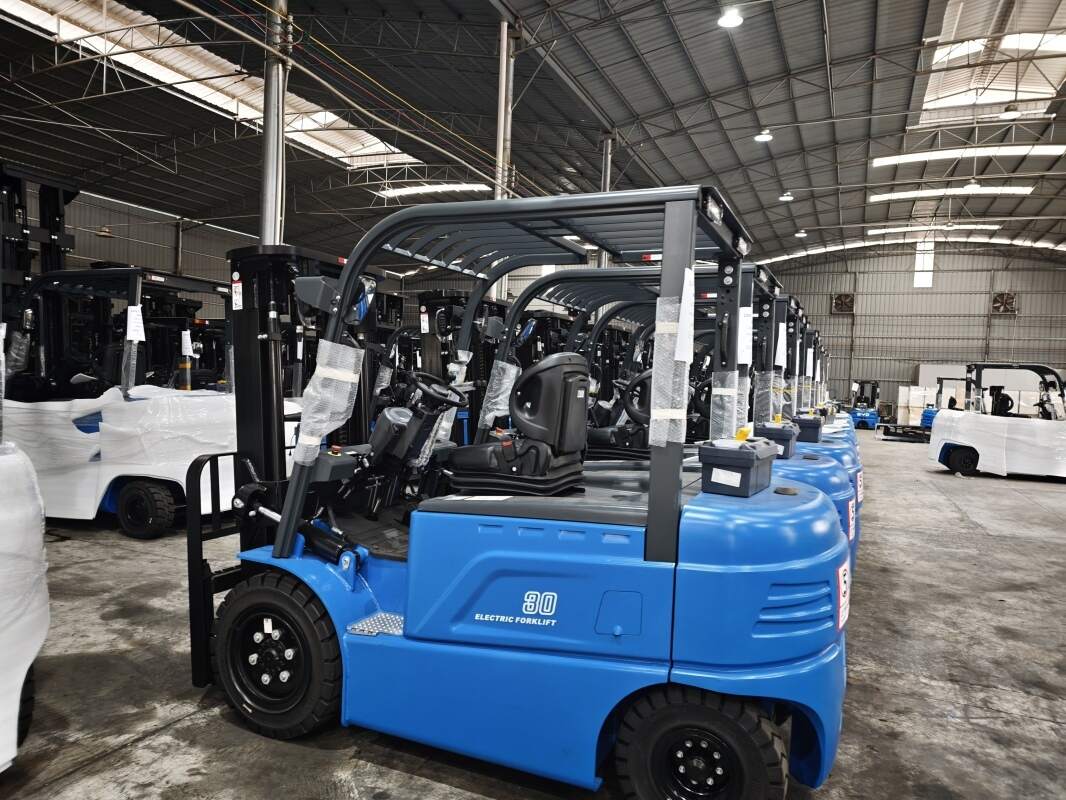
For teams that focus on electric forklift rental, the system can also add targeted customized adaptation functions to better match the characteristics of new energy equipment. For example, the battery health data, remaining power and charging records of each electric forklift can be connected to the system, so that the operation team can arrange equipment scheduling reasonably according to the remaining power of the device, and arrange maintenance personnel to carry out battery inspection in time when abnormal battery data is found, to reduce the failure rate of equipment in the rental period.
As a professional service provider focused on BYD electric forklifts, Jianxin New Energy provides supporting professional guidance for forklift rental management system deployment and operation for all cooperative customers. If you have related demands for electric forklift rental management, you can contact us via [email protected] for further communication.


