
 简体中文
简体中文 Русский
 Français
 Português
 Español
 لالعربية

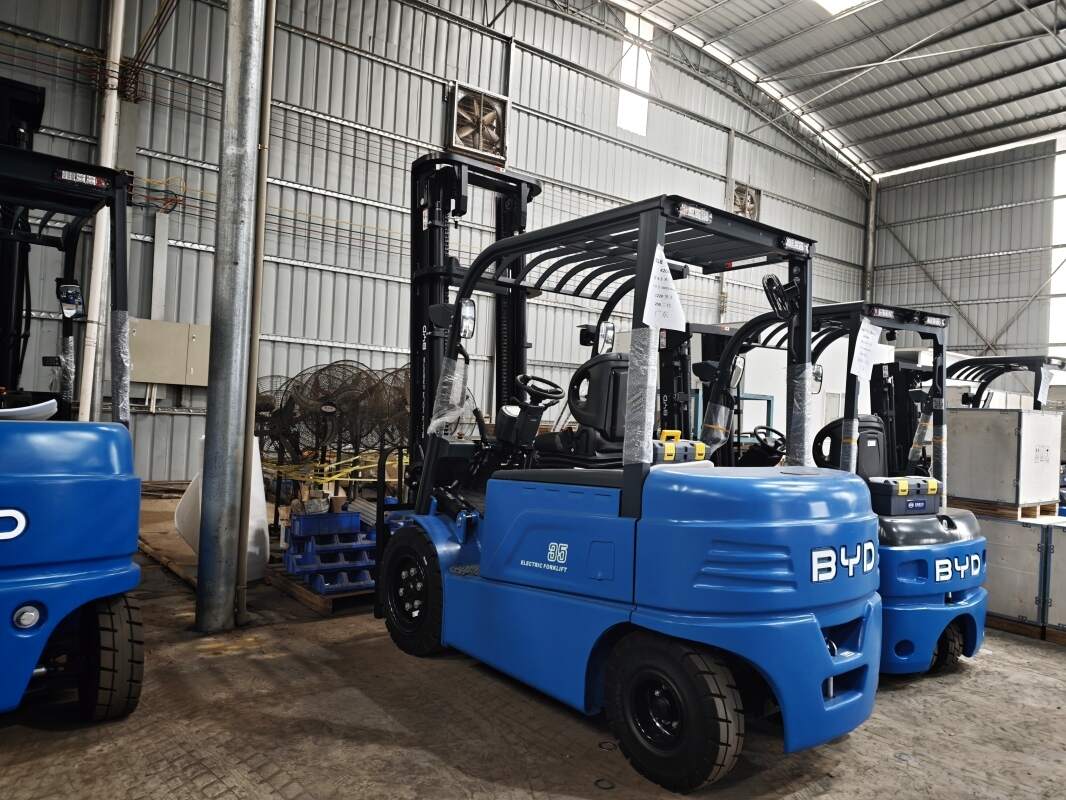
In recent years, electric forklifts have been widely applied in indoor logistics, warehouse storage and light industrial material handling scenarios, for their low noise, zero local emission and relatively easy operation features. Mastering proper use and management rules of such equipment can bring more stable operation experience for frontline teams.
Basic Standard Operation Rules
Before each formal shift, operators need to walk around the whole equipment to check the surface condition, tire wear and surrounding working space, to confirm no sundries or hidden obstacles near the operation area. During operation, keep the load within the rated bearing range, slow down in turning and passing narrow aisles, and avoid sudden sharp direction change which may cause cargo dropping or equipment sideslip. When finishing each operation cycle, operators need to park the equipment on flat ground, pull up the hand brake, lower the forks to touch the ground, and cut off the power source before leaving the driving position.
Routine Maintenance Suggestions
For the power system, follow the standard charging flow to avoid deep over-discharge or long-time overcharge, wipe the dust and stains on the battery surface regularly to keep the electrode contact in good condition. Check the hydraulic system regularly to spot potential leakage of oil pipes in time, and test the braking sensitivity every week to make sure the braking response meets the operation requirement. Do not use high pressure water gun to wash the electronic control components directly, to prevent unnecessary circuit short circuit damage caused by water immersion.
Scenario-based Usage Optimization
In narrow high-density storage aisles, operators can adjust the equipment’s maximum travel speed to a relatively low level to further reduce collision risks. In low temperature working environment, reserve proper preheating time for the power system before formal heavy load operation, to get more stable power output. If the equipment will be left idle for more than 2 weeks, store it in cool, dry and ventilated space, and complete a supplementary charge every 15 days to keep the battery activity in good state. Following these practical rules can effectively reduce unexpected equipment failure probability, extend the overall service life of the electric forklift, and create more stable material handling support for the whole logistics workflow.


