简体中文
 Русский
 Français
 Português
 Español
 لالعربية


Distribution centers are under constant pressure to maintain high throughput, support multi-shift operations, and reduce unplanned downtime for material handling equipment. For most distribution center managers, the choice of core handling equipment directly affects the overall operation efficiency of the whole site, and lithium forklifts have gradually become one of the most concerned upgrade options in recent years.
First of all, managers need to clarify the actual operation rhythm adaptability of lithium forklifts. Different from traditional lead-acid power equipment, lithium forklifts support opportunity charging, which means operators can connect the device to a power supply during short breaks between shifts, and 15 to 20 minutes of charging can support 1 to 2 hours of normal operation. This feature eliminates the need for dedicated battery storage areas and manual battery replacement steps, which can save extra labor and site occupation cost for distribution centers that run 2 to 3 shifts per day.
Next, it is necessary to understand the actual maintenance requirements of lithium forklifts. The closed battery structure of lithium forklifts does not require daily operations such as adding electrolyte or cleaning corrosive overflow substances, and the overall routine maintenance work is much simpler than that of traditional lead-acid forklifts. When calculated according to the full service cycle, the accumulated maintenance cost can be controlled at a relatively reasonable level, and the equipment downtime caused by battery failure can also be reduced accordingly.
In terms of on-site operation experience, the power output of lithium forklifts remains stable even when the battery level drops to a low range, which will not cause a significant drop in handling efficiency due to insufficient power. The more accurate power control system can also help operators complete high-position goods access and narrow-channel transfer operations more smoothly, which is conducive to improving the average pallet processing volume per unit time of the whole distribution center.
From the perspective of environmental compliance, lithium forklifts will not produce volatile corrosive substances in the daily operation process, which can keep the working area cleaner and meet the current green operation requirements of most modern distribution centers, avoiding extra disposal procedures for waste lead-related materials.
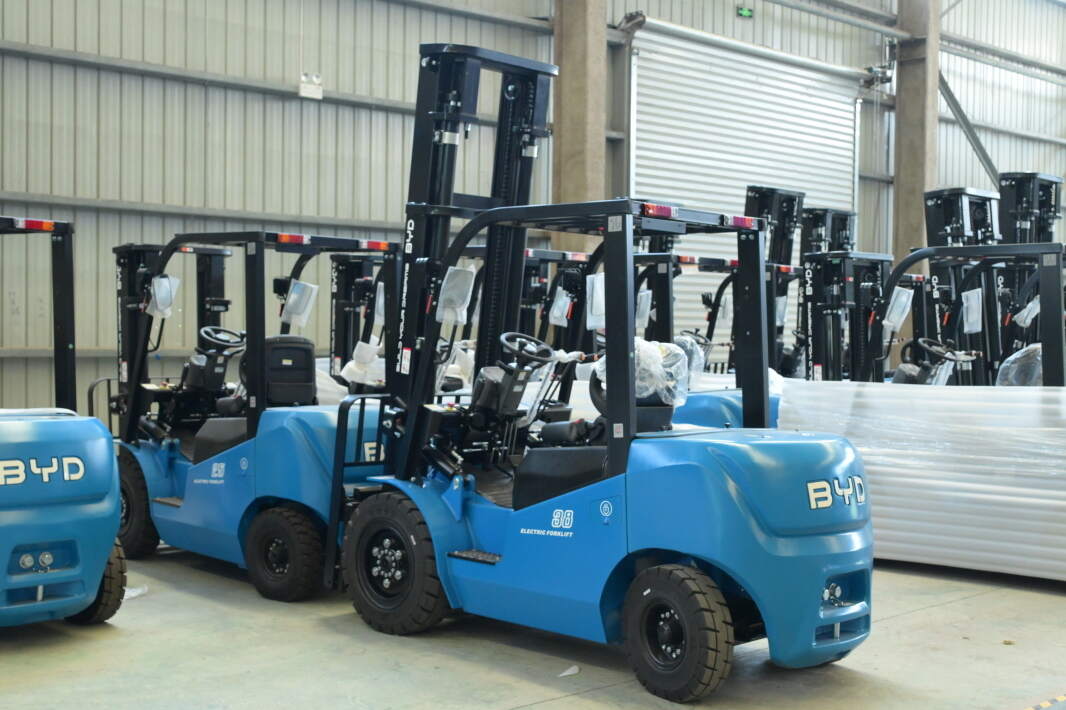
As a professional new energy material handling solution provider, Jian Shu New Energy focuses on high quality BYD electric forklifts. If you have relevant consultation demands for lithium forklift configuration, operation and supporting services for your distribution center, you can send an email to [email protected] to contact our team, and we will provide you with targeted professional suggestions.