简体中文
 Русский
 Français
 Português
 Español
 لالعربية


As a professional new energy material handling equipment service provider focused on BYD electric forklifts, Jian Shu New Energy has accumulated plenty of localized operation data for BYD electric stackers in Lilongwe, and we would like to share the practical three-shift running cost reference for local warehousing and logistics operators here.
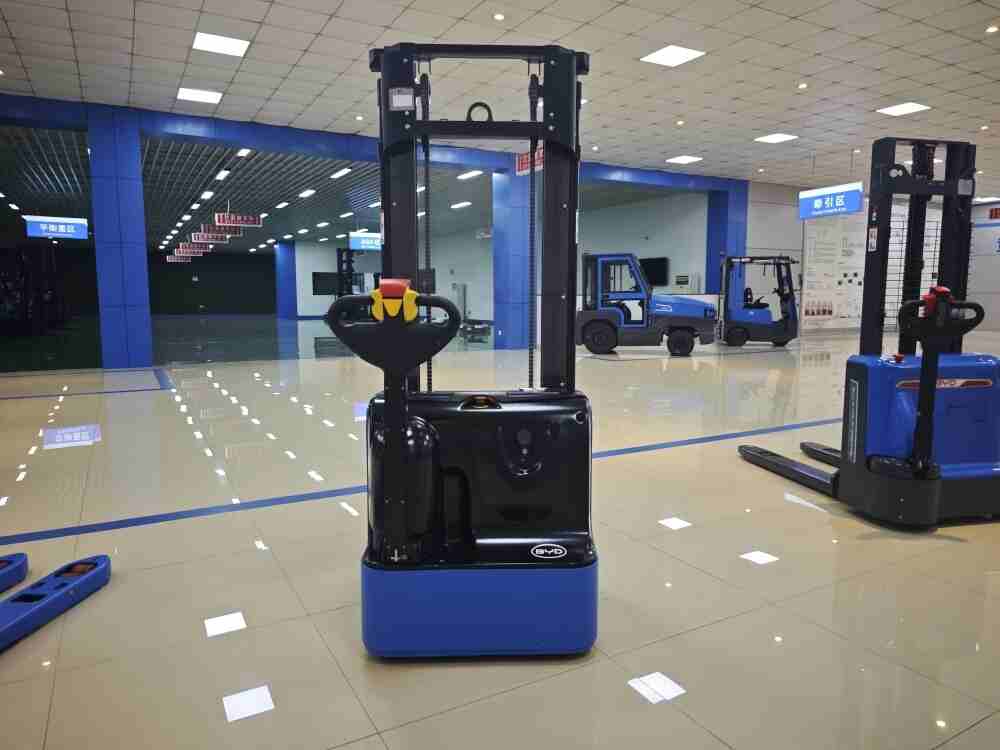
For most large-scale distribution centers and freight hubs in Lilongwe, three-shift continuous operation is a common arrangement to meet the growing cargo throughput demand. Many operators concern about the actual long-term running cost of new energy stackers when replacing traditional handling equipment, and our data comes from real operating scenarios of multiple cooperative clients, which can provide practical decision support.
First of all, the energy consumption cost accounts for the largest proportion of daily operation expenditure. Combined with the local electricity price standard in Lilongwe, the average power consumption of BYD electric stacker per working hour is at a relatively low level. Even for three consecutive 8-hour shifts, the total daily energy cost is far lower than the fuel cost required by similar power handling equipment under the same working intensity. Local grid has stable power supply in most industrial areas, and operators can also arrange partial charging at off-peak electricity price periods to further reduce energy expenditure.
The second part is the routine maintenance cost. Different from traditional equipment with complex internal combustion structure, BYD electric stacker has no vulnerable parts such as fuel filter, oil circuit assembly and muffler that need to be replaced frequently. For three-shift continuous operation mode, the monthly maintenance work only includes regular inspection of hydraulic system, tire wear check and power battery health status test. The average monthly maintenance cost is at a very reasonable level, and there is no additional high cost for engine overhaul after long hours of operation.
In addition, there is no extra hidden cost for operation. Under the local environmental protection management regulations for urban warehouse operation, electric stackers do not produce exhaust emission during operation, so operators do not need to pay extra environmental related fees, and there is no need to invest extra cost to transform the warehouse ventilation system to adapt to exhaust emission. The battery configuration of BYD electric stacker supports short-time fast charging during the shift handover gap, which can fully meet the power demand of three consecutive shifts without purchasing extra standby batteries.
If you need more detailed customized cost calculation and equipment scheme consultation, you can send your demand to our official mailbox [email protected], and our professional technical team will provide targeted support for your material handling scenarios.