简体中文
 Русский
 Français
 Português
 Español
 لالعربية


Matadi, as the core port city of the Democratic Republic of the Congo, hosts growing volumes of import and export cargo flow, making efficient material handling a core priority for local logistics providers, warehouse operators and port service teams. For most operation teams that use counterbalance forklifts for daily cargo loading, unloading and stacking, calculating clear long-term running costs has become a key factor to control overall business expenditure.
First of all, energy cost takes up the largest proportion in the daily running expenditure of counterbalance forklifts. In the local market of Matadi, the fuel price for internal combustion forklifts stays at a relatively high level in recent years, while the operating energy cost of electric counterbalance forklifts is only around 1/3 of that of equivalent fuel forklifts under the same working hour output. With the gradual improvement of supporting charging facilities in Matadi’s major logistics parks and port operation zones, operation teams can arrange low-price off-peak charging to further cut energy expenditure reasonably.
The second core cost part is daily maintenance and upkeep cost. Electric counterbalance forklifts have far fewer moving friction components than fuel forklifts, and do not need regular oil change, filter replacement and other routine maintenance work specific to internal combustion engines. The annual average maintenance cost of standard electric counterbalance forklifts is only about 30% of that of fuel counterparts, and the failure rate in daily high-intensity operation is also kept at a low level, which reduces extra downtime loss brought by unexpected equipment breakdown.
Third, local policy-related cost also deserves attention. In recent years, Matadi’s port management department has rolled out gradually stricter exhaust emission control regulations for operating vehicles in the port zone. Electric counterbalance forklifts produce no tail gas emission in the whole operation process, which can meet local environmental protection requirements stably, and operation teams do not need to pay extra environmental related fines or additional emission testing fees.
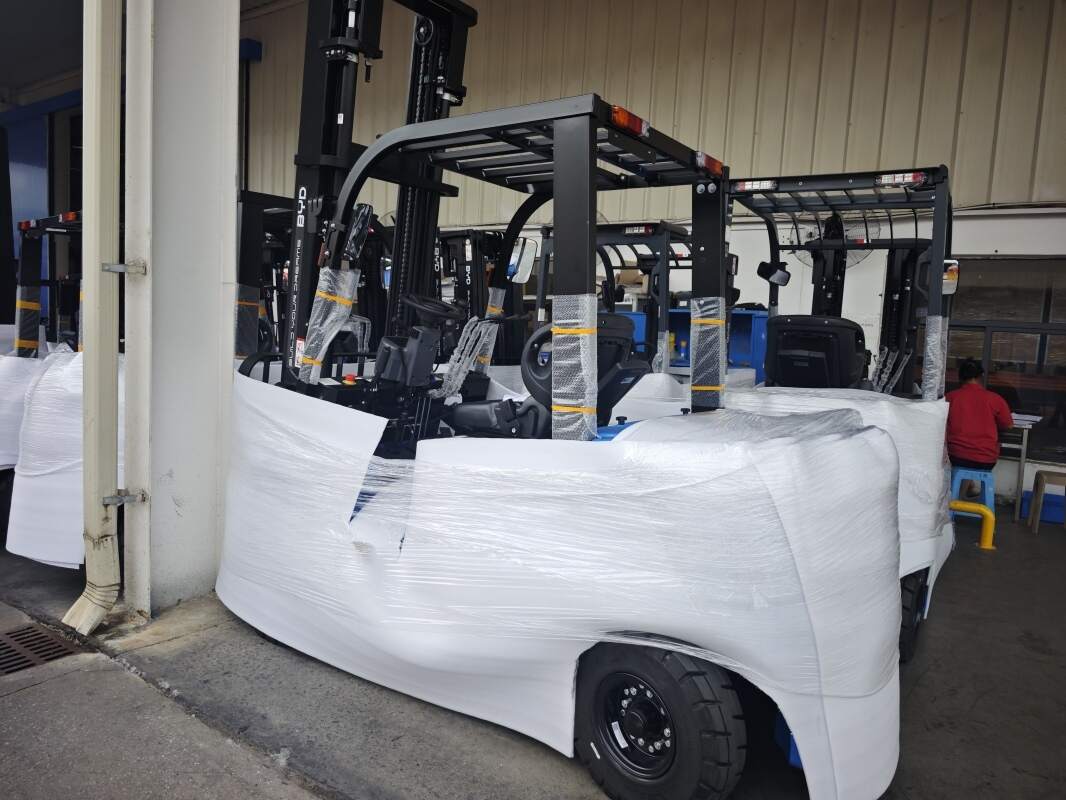
Besides, the residual value of equipment at the end of the use cycle is also an important part of total running cost. Well maintained electric counterbalance forklifts have higher recognition in Matadi’s second-hand logistics equipment trading market, and the residual value rate after 5 years of normal use is significantly higher than that of fuel forklifts of the same period, which further reduces the amortized cost of equipment in the whole use cycle.
As a professional new energy forklift service provider, we Jian Shu New Energy focus on BYD electric forklift related service support for local clients. If you need a customized running cost calculation plan for your fleet based on your actual daily operation hours, we can provide targeted solution for you, you can contact us via [email protected] for more detailed information.