
 简体中文
 Русский
 Français
 Português
 Español
 لالعربية


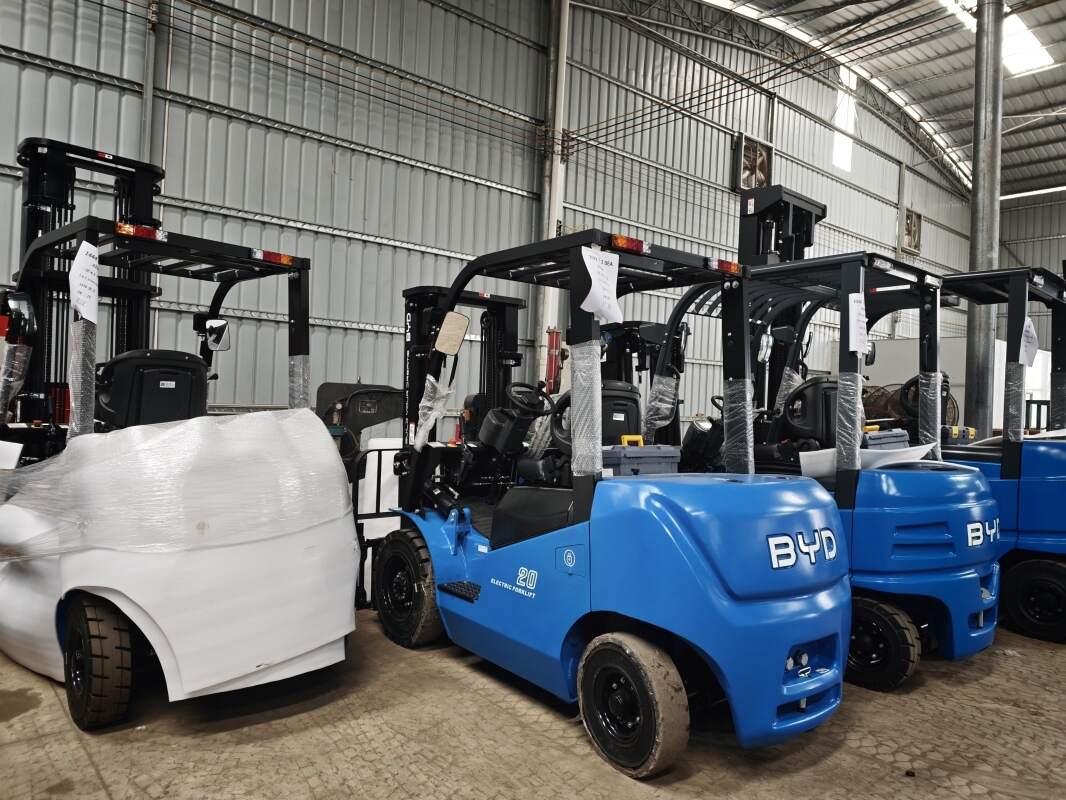
As the low-carbon logistics and industrial warehousing industry develops rapidly, electric forklifts have become one of the most widely used material handling equipment in various scenarios, with features of low noise and zero local emissions. Mastering the correct use and management rules of this type of equipment can help relevant personnel give full play to its performance and extend its service cycle to a reasonable extent.
Basic Operation Standard Specifications
Before starting the equipment, operators need to complete a full pre-inspection, covering the power remaining status, brake sensitivity, tire wear degree, and the smoothness of the lifting hydraulic system. During the driving process, personnel should keep the vehicle body running at a safe speed matching the site environment, avoid sudden acceleration and sharp steering, and keep a safe distance from surrounding personnel, goods and obstacles. When picking up and placing goods, adjust the fork spacing according to the size of the load to ensure the goods are placed stably on the pallet, and avoid overloading beyond the rated load range marked on the equipment body.
Daily Maintenance and Management Points
After each daily use, operators should park the equipment in the designated fixed area, turn off the power supply in time, and clean the dust and sundries attached to the vehicle body, fork and heat dissipation parts. The battery maintenance link needs to follow the corresponding parameter requirements, complete the charging operation in a well-ventilated dedicated charging area, avoid overcharging and deep discharge, and regularly check the connection tightness of the line interface to prevent poor contact. The wearing parts such as transmission system and walking wheel should be checked regularly according to the use frequency, and lubrication and replacement operations should be carried out in time when abnormal wear is found, to reduce the probability of sudden failure during use.
Scene Adaptation and Safety Usage Notes
Different application scenarios have different performance requirements for electric forklifts. For narrow aisle operation scenarios, operators should adjust the driving route in advance to reserve enough turning space. For outdoor operation scenarios on non-paved roads, personnel should appropriately reduce the driving speed and avoid passing through obvious potholes and slope sections that exceed the allowable parameters of the equipment. All operation and maintenance personnel need to receive corresponding professional training before taking up their posts, and strictly follow the operation process to avoid improper operation that may cause safety risks. Regularly organize personnel to carry out safety awareness training, which can effectively reduce the incidence of operation accidents and improve the overall operation efficiency of material handling.


