Monterrey, as a core industrial and logistics hub in northern Mexico, gathers a large number of manufacturing plants, distribution centers and cross-border logistics parks. Tow tractors, as the core equipment for intra-facility material transfer, undertake most of the raw material delivery and finished product handling work in most operation sites, and their continuous and stable operation is directly related to the overall efficiency of the entire site.
Many operation managers used to only count the direct maintenance cost when calculating the loss caused by tow tractor downtime, but ignored a large part of hidden expenditure. The comprehensive downtime cost includes multiple dimensions such as the output loss caused by the stagnation of subsequent production links, the penalty for delayed delivery of customer orders, the extra expense for temporarily renting alternative handling equipment, and the idle labor cost of on-site operators waiting for equipment recovery. For medium and large manufacturing sites with more than 10 tow tractors, the average hourly comprehensive loss of unplanned downtime of key transfer equipment can reach hundreds of dollars, and a 4-hour unplanned shutdown may affect the normal completion of the daily production schedule.
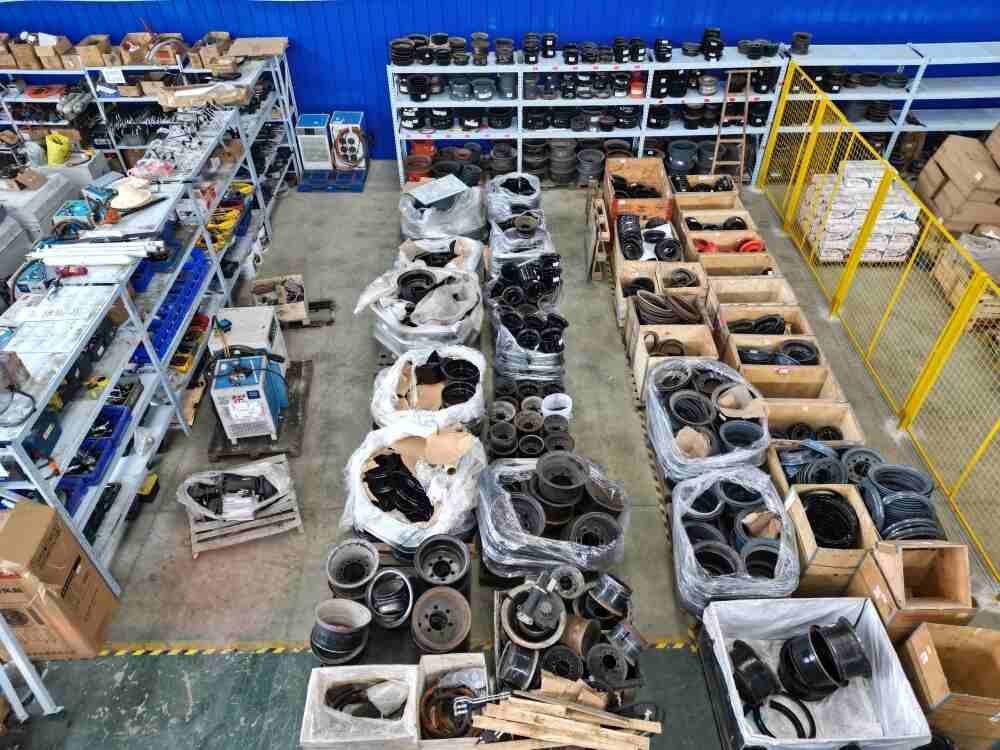
Scientific spare parts planning is the most cost-effective way to reduce unplanned downtime frequency and shorten fault repair cycle. Many operation teams tend to fall into two extremes in spare parts management: one is to not stock any spare parts at all, once the equipment fails, they need to wait for cross-regional transportation of parts, which often takes 3 to 7 working days to resume operation; the other is to overstock a large number of spare parts, which occupies a lot of working capital, and some electronic components and rubber seals will have performance degradation after long-term improper storage, and cannot play a normal role when used. A reasonable spare parts planning solution needs to combine the historical operation data of the site’s tow tractors, count the replacement cycle of high-frequency wearing parts, and set a reasonable safety stock threshold according to the local parts supply efficiency. For brake wearing parts, power contact components and other parts that need to be replaced regularly, it is recommended to maintain a small safety stock of 3 to 5 sets; for low-frequency replacement core components, you can cooperate with professional local service teams to establish a fast supply linkage mechanism, which can not only avoid the capital occupation caused by overstocking, but also ensure that the replacement parts can be delivered to the site within 4 hours after the fault occurs.
As Jianshu New Energy, we focus on electric forklift related services, and have built a complete local spare parts reserve system and professional on-site maintenance team in Monterrey. We can provide free operation assessment for local material handling operators, help sort out the wear rule of existing tow tractors, and output customized spare parts planning scheme matching their own operation scale, so as to effectively control the overall downtime cost. Operators with relevant demands can send emails to [email protected] for exclusive consultation and support.