简体中文
 Русский
 Français
 Português
 Español
 لالعربية


Namibia’s logistics, mining, port and large-scale manufacturing sectors have sustained growing demand for high-capacity forklifts in recent years, as local supply chain operation efficiency continues to improve. For fleet managers and enterprise decision makers, clarifying the full cost difference between diesel and electric high-capacity forklifts can effectively support reasonable procurement and long-term operation planning.
First, we look at the cost composition of traditional diesel high-capacity forklifts in local operation scenarios. The upfront procurement cost of diesel high-capacity forklifts is relatively stable at the current stage, but subsequent long-term operating expenditures are affected by multiple fluctuating factors. The most notable one is the fuel cost, which accounts for more than 60% of the daily operating expenditure of this type of equipment in most scenarios, and local diesel price fluctuations will directly bring unpredictable changes to the annual operation budget. The routine maintenance of diesel forklifts also requires regular replacement of engine oil, fuel filter, air filter and other consumables, plus regular inspection and maintenance of internal combustion power systems, the annual maintenance cost is at a relatively high level. There are also hidden costs that are easy to be ignored, including expenditure on emission compliance inspection, post-operation site ventilation optimization, and occupational health protection for operators exposed to exhaust gas for a long time.
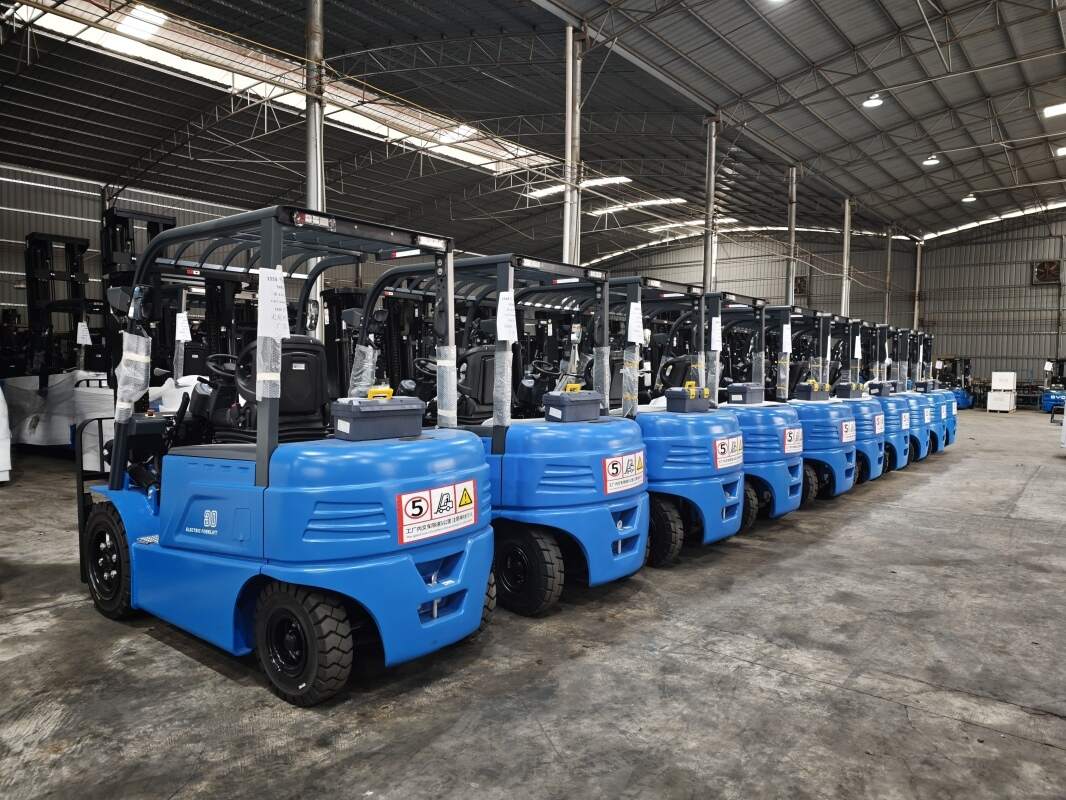
Then we analyze the cost performance of electric high-capacity forklifts in Namibia’s local operation environment. The upfront procurement input of electric high-capacity forklifts is slightly higher than that of products of the same load level driven by diesel, but the advantages of subsequent long-term cost control are very prominent. Namibia has abundant solar energy resources, the stable local industrial and commercial electricity price, many enterprises can also combine distributed photovoltaic power generation systems to further reduce the energy cost of equipment operation, and the hourly energy consumption cost of electric forklifts is far lower than the fuel cost of diesel models of the same tonnage. As electric high-capacity forklifts do not have complex internal combustion power structures, there is no need to replace engine oil, fuel-related consumables, the maintenance work only involves conventional inspection of power lines, batteries and walking structures, the annual maintenance expenditure can be reduced by more than 50% compared with diesel products of the same specification. In terms of hidden benefits, zero-emission electric forklifts do not need additional exhaust gas treatment and ventilation investment in closed operation sites, and will not produce noise interference that affects the working environment.
Calculated on the full life cycle of more than 5 years, the total comprehensive cost of electric high-capacity forklifts is more competitive than that of diesel models under most continuous operation scenarios. We are Jianshu New Energy, focusing on BYD electric forklifts, and can provide targeted cost accounting and scenario-adapted solution support for local enterprises in Namibia. If you have related demand for fleet configuration consultation, you can send an email to [email protected] for further communication.