简体中文
 Русский
 Français
 Português
 Español
 لالعربية


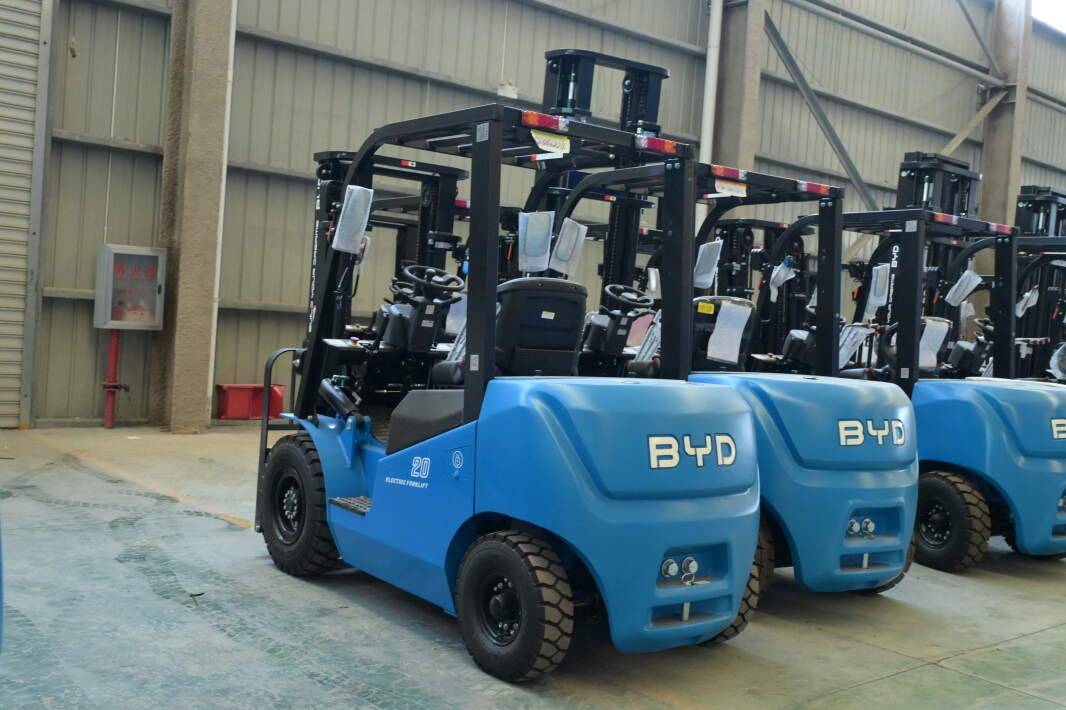
Solid rubber tires are core load-bearing components widely used on BYD electric forklifts, which adapt to frequent start-stop, high-load operation scenarios of indoor warehousing, cargo yards and logistics distribution sites. Compared with ordinary pneumatic tires, this type of tire avoids the risk of sudden puncture during operation, and delivers stable friction performance on common flat working surfaces, effectively reducing the extra downtime caused by tire failure.
Regular inspection is the core measure to extend the service life of solid rubber tires. It is recommended to check the tire condition once a week during daily operation: observe whether there are obvious cuts, bulges or embedded sharp debris on the tread surface, check the fastening state between the tire bead and the rim, and confirm that the remaining tread thickness is not less than two-thirds of the original product thickness. When the tread wear exceeds the normal allowable range, or the tire body has irreversible structural damage, users need to arrange tire replacement in time to avoid hidden safety hazards in subsequent operation.
Before starting the tire replacement work, operators need to complete full safety preparation first. Park the forklift on a horizontal, hard and flat ground, pull up the parking brake, lower the fork to the lowest position, use special safety support tools to fix the vehicle body stably, and cut off the main power supply of the whole vehicle completely. Prepare solid rubber tires that match the original specification parameters, standard disassembly and assembly tools, and personal protective equipment including work gloves and goggles. Do not use tires with mismatched load parameters or sizes to avoid abnormal operation after installation.
When proceeding with formal replacement, first remove all the fixing fasteners on the rim in diagonal order, then take out the old tire steadily after loosening all fasteners completely. Clean the rust, residual sundries and burrs on the contact surface of the rim, confirm that the inner size of the new tire is fully matched with the rim, then align the tire bead to the installation position slowly, and install the fasteners in diagonal sequence step by step to reach the specified torque value. Do not tighten the fasteners on one side at one time, so as to avoid uneven stress and offset between the tire and the rim.
After the replacement work is completed, operators need to carry out no-load test operation first: drive the forklift at low speed for 10 to 15 minutes in the designated safe area, check whether there is abnormal jitter or abnormal noise during driving, and confirm that the new tire fits the rim completely before putting it into normal load operation.
We are Jianxin New Energy, focusing on supporting services for BYD electric forklifts, and can provide professional guidance for tire matching, on-site replacement and daily maintenance. If you have relevant demands, please contact us via [email protected] for further communication.