简体中文
 Русский
 Français
 Português
 Español
 لالعربية


For modern warehouse and logistics operation systems, lithium-powered forklifts have become a widely recognized high-performance material handling equipment choice in recent years, bringing stable performance output and long-term operation value for enterprises of different scales. For procurement teams in charge of equipment sourcing, mastering core facts related to lithium forklift selection can effectively avoid mismatched investment, reduce potential operation risks and maximize the return of equipment purchase.
The first priority for procurement teams is to complete a full investigation of actual operation scenarios before submitting procurement plans. Teams need to sort out key indicators including daily average operation duration, maximum required load weight, operation aisle width, site ramp gradient, existing power distribution and charging infrastructure conditions. Targeted selection of models that match actual demand can avoid extra cost waste caused by excessive redundant configuration, and also prevent operation efficiency lag caused by insufficient parameter matching.
The second core point is to carry out full life cycle total cost of ownership accounting, instead of only taking initial purchase price as the core assessment indicator. Compared with traditional lead-acid battery forklifts, lithium forklifts have longer battery cycle life, do not need regular water replenishment, electrolyte inspection and other daily maintenance work, and do not produce waste acid and other hazardous waste that needs special compliance disposal. Actual operation data shows that the comprehensive operation cost of lithium forklifts will show obvious advantage over traditional equipment after 2 to 3 years of normal use.
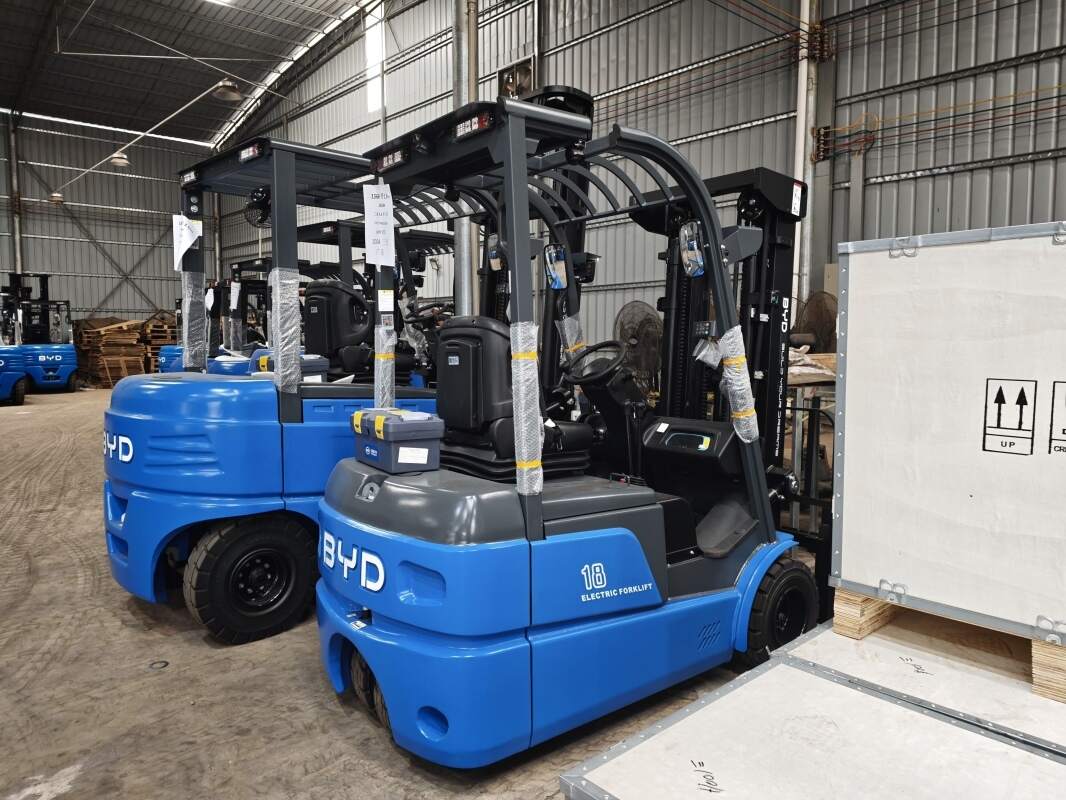
Procurement teams also need to pay full attention to the compliance and safety configuration of the equipment. It is necessary to confirm that the selected lithium forklift fully meets local industrial operation safety standards, and verify the core safety configurations including battery thermal management system, automatic overload protection, emergency power-off response function, to eliminate hidden safety risks in subsequent high-intensity operation scenarios.
After confirming the performance and safety of the equipment, procurement teams need to check the supporting after-sales service system of the supplier. Fast on-site maintenance response, regular free safety inspection, flexible spare parts and standby battery deployment service can effectively reduce the downtime rate of equipment, and guarantee the stable operation of daily logistics links.
As a professional new energy equipment service provider, Jianshu New Energy (尖树新能源) focuses on providing high-quality BYD electric forklift related solutions, and can provide full support for procurement teams from demand assessment, scene matching to long-term after-sales docking. If you have relevant demand for lithium forklift procurement, you can contact us via [email protected] for more detailed information.