
 简体中文
 Русский
 Français
 Português
 Español
 لالعربية


Agricultural facilities cover multiple operation scenarios including crop storage, feed transportation, harvest cargo sorting and livestock farm material distribution, which put forward high requirements for the safety, adaptability and cost performance of handling equipment. Compared with traditional internal combustion forklifts and lead-acid battery forklifts, lithium forklifts bring multiple targeted advantages for agricultural daily operation, and we list 6 core practical benefits as below.
First, it delivers steady long-hour operation performance to match seasonal peak demand. The agricultural industry often has concentrated peak periods such as harvest season and seeding preparation season, which require handling equipment to work continuously for 6 to 8 hours a day. Lithium forklifts can support long continuous working hours without frequent power replenishment, and support quick opportunity charging during staff break to meet temporary extended operation needs, no extra standby equipment is required for most small and medium agricultural facilities.
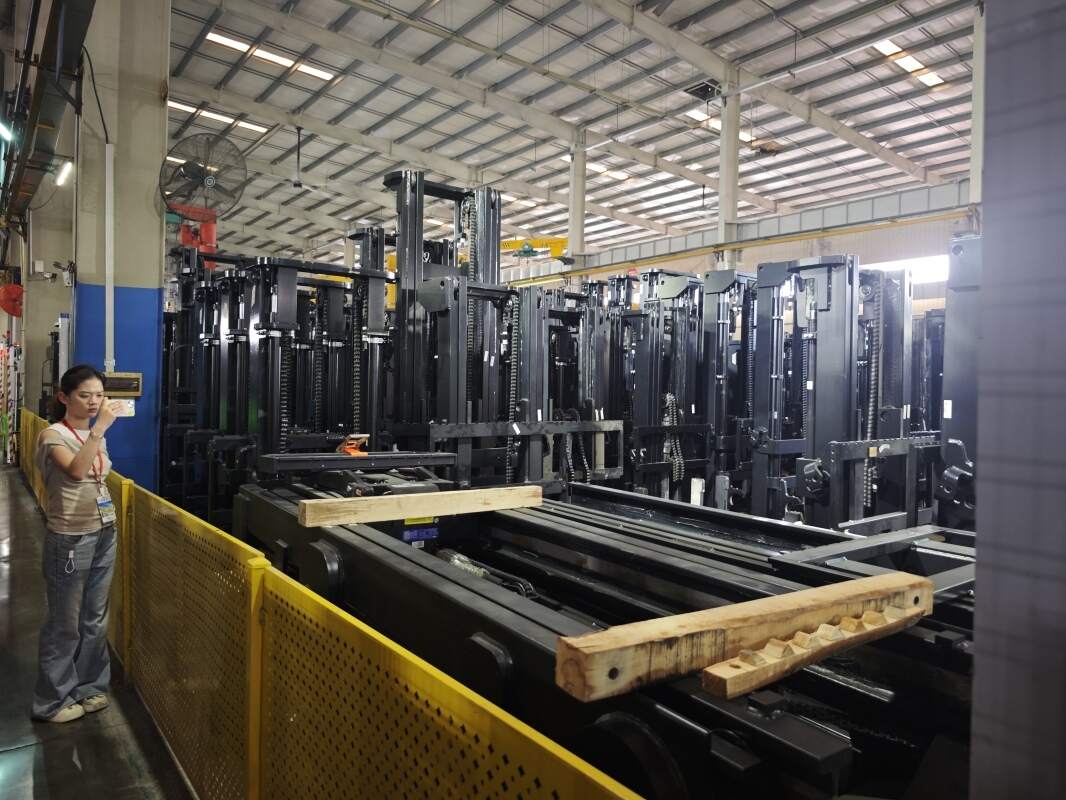
Second, it has very low maintenance requirement to reduce unexpected downtime. Traditional forklifts need frequent engine oil replacement, filter check and regular battery water replenishment, which takes extra labor and time. Lithium forklifts have much fewer vulnerable parts, and only need simple daily cleaning and routine component check, which cuts maintenance related downtime obviously, ensuring the smooth progress of urgent harvest and transportation tasks.
Third, zero local exhaust emission effectively protects agricultural product quality. Many agricultural products such as grains, fresh fruits, vegetables and edible fungi are very sensitive to exhaust fumes, the tail gas from internal combustion forklifts may leave peculiar smell or cause subtle contamination to stored products. Lithium forklifts produce no emission during operation, which fully fits the requirement of clean operation for food-grade agricultural product storage environment.
Fourth, it shows good adaptability to varied terrains in agricultural sites. Most agricultural facilities have not only flat indoor storage space, but also uneven outdoor soil roads, sloped unloading zones and muddy temporary passages. Properly configured lithium forklifts can output stable power under different temperature and road conditions, finishing cargo transfer tasks smoothly without extra transformation of the site.
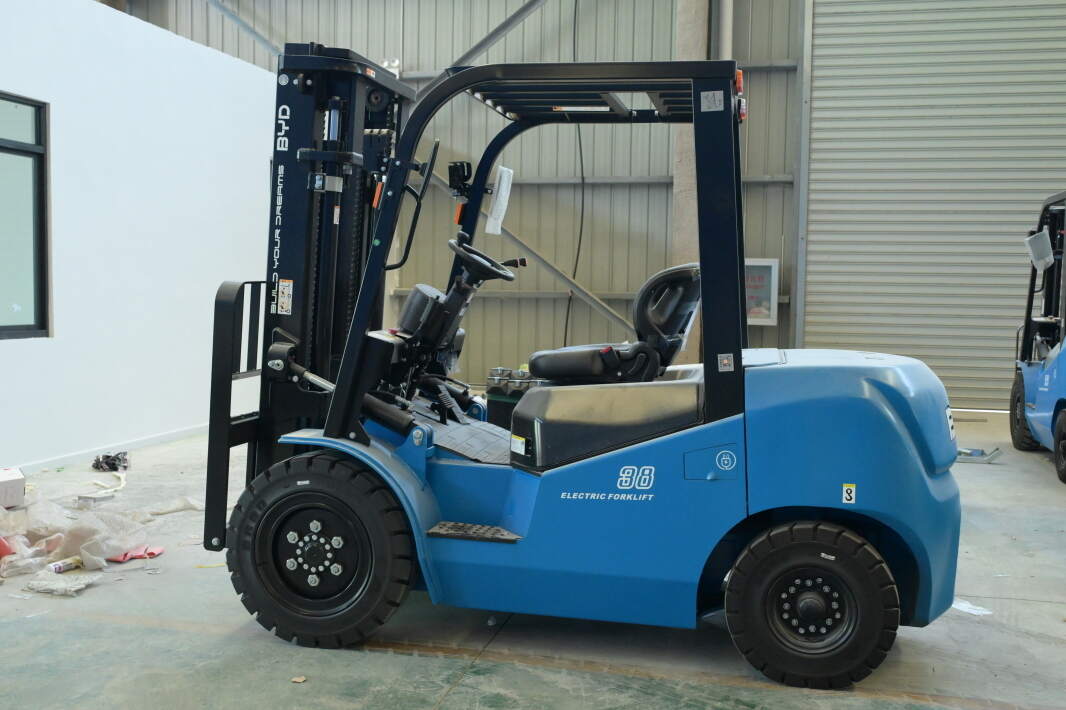
Fifth, it brings lower long-term total operation cost. Apart from the lower daily maintenance cost we mentioned before, the energy consumption cost of lithium forklifts is much lower than that of internal combustion forklifts which take fossil fuel. For long term use over 5 to 10 years, the total input of lithium forklift is quite competitive for agricultural facility operators with tight annual budget.
Sixth, the low-noise operation feature creates friendlier environment for crops and livestock. Noisy internal combustion forklift may cause stress reaction to poultry and livestock nearby, and affect the stable growth of sensitive greenhouse crops. The running noise of lithium forklift is kept at a relatively low level, which will not disturb normal growth rhythm of livestock and plants in the facility.
As a professional new energy material handling solution provider, we are Jian Shu New Energy, focus on supplying high quality BYD electric forklifts for agricultural and industrial scenarios. If you have any demand or consultation related to electric forklifts, you can send email to us at [email protected] for further support.


