
 简体中文
简体中文 Русский
 Français
 Português
 Español
 لالعربية

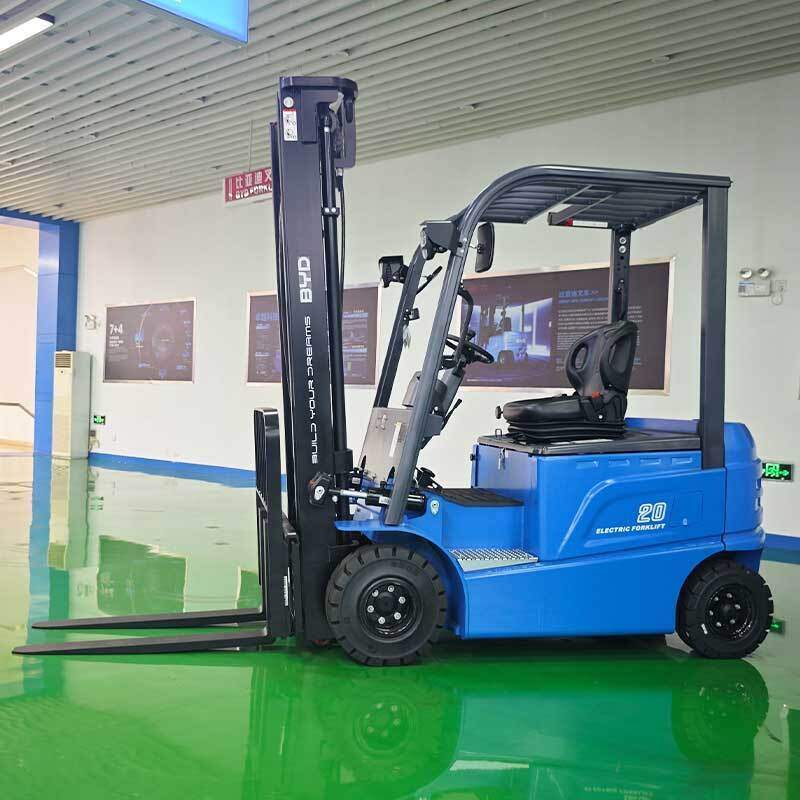
For industrial scenarios that require 12 to 24 hours of continuous material handling across 2 or more shifts, including large logistics distribution centers, heavy manufacturing workshops and large-scale cargo yards, the lithium-ion forklift has gradually replaced traditional lead-acid models for its higher energy density and no need for frequent battery replacement during operation. Reasonable parameter configuration of the power system directly determines the long-term operation stability and total use cost of the equipment, and operators need to pay attention to the following core rules when making configuration plans.
First, confirm the rated battery capacity based on actual operation intensity instead of only referring to the nominal load of the forklift. Operators need to count the actual energy consumption data of single-shift operation for 3 to 7 consecutive days, including the proportion of heavy load transfer, frequent climbing and long-distance driving, to calculate the total required power under multi-shift working conditions. It is not advisable to blindly pursue excessive capacity reserve which will cause unnecessary cost waste, nor select capacity that is just enough to support the theoretical operation time, which will lead to frequent power shortage caused by unexpected high load conditions. It is recommended to reserve 15% to 20% of the redundant capacity on the basis of calculating the actual total energy consumption to cope with accidental operation demand fluctuations.
Second, check the discharge rate parameters matching the actual operation scenarios. For multi-shift operation conditions with frequent start and stop, short-distance heavy load transfer, the power system needs to maintain stable output under continuous high current working status for a long time, so the sustainable discharge rate of the lithium battery pack should match the maximum power demand of the walking motor and the hydraulic lifting motor. The threshold value of over-current protection set by the battery management system should also be calibrated in consistent with the upper limit of the power system load, to avoid accidental shutdown caused by false triggering of protection during continuous high-load operation, or long-term over-current output that damages the internal structure of the battery.
Third, adjust the auxiliary power module parameters to adapt to the application environment. For areas with low ambient temperature in winter or high altitude, it is necessary to configure the battery thermal management system with appropriate power parameters, to ensure that the battery can work within the optimal temperature range even in extreme environment, and maintain stable output performance. The input current parameter of the fast charging port should also match the power of the supporting charging pile, so that the equipment can get enough supplementary power during the 20 to 30 minute break between shifts, to support the subsequent continuous operation.
Daily regular check of power system parameter status is also necessary, operators should not modify the factory calibrated parameters without professional guidance, to avoid uncoordinated operation between different power components. Following the above parameter configuration rules can effectively extend the service life of the lithium-ion forklift power system, and reduce unnecessary downtime in multi-shift working scenarios.


