简体中文
 Русский
 Français
 Português
 Español
 لالعربية


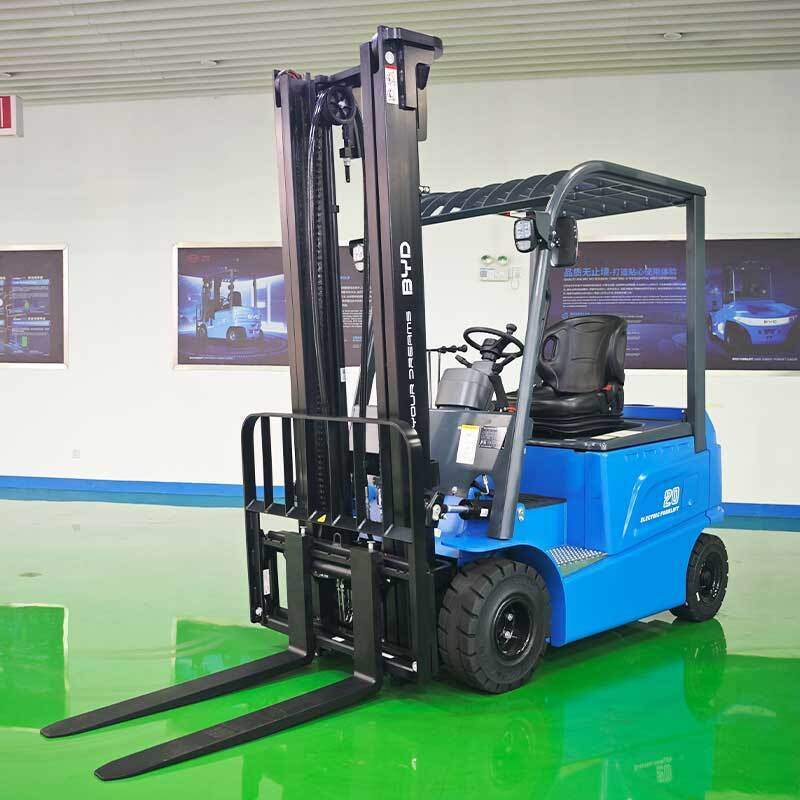
The triangle of stability is the core theoretical basis for evaluating electric forklift operation safety, which refers to the closed stable area formed by the connection of two front tire contact points and the rotation center point of the rear axle. As long as the comprehensive center of gravity of the forklift body and the carried load stays inside this triangular area, the vehicle can maintain a safe and balanced state during operation. This practical checklist is sorted out for on-site operators and safety management personnel to standardize daily check actions and reduce unnecessary safety hidden dangers.
The first part of the checklist covers static pre-operation checks. First, confirm that the ground where the forklift is parked is flat, solid and free of obvious depression, to ensure that the three support points corresponding to the three vertices of the stability triangle can fully contact the ground. Check that the tire pressure of the two front wheels meets the specified value, no serious tire wear, crack or local damage, to avoid insufficient support force affecting the boundary of the stability triangle. Then check the movable rotation structure of the rear axle, make sure there is no sundry jamming, no abnormal lack of lubrication, to ensure that the rear axle can swing flexibly within the allowable range during operation. Next, check the load status, confirm the actual weight of the goods does not exceed the rated load of the vehicle, and the center of gravity of the goods is located at the middle position of the fork, so that the combined center of gravity of vehicle and load can be kept in the central safe area of the stability triangle.
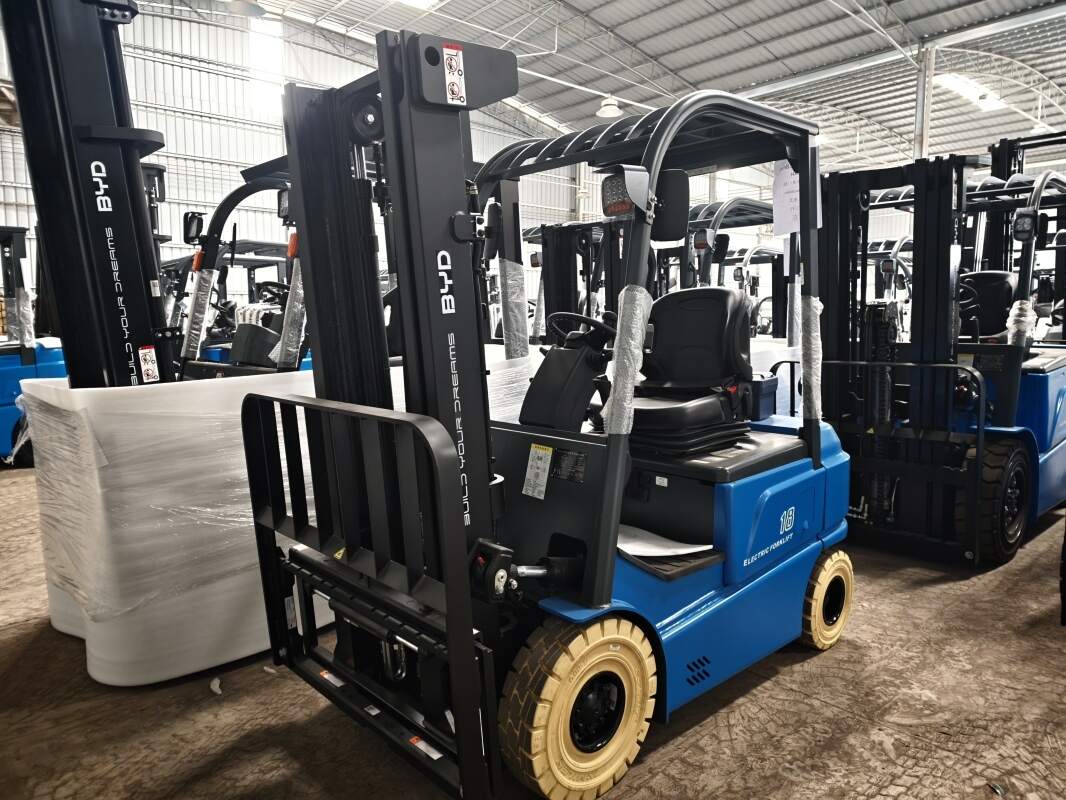
The second part of the checklist covers dynamic operation checks in work scenarios. First, keep the driving speed at a reasonable level, especially slow down in advance before turning, avoid sharp turns at high speed, to prevent the centrifugal force generated during turning from shifting the combined center of gravity out of the boundary of the stability triangle. Second, when carrying goods on a non-flat road section, appropriately lower the lifting height of the goods, keep the gantry tilted back at a reasonable angle, to prevent the overall center of gravity from moving upwards and forwards, which will break the balance of the stability triangle. Third, when operating on a gentle slope, keep the load facing the uphill direction, do not carry out turning or fork forward tilting operations on the slope, to avoid the center of gravity sliding out of the stability triangle along the slope direction.
All the check items above are easy to implement in daily work, which can effectively help standardize operation behavior and reduce safety risks. As Jian Shu New Energy, we focus on professional services for BYD electric forklifts. If you have relevant needs, you can contact us via [email protected].