
 简体中文
 Русский
 Français
 Português
 Español
 لالعربية


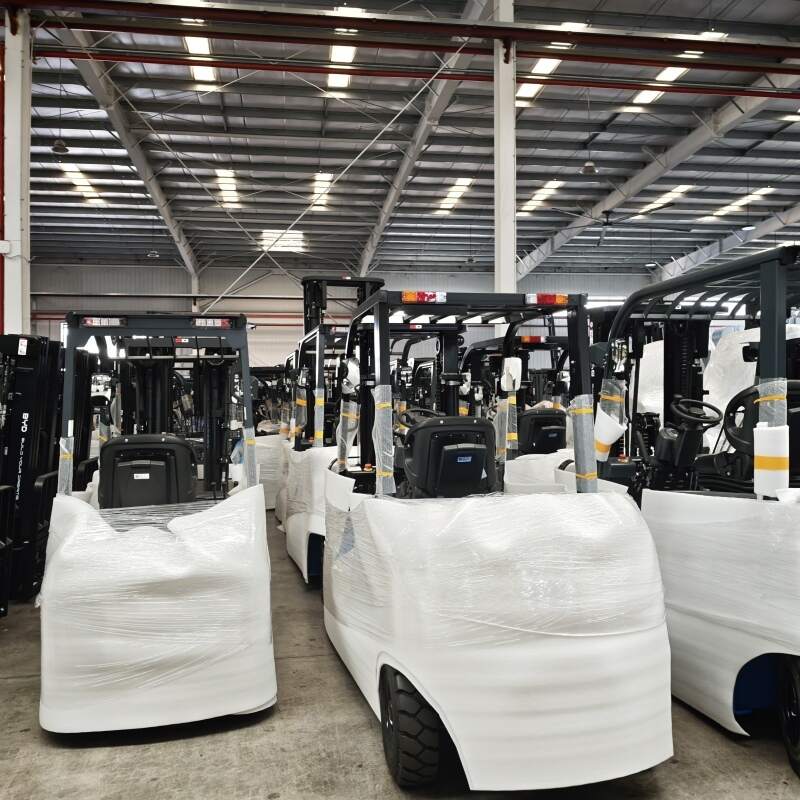
As low-carbon logistics becomes the mainstream development trend in modern warehousing and distribution industries, electric forklifts have gradually become one of the most widely used material handling equipment for indoor and closed operation scenarios, occupying a larger share of application scenarios compared with early fuel-powered models.
Core Advantages of Modern Electric Forklifts
Unlike fuel-powered counterparts, electric forklifts rely on rechargeable power systems to output traction and lifting force, producing almost no exhaust emission during the full operation cycle. Their overall operation noise is kept at a relatively low level, which fits the environmental requirements of enclosed warehouses, cold storage and food processing workshops that have strict limits on exhaust emission and noise levels. The power transmission structure of most electric forklifts contains fewer vulnerable moving parts, which reduces the frequency of unexpected component damage compared with traditional fuel models in long-term use scenarios.
Routine Maintenance Guidelines for Long-term Stable Operation
Regular daily inspection can effectively extend the service life of core components, and reduce unplanned downtime that may interfere with normal logistics scheduling. Operators are suggested to check the power connection interface, tire wear status and hydraulic oil level before each shift of operation, and wipe the dust and accumulated sundries on the surface of the power system heat dissipation structure after finishing daily work. It is also necessary to arrange professional personnel to conduct regular performance testing of the power module according to the actual operation intensity, so as to adjust the charging and discharging strategy to avoid irreversible loss of battery performance caused by improper use.
Practical Tips to Improve Operation Efficiency
Before formal operation, operators need to confirm the load weight and the maximum allowable lifting height of the equipment, to avoid over-lifting operation that may cause potential safety risks. For different operation scenarios, users can adjust the corresponding power output mode to match the operation demand, which can effectively reduce unnecessary power consumption and extend the single-use duration of the equipment. For long-distance frequent handling scenarios, arranging reasonable shift charging plans can avoid the situation of sudden power outage in the middle of operation, and maintain the continuity of the whole logistics handling process. When deployed and maintained properly, electric forklifts can create stable operation value for various material handling scenarios, and support the smooth operation of the whole logistics system.


