
 简体中文
简体中文 Русский
 Français
 Português
 Español
 لالعربية

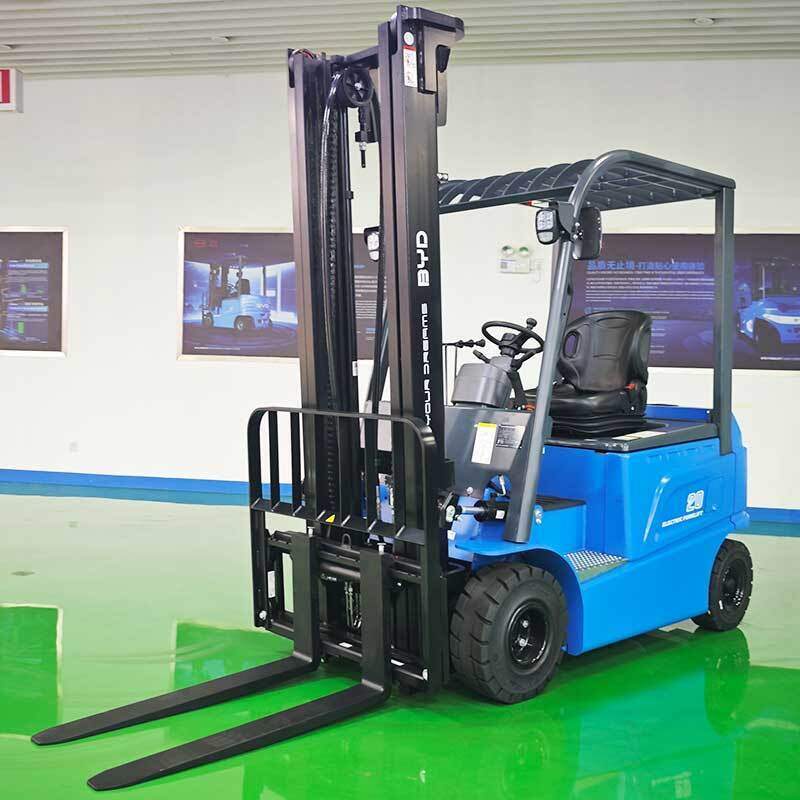
Against the background that most manufacturing facilities adopt continuous multi-shift production arrangements to meet growing output demands, the stability and cost performance of material handling equipment have become one of the core concerns of operation management teams. Before large-scale application of lithium-ion forklifts in such scenarios, many facility managers had concerns about whether the new energy powered lifting equipment can keep up with the high intensity of non-stop material transfer tasks across different shifts.
We collect the first-hand operation feedback from dozens of manufacturing factories that run 3 consecutive shifts per day, which covers more than 12 months of continuous use data of BYD lithium-ion forklifts. In terms of endurance performance, under the working condition that each shift carries out 8 hours of full-load material transfer, frequent ramp passage and frequent access to low-temperature storage areas, a fully charged standard battery unit can support 2 full shifts of operation without extra charging. Workers only need to use the fast charging mode for 40 minutes in the idle gap between shift handovers to get enough power for the full operation of the third shift, which avoids extra time consumption on battery replacement procedures, and improves the smoothness of operation connection between shifts.
In terms of daily maintenance, the on-site operation team records that the monthly maintenance time of these lithium-ion forklifts is only about 30% of that of traditional fuel-powered handling equipment with the same load capacity. There is no need to carry out procedures such as electrolyte supplement, waste liquid cleaning and fuel circuit inspection, and operators only need to check tire wear, braking sensitivity and battery shell cleanliness after each shift. The access threshold for front-line staff is also quite low, new operators can master basic operation skills after 2 hours of simple training, without complicated pre-start debugging steps.
From the perspective of long-term operation cost, the operation account books of these factories show that after 12 months of continuous use, the comprehensive energy consumption cost of these lithium-ion forklifts is about 45% of that of the same specification internal combustion handling equipment. No exhaust emission will be generated during the whole working process, which meets the clean environment requirements of closed production workshops and food raw material storage areas, and no extra supporting facilities for tail gas treatment are needed. The actual operation feedback from different factories shows that the BYD lithium-ion forklifts can well adapt to the high-intensity working rhythm of multi-shift schedules, effectively optimize the operation efficiency of the material handling link, and reduce the long-term operation burden of manufacturing enterprises.


