
 简体中文
简体中文 Русский
 Français
 Português
 Español
 لالعربية

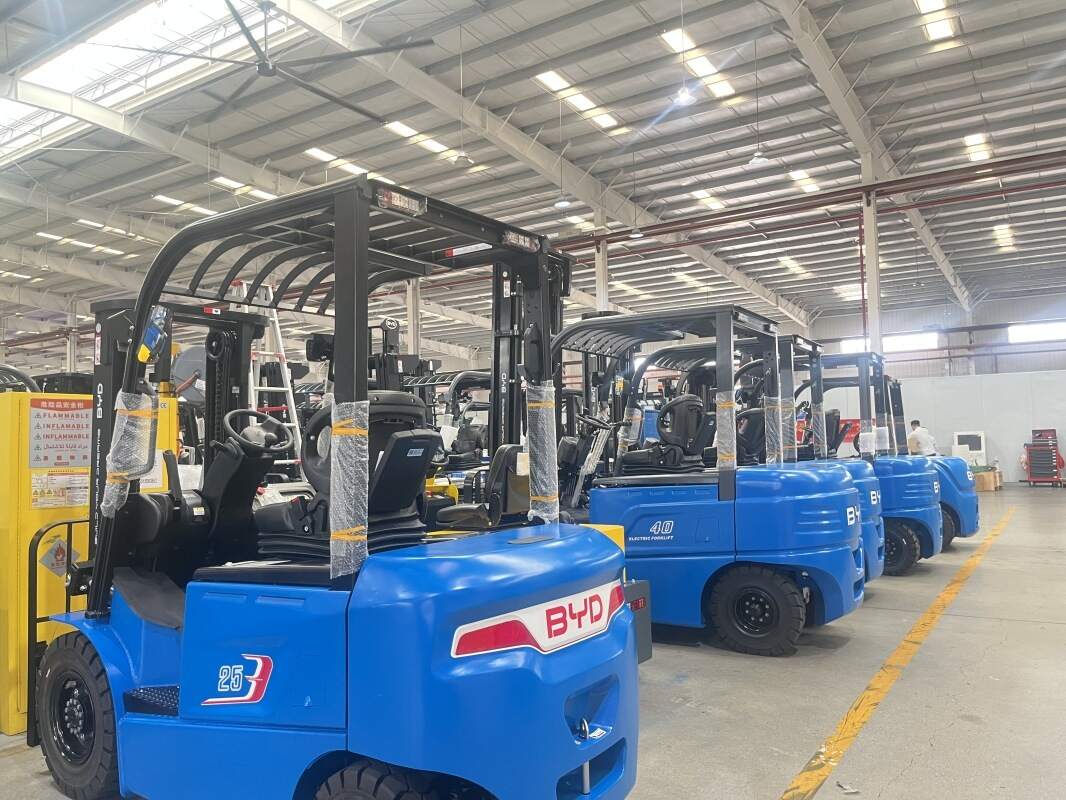
As the modern warehousing and logistics industry continuously pursues low-carbon operation and stable material transfer efficiency, electric forklifts have become one of the most widely used handling equipment in indoor and closed working scenarios in recent years. Many frontline operators and equipment managers still have doubts about how to fully release the use value of such equipment in daily work, and the following content sorts out systematic practical reference around the core concerns of relevant practitioners.
Core Performance Advantages of Electric Forklifts
Different from traditional internal combustion power handling equipment, electric forklifts are driven by matched power battery packs, and the whole operation process produces almost no exhaust emissions, which can meet the strict environmental protection access requirements of closed spaces such as indoor ordinary warehouses, food processing workshops and pharmaceutical storage areas. The noise generated during normal operation is also significantly lower than that of fuel-powered equipment, which can reduce unnecessary interference to the surrounding working environment and relieve the physical and mental burden of operators during long consecutive shifts. Under the premise of matching the corresponding rated load weight, the operation flexibility of standard electric forklifts can also adapt to the handling needs of narrow channel scenarios, helping to improve the overall utilization rate of warehouse storage space.
Standard Electric Forklift Operation Specifications
Before starting each shift of formal operation, operators need to check the residual power of the equipment, the sensitivity of the braking system, the flexibility of the lifting hydraulic structure and the integrity of the lighting prompt device first, and carry out short no-load test runs in the designated idle area to confirm that there is no abnormal condition before entering the formal handling link. During the operation process, the operator needs to adjust the driving speed according to the on-site personnel flow and ground condition, avoid sharp turns and sudden braking when carrying heavy loads, and keep the goods in a centered and stable state on the forks to prevent the goods from slipping and causing potential safety risks. When the equipment is temporarily unused or after the shift ends, it is necessary to park it in the designated charging and storage area, lower the forks to a safe height close to the ground, and cut off the main power supply of the whole machine.
Routine Maintenance Suggestions for Electric Forklifts
The core functional component of electric forklifts is the power battery system, and operators need to follow the matching charging specifications during daily use, avoid over-discharging the battery pack to an extremely low power state for a long time, and arrange regular battery performance detection according to the actual use frequency. It is also necessary to regularly clean the dust and sundries accumulated on the surface of the drive motor, the walking wheel and the heat dissipation structure, check the wear degree of the transmission part and the fastening state of the wire joint, and arrange professional technical personnel to deal with abnormal faults in time, which can effectively extend the overall service life of the equipment.


