
 简体中文
简体中文 Русский
 Français
 Português
 Español
 لالعربية

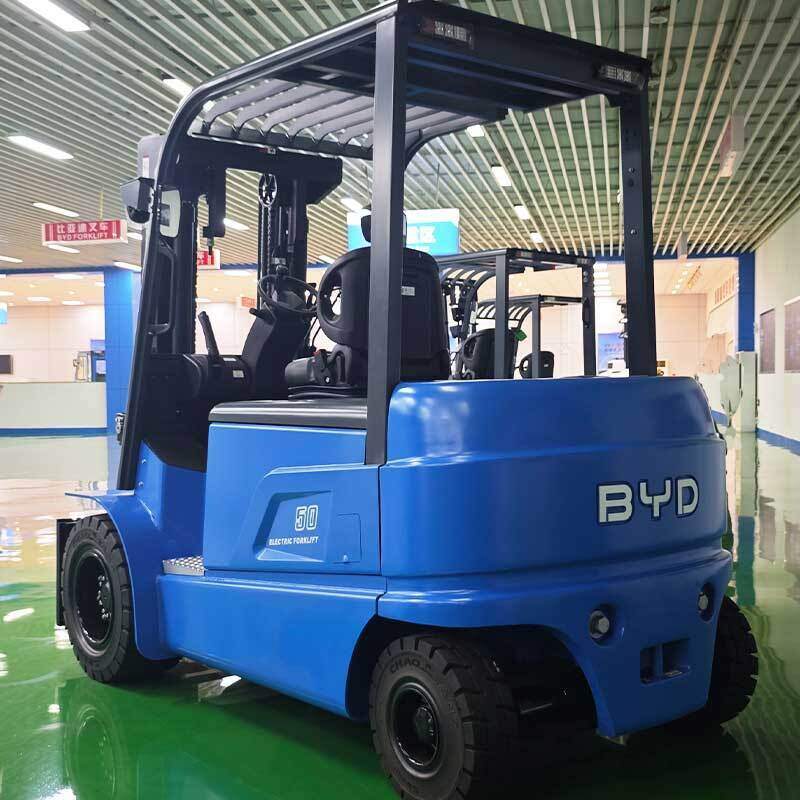
Many modern indoor operation scenarios, including high-standard warehouses, finished product assembly workshops and food processing storage areas, adopt finished floors such as polished concrete, epoxy resin and polyurethane coating, which have strict requirements for surface cleanliness and integrity. Ordinary rubber tires with traditional carbon black formula will leave obvious black friction marks on the smooth floor after long-term driving, which increases the cleaning workload and even causes permanent residual stains that are difficult to remove. As the core walking component of electric forklifts working in these scenarios, non-marking tires need to meet special material and parameter design requirements to balance driving performance and floor protection effect.
For material performance features, the non-marking tire uses a specially formulated synthetic rubber composite system as the base material, with no common high-content carbon black added in ordinary industrial tires, and uses light-colored inert reinforcing fillers to achieve the required structural strength. The Shore hardness of the finished tire material is stably controlled between 60 and 75 degrees, which avoids the too-hard tire surface causing impact scratches on the floor joint and brittle cracks on the coating, and also avoids the too-soft material leading to rapid wear and excessive energy consumption. The selected material components will not produce oily precipitates after long-term continuous compression, which effectively prevents the problem of yellow residual stains left on the contact surface of the floor.
For core performance parameter settings, the static friction coefficient of the tire surface is calibrated for smooth finished floor scenes, the dry-state static friction coefficient is no less than 0.8, and the wet-state static friction coefficient is no less than 0.6. This parameter can ensure the electric forklift maintains sufficient traction during full-load start and stop, and effectively reduces the risk of sideslip during steering. The rolling resistance parameter is controlled within a reasonable range, which will not cause additional loss of electric energy, and will not significantly reduce the single-shift battery life of the electric forklift under normal operation conditions. The tread depth is set between 8mm and 12mm, and the optimized wide and shallow groove design reduces the probability of sand and hard debris being trapped in the tire tread, thus avoiding accidental scratch damage to the smooth floor surface in subsequent driving.
When selecting non-marking tires for electric forklifts operating on finished floors, users can check the above core material and parameter indicators according to their actual load, daily operation intensity and floor material characteristics, to obtain a balanced use effect, reduce the later maintenance cost of the floor, and maintain the long-term stable operation state of the handling equipment.


